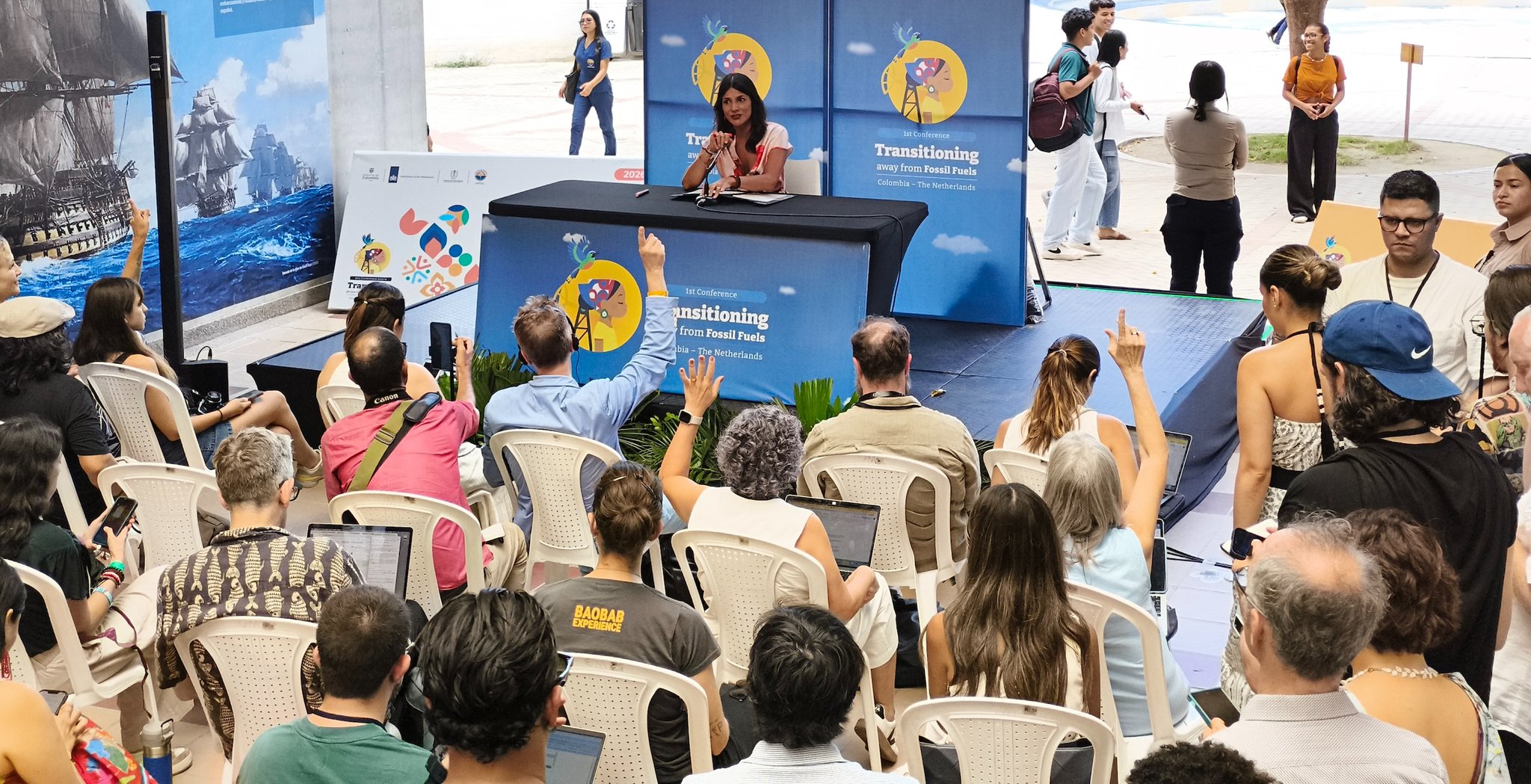
Colombia helped form a 57 nation strong “Coalition of the Willing” determined to accelerate the global transition away from fossil fuels. Now, in a striking reversal, the country that became a figurehead for the movement is the first to walk away.
Setback after setback is currently weaking climate policies globally. After 45 climate policy reversals over a 12-month period, a 46th can now be added to the list. Colombia — co-host of the successful First Conference on Transitioning Away from Fossil Fuels — has made a dramatic turn in the opposite direction.
”We cannot accept the decline of our gas reserves”
Colombia's new President Abelardo de la Espriella
The shift follows the election of right-wing President Abelardo de la Espriella, who took office on August 7. His Trump-supported government has pledged to revive oil and gas exploration and pursue what he calls “responsible and sustainable fracking”, reversing the previous government's decision to stop awarding new hydrocarbon exploration contracts.
"We cannot resign ourselves to having proven oil reserves that will last only a few more years, nor can we accept the decline of our gas reserves," he said, according to Reuters, and added that his government will work to strengthen state-run oil company Ecopetrol.
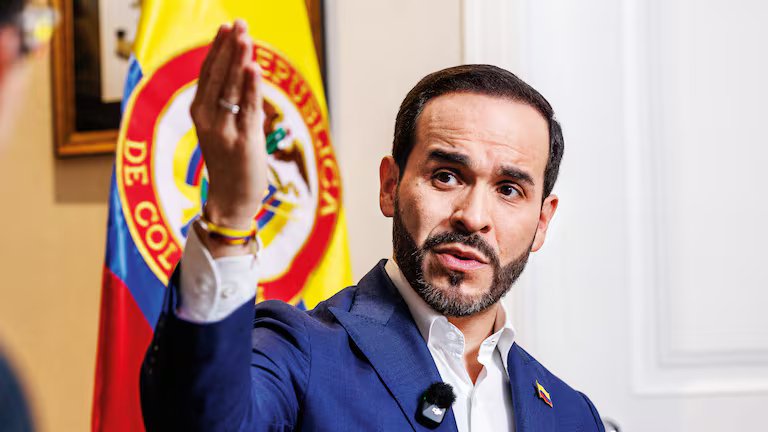
President Abelardo de la Espriella, took office in Colombia on August 7. He has pledged to increase the extraction of fossil fuels.
The reversal comes just months after Colombia and the Netherlands brought representatives from 57 countries, among those many oil and coal exporters, to the Caribbean city of Santa Marta for the first multilateral conference dedicated specifically to transitioning away from fossil fuels.
Unlike the annual UN climate negotiations, Santa Marta was designed as an implementation-focused forum outside the traditional UN climate architecture. Rather than negotiating another consensus document, participants focused on concrete action countries can take here and now to reduce their dependence on coal, oil and gas —and how to tackle the economic, financial and political obstacles standing in the way.
The meeting produced a series of concrete outcomes, including a new scientific panel to help countries develop 1.5°C-aligned transition roadmaps, three technical workstreams and plans for a second conference in 2027. The conference was hailed as a success by many participating nations, scientists, local governments and global companies, not least because only countries determined to step up their efforts to phase out fossil fuels was invited.
Ironically, had the conference been held today, Colombia would most likely have been of the blacklisted countries.
Not that it would bother the country´s new leadership. The incoming environment minister, Fabio Arjona, has described the Santa Marta conference as an “absolute waste of time and money”. So what does this mean for the newly formed coalition of countries willing to accelerate the phase-out of fossil fuels?
Colombia’s U-turn is no doubt a major setback. But it is not a defeat. Former Colombian environment minister Irene Vélez Torres told Climate Home News that the process was deliberately built to survive political changes in individual countries.
“It’s a coalition of countries but also subnational governments, civil society, scientists... so there is a lot more than just Colombia,” she said in a recent interview with Climate Home News. “It’s a shame that Colombia cannot continue with its international leadership, but it doesn’t mean that what we created as a global legacy will not continue.”
This resilience was stressed also by Stientje van Veldhoven, environment minister of the Netherlands, who co-hosted the Santa Marta Conference. She said "the organization is set-up in a way that progress does not depend on one or two countries", and highlighted the role of incoming co-chairs Ireland and Tuvalu.

From We Don't Have Time’s broadcast in Santa Marta: Environment Ministers Maina Talia, Tuvalu; Stientje van Veldhoven, The Netherlands; Irene Vélez-Torres, Colombia; and program host Catarina Rolfsdotter-Jansson.
And outside of the media spotlight, the work to build on the momentum from Santa Marta and expand the coalition continues.
Just one day before Irene Vélez Torres left office, Colombia and The Netherlands organized a webinar called "Santa Marta: The Way Forward and the implementation of the Three Workstreams," marking the next phase of the process. The webinar was open to all countries that participated in the first conference, as well as other interested countries and stakeholders from civil society, academia, the private sector, subnational governments, indigenous peoples and local communities, among others.
“We look forward to continuing our involvement in the follow-up to the Santa Marta Conference”
Mattias Frumerie, Sweden's Climate Ambassador
Among the participants was Mattias Frumerie, Climate Ambassador and Head of Delegation to UNFCCC at Swedish Ministry of Climate and Enterprise. In a comment to We Don´t Have Time, he said:
“We look forward to continuing our involvement in the follow-up to the Santa Marta Conference, which Ireland and Tuvalu will host in 2027. Sweden and Swedish companies can contribute solutions that help other countries make the transition.”
According to the final Santa Marta report, 80% of the stakeholder sectors engaged in the process called for a new international mechanism to support an equitable transition away from fossil fuels. Many governments also raised the need for such a mechanism during the conference.
The Fossil Fuel Non-Proliferation Treaty Initiative, which played an important role in the Santa Marta process, is now presenting a series of legal briefings to inform and ground discussions on the legal design of a treaty and help policymakers and advocates of the Treaty to navigate the road ahead.
To make the coalition’s progress transparent and accessible for all, We Don´t Have Time is developing a “Coalition of the Willing Tracker” to track the global progress of the transition away from fossil fuel. The purpose of the tracker is to put pressure on the politicians by showcasing which governments are moving in line with climate science — and which are falling behind or reversing course.
MORE ON THIS TOPIC