Article
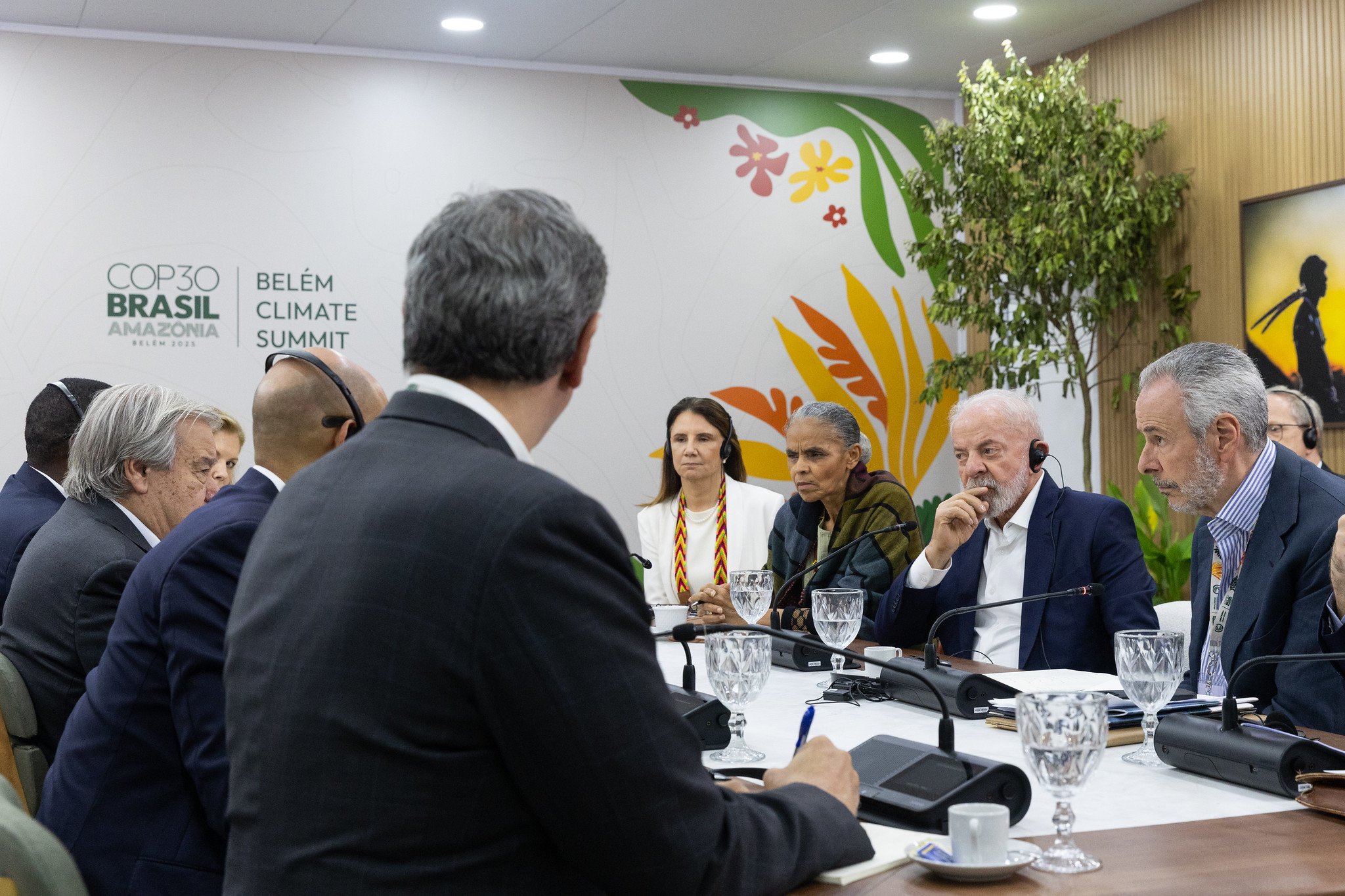
COP 30 Live Blog - 21st to 22nd November

COP30 Live Blog
47 w
•
Welcome to our live blog of the 30th Conference of the Parties (COP 30) to the United Nations Framework Convention on Climate Change (UNFCCC), taking place in Belém, Pará, Brazil. Over the next two weeks, world leaders, policymakers, activists, and experts will gather to discuss and negotiate critical issues related to climate change, biodiversity, and sustainability. The stakes are high, as the world faces a climate crisis that demands urgent and transformative action, especially within the context of the Amazon rainforest and global ecological balance. We will be bringing you real-time updates, insights, and exclusive behind-the-scenes glimpses of the event, providing a comprehensive overview of the discussions, decisions, and outcomes of COP 30.
Good Bye! See you in Türkiye!
Updated 21:00h – 22/11/25

With the final gavel having dropped, we are now closing the live blog coverage of COP 30 here in Belém, Brazil. Thank you so much for following along with us through every moment of high drama, procedural crises, and negotiated compromises this year yet again!
Delegates are leaving Belém with notably mixed feelings: while the outcome was heavily criticized for lacking a firm fossil fuel roadmap and sparking a procedural revolt, participants did applaud the adoption of the new gender action plan as well as the decision to develop a formal just transition mechanism.
This marks our third consecutive year covering the COP negotiations here at the COP Live Blog, stretching from COP 28 in Dubai, to COP 29 in Baku, and now COP 30 in Belém. The next stop is COP 31 in Antalya, Türkiye, in 2026. We extend our deepest thanks to you, our readers, and special gratitude to the hosts of the blog, WDHT, our supporting partners through the years, Nexus Afri News, the Saudi Green Building Forum, and the support we have consistently received from the UNFCCC, the COP media teams, and LINCgreen. See you in Antalya next year!
The Gavel has finally fallen on COP 30
Updated 20:44h – 22/11/25
https://www.youtube.com/watch?v=Poxx7VsEtqA
The gavel has finally fallen on COP 30, concluding the summit. The conference closed twenty-five hours and twenty-five minutes after its scheduled time of 6 PM yesterday, a delay that, in the history of COPs, is not uncommon. The COP President delivered a short, emotional closing speech, beginning with heartfelt thanks and applause for the people of Belém for their hospitality.
He then singled out President Lula as the "most committed president to the success of a COP," before sharing tears and then thanking the Secretariat staff for their immense efforts, particularly over the last 24 hours, also noting delegates were in the negotiation rooms for 17 hours yesterday.
The President expressed regret that more could not have been achieved, he then thanked the media and the contributing private sector, and concluded with a powerful message to civil society, women, and youth groups, recognizing their commitment and passionately asserting: "Thank you for always asking for more; the world needs you to ask for more."
Observers Express Disappointment
Updated 19:30h – 22/11/25
Following the national statements, the floor is now open for interventions from observer groups and civil society organizations, who are seizing the final moments to register their verdict on the summit's outcome. The central themes emerging from these groups, which include environmental NGOs, Indigenous organizations, and youth activists, mirror the disappointment voiced by many developing nations. While some progress on adaptation finance and the creation of a Just Transition mechanism is being acknowledged, the overwhelming consensus is that the deal fell significantly short of ambition, especially due to the failure to secure a robust commitment or roadmap for transitioning away from fossil fuels. Groups are stressing that the adopted text does not reflect the moral clarity or urgency demanded by science, with activists turning the focus from negotiation compromises to the need for governments to demonstrate real-world implementation beyond the conference hall.
National Statements, Delegations Register Lingering Disappointment
Updated 18:30h – 22/11/25
The closing plenary here in Belém is currently focused on the final, formal stage: national statements delivered by countries before the official conclusion. Despite the earlier high drama, which included a procedural revolt, a plenary suspension, and the contentious gaveling through of the main Mutirão Decision text and technical documents, the session has returned to protocol. These statements allow each nation to formally place their views, reservations, and final interpretation of the outcome on the record. While the President has confirmed the adoption of all key texts, this final opportunity is being used by many delegates to express lingering disappointment, particularly over the lack of a clear fossil fuel phase-out roadmap and the language in the Global Goal on Adaptation, ensuring their specific critiques remain part of the COP's history.
Final Sprint COP 30 Presidency Rapidly Gaveling Technical Decisions
Updated 17:00h – 22/11/25
The COP 30 Presidency is now working at a rapid pace to formally conclude here in Belém by gaveling through the numerous technical draft decisions for the subsidiary bodies—the Conference of the Parties (COP), the Conference of the Parties serving as the meeting of the Parties to the Kyoto Protocol (CMP), and the Conference of the Parties serving as the meeting of the Parties to the Paris Agreement (CMA). While these texts, which cover detailed operational issues such as finance reporting, technology transfer, and the governance of various mechanisms like the Loss and Damage Fund and the Warsaw International Mechanism, are considered less political than the core Mutirão Decision, they are nonetheless crucial for the functional implementation of the Paris Agreement. This fast-tracked adoption process aims to finalize the entire negotiating package despite the earlier political turmoil.
Ethiopia Approved as Host of COP 32 Ahead of Nigeria
Updated 16:40h – 22/11/25

We have another official announcement on the future of the climate talks: Ethiopia will host COP32 in 2027! The COP President just gavelled through the text confirming the next host country for the African regional rotation with no objections raised from the floor. This decision, which followed Ethiopia winning the endorsement of the African Group of Negotiators over a rival bid from Nigeria, positions the continent to set the climate agenda in 2027. Ethiopia’s capital, Addis Ababa, will provide a vital platform to amplify African priorities, particularly around adaptation finance and climate justice.
UN Climate Chief Hails COP 30 as Nations Affirm Transition Despite Geopolitical Blows
Updated 16:30h – 22/11/25

Simon Stiell, the UN Climate Change Executive Secretary, just issued a written statement reflecting on COP30, acknowledging that the talks took place amidst "stormy political waters" where "denial, division and geopolitics" dealt heavy blows to international cooperation. Despite this, Stiell asserted that "climate cooperation is alive and kicking," and that the summit achieved its goal of keeping humanity "in the fight for a livable planet, with a firm resolve to keep 1.5C within reach." In a clear reference to the US withdrawal, he contrasted the focus on "one country stepping back" with the fact that 194 countries stood "rock-solid in solidarity," asserting in a unified voice that “the Paris Agreement is working.” He highlighted the historic market signal that, for the first time, 194 nations declared the "global transition to low greenhouse gas emissions and climate-resilience is irreversible and the trend of the future," arguing that this political consensus is a force that cannot be ignored.
Turkey will host COP 31
Updated 16:20h – 22/11/25
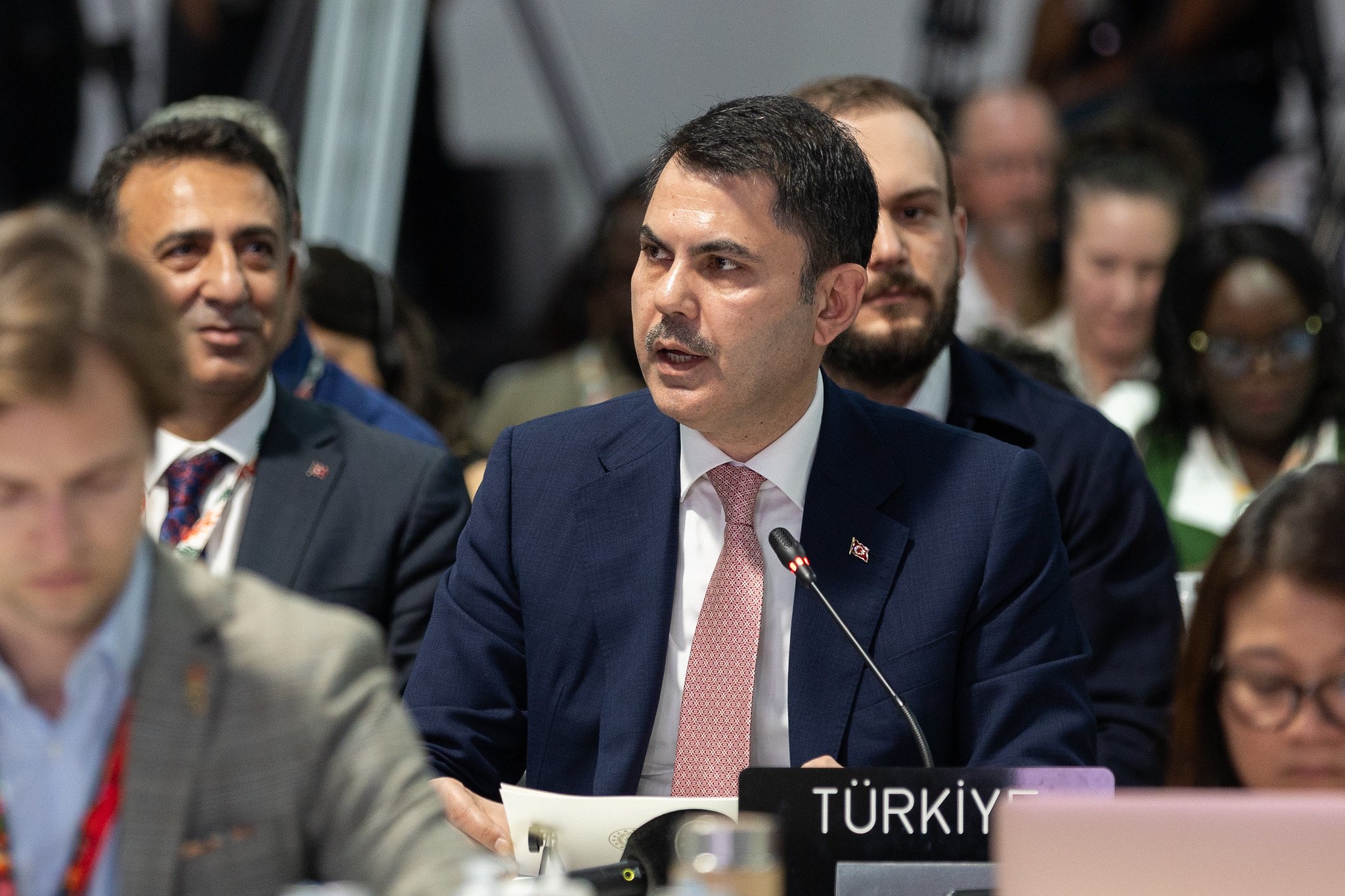
The COP President just gavelled through the text confirming the next host country with no objections raised from the floor. Turkey's hosting is unique as it will be sharing duties with Australia. Turkey hosts in the resort city of Antalya while Australia will take charge of the negotiations. This marks a significant moment for Turkey, effectively giving it a "second life" hosting a major UN conference after it was previously unable to host the Biodiversity COP earlier this year.
COP 30 President Gavels Through Finance and Gender Agenda Items, More National Statements
Updated 16:10h – 22/11/25

COP 30 President Do Lago has just quickly gavelled through a good number of agenda items, including key decisions on finance and gender. The floor is now once again open for another round of national statements.
However, the passing of the gender item immediately sparked backlash, with a number of countries taking the microphone to argue against gender-inclusive language. Russia, Argentina, and Paraguay all voiced objections, pushing instead for a strict sex-based definition of men and women, following similar comments made earlier by the Vatican.
Russian delegate trade words with Latin American delegates
Updated 15:40h – 22/11/25
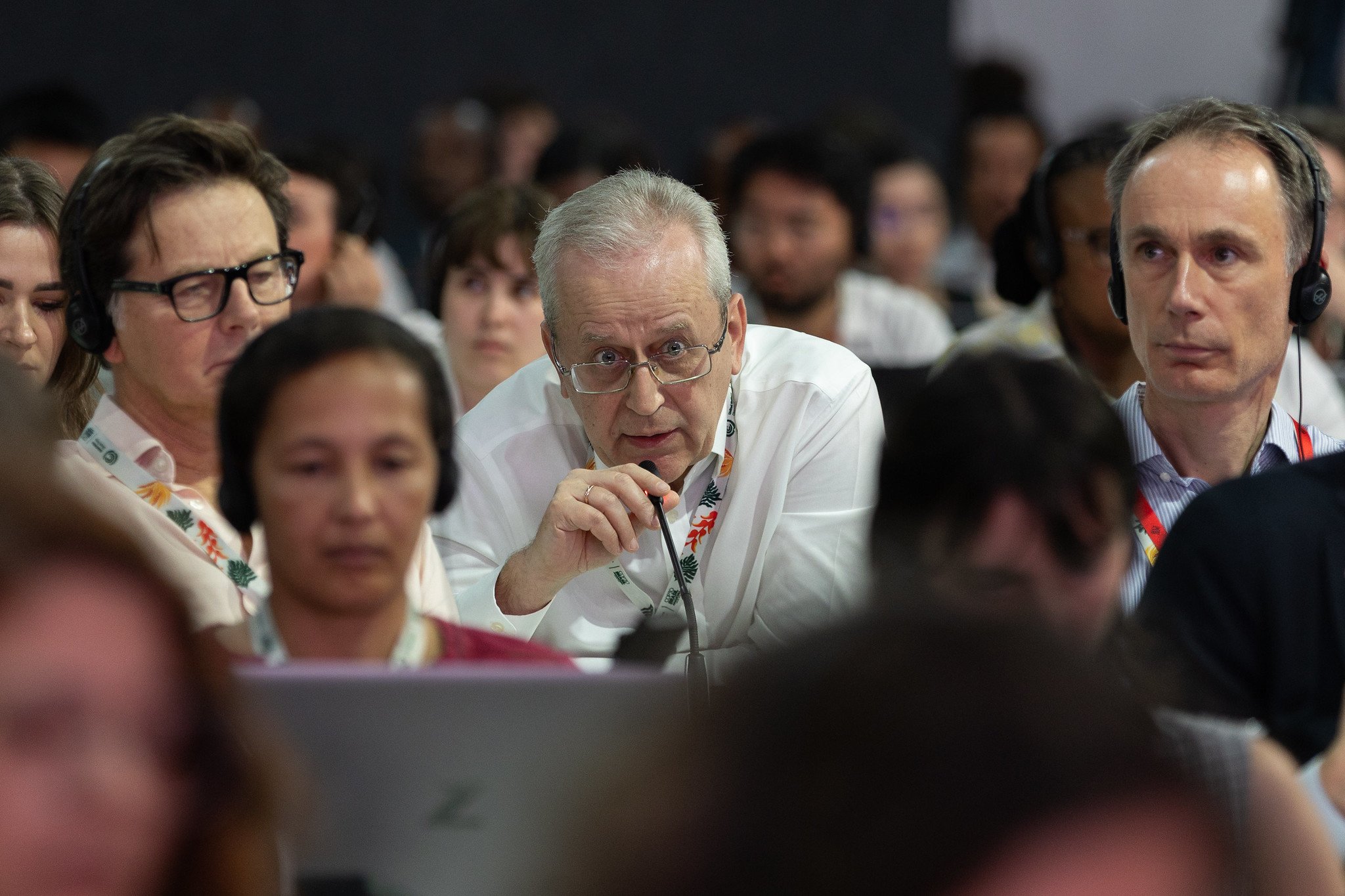
The already tense plenary session rapidly escalated into a series of heated confrontations, primarily after Russia delivered a pointed intervention in Spanish that seemed calculated to provoke the Latin American delegates. Russia directly inflamed the situation by comparing the persistent younger Latin American negotiators to "children who are trying to grab all the candy." The insulted region immediately retaliated, with Panama delivering a sharp rebuke to Russia’s condescending comparison. Panama’s delegate retorted: "Children are extremely intelligent and visionary. And as the region, we will continue pushing for transformative decisions. We wish we’d all behave like children to work for a better future – instead of [like] futureless adults," effectively transforming the insult into a powerful moral indictment of those nations obstructing consensus.
Plenary Resumes
Updated 15:20h – 22/11/25

The plenary session has now resumed following the dramatic suspension and closed-door consultations. In opening the resumed session, the COP President attempted to diffuse the intense procedural crisis—where flags and points of order were ignored—by deflecting the blame onto exhaustion and human error. He attributed the failure to recognize dissenting nations to widespread delegate fatigue after the long, sleepless night of negotiations, and even humorously referenced his own old age.
He then confirmed that the decisions that were gavelled through earlier, including the major agreements opposed by Colombia and others, have been adopted, despite the strong objections and ignored requests to speak.
Plenary Suspended, Objections Halt COP 30, Nations Decry Lack of Transparency and Consensus
Updated 14:25h – 22/11/25
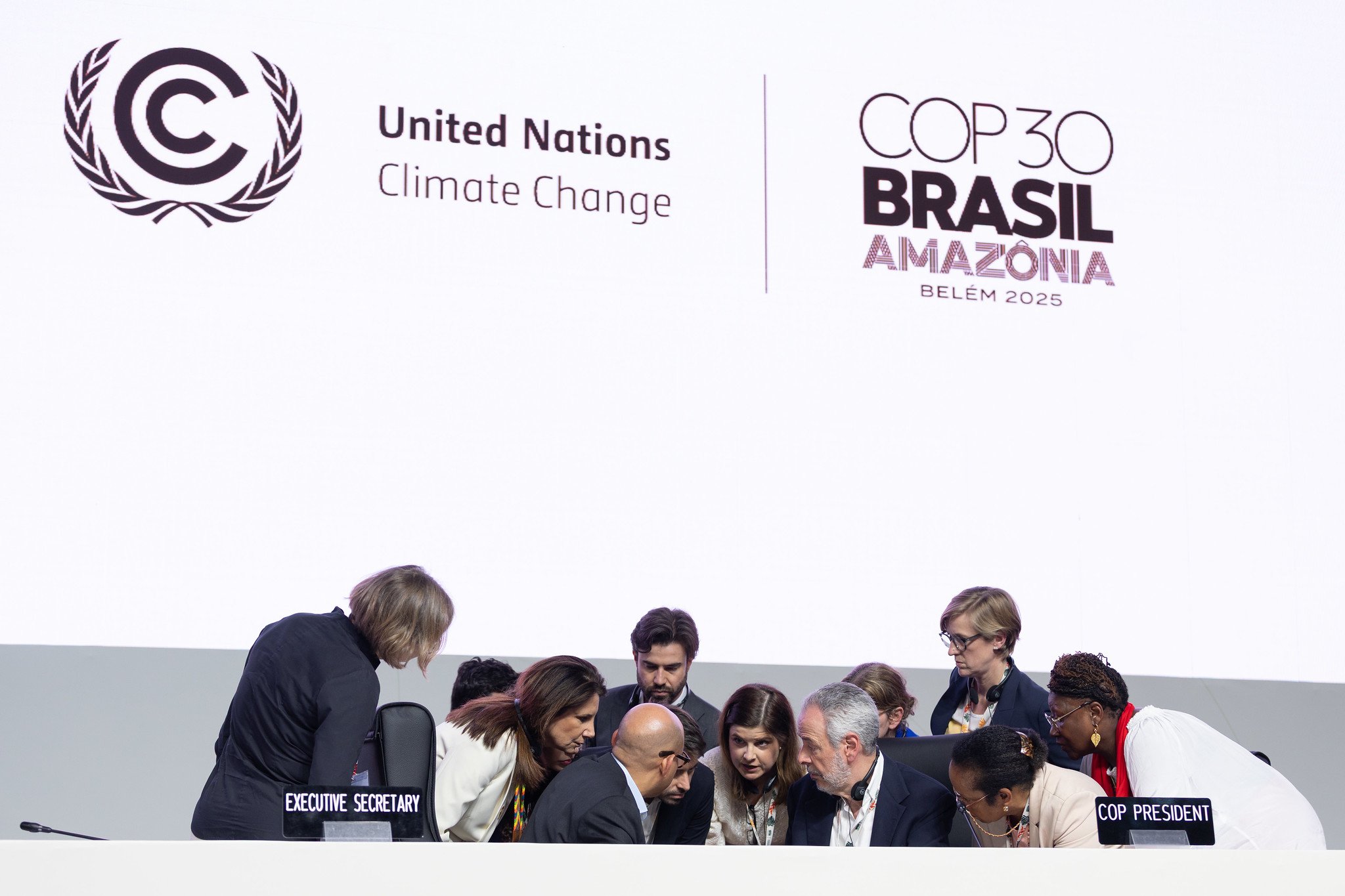
The closing plenary session has reached a breaking point and has been suspended following objections from Colombia and numerous other nations, signifying a total breakdown of consensus. This crisis started with a core procedural failure: nations raised their flags tag—the formal sign to interject—but were ignored by the COP Presidency. One by one, countries are questioning the legitimacy of the process, asserting that major topics were pushed through without real consensus: Argentina objected on gender issues, Uruguay on adaptation, Paraguay on mitigation, and Colombia specifically on fossil fuels. All of Latin America has reportedly risen up against the Brazilian COP 30 Presidency.
This collapse follows intense procedural and substantive criticism. Panama earlier publicly condemned the Presidency for failing to deliver transparency, detailing how its repeated points of order were ignored: “I raise my flag and you ignore it. I raise a point of order and you ignore it. I sustain it, and it keeps being ignored.”
The COP 30 President, André Corrêa do Lago, initially attempted to contain by stating objections would only be included in the final report, then admitting, “I am sorry I haven’t seen the flags,.” The COP Presidency has now entered into closed door consultations after plenary was suspended.
Substantively, the Global Goal on Adaptation (GGA) became a major point of conflict, with Panama, Switzerland, the European Union, and Canada all rejecting the indicators as unclear, inconsistent with prior agreements, and potentially “taking us backwards.” Canada further added “strong concerns” over the conflation of Indigenous Peoples' rights with local communities, arguing the summit was walking back important progress. The procedural defiance and widespread substantive rejection ultimately forced the President to halt the meeting, confirming that the gaveling of the text lacked the political mandate of all 195 participating nations.
COP 30 Texts Gavelled Amid Widespread Disappointment
Updated 13:52h – 22/11/25
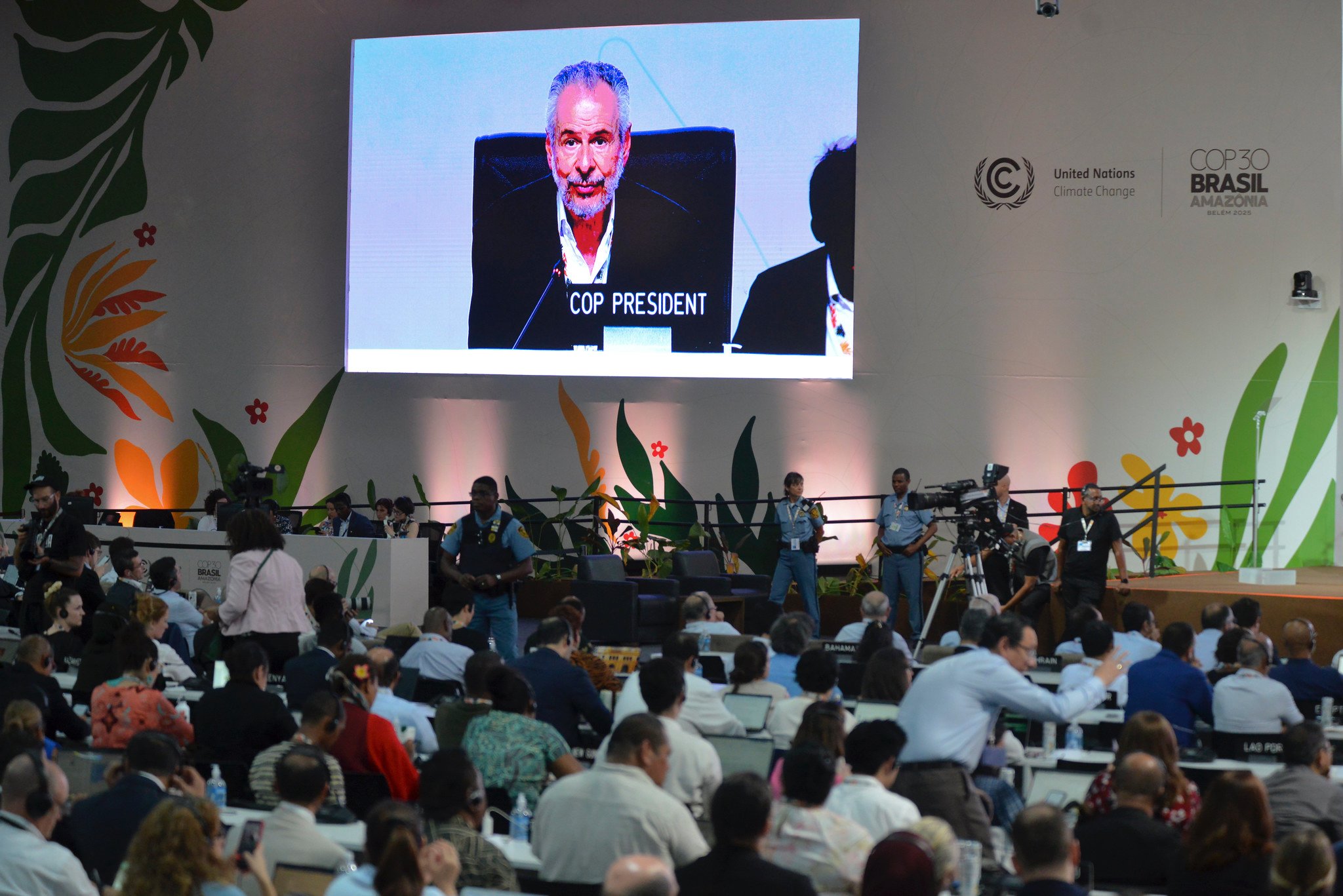
Nations are now delivering their official statements in the plenary following the contentious gaveling of the Mutirão Decision text, the Global Goal on Adaptation (GGA), and other texts, and a core theme of disappointment and procedural criticism is dominating the floor. Country after country is expressing dissatisfaction. The first countries to speak, Argentina and Chile, immediately pushed back on parts of the agreed-upon text, with Chile criticizing the negotiation of already-agreed procedures, stating emphatically, “this frustrates us, deeply.”
Furthermore, Panama publicly laid into the COP Presidency for failing to deliver the promised transparent process, with its delegate making a powerful statement of exclusion: “I raise my flag and you ignore it. I raise a point of order and you ignore it. I sustain it, and it keeps being ignored.” On the substance, Panama stated it could not endorse an outcome for the global goal on adaptation that “takes us backwards,” complaining that the expert work of "months and years" had been arbitrarily replaced by placeholders in the final text.
Switzerland added to this criticism of the global goal on adaptation, specifically highlighting the lack of time given to discuss the final text and the Presidency's choice to use indicators that were not directly selected from the technical expert list.
Sierra Leone voiced its own deep dissatisfaction but committed to continuing the fight, indicating it would work to evolve the framework of the global goal on adaptation until it meets its needs. Its delegate powerfully questioned the summit's priorities, asking: “We must ask ourselves, how are we helping the most vulnerable if this is the quality of the outcomes we call ambition? What message does it send when a process built to elevate our needs ends by diminishing expert work and overlooking the realities of those on the frontlines.”
The European Union declared it cannot accept the global goal on adaptation in its current form, arguing the indicators are unclear, unfit for their main purpose, and fail to align with previous climate agreements. The EU delegate stated, “We will share our targeted changes in writing but I’m afraid we join others in not being able to support these indicators at this moment.”
The flood of critical statements reinforces the sense that while the texts were adopted with a literal strike of the hammer, it lacks the full political mandate and buy-in of all 195 participating nations.
Key Outcomes of COP 30
Updated 13:47h – 22/11/25
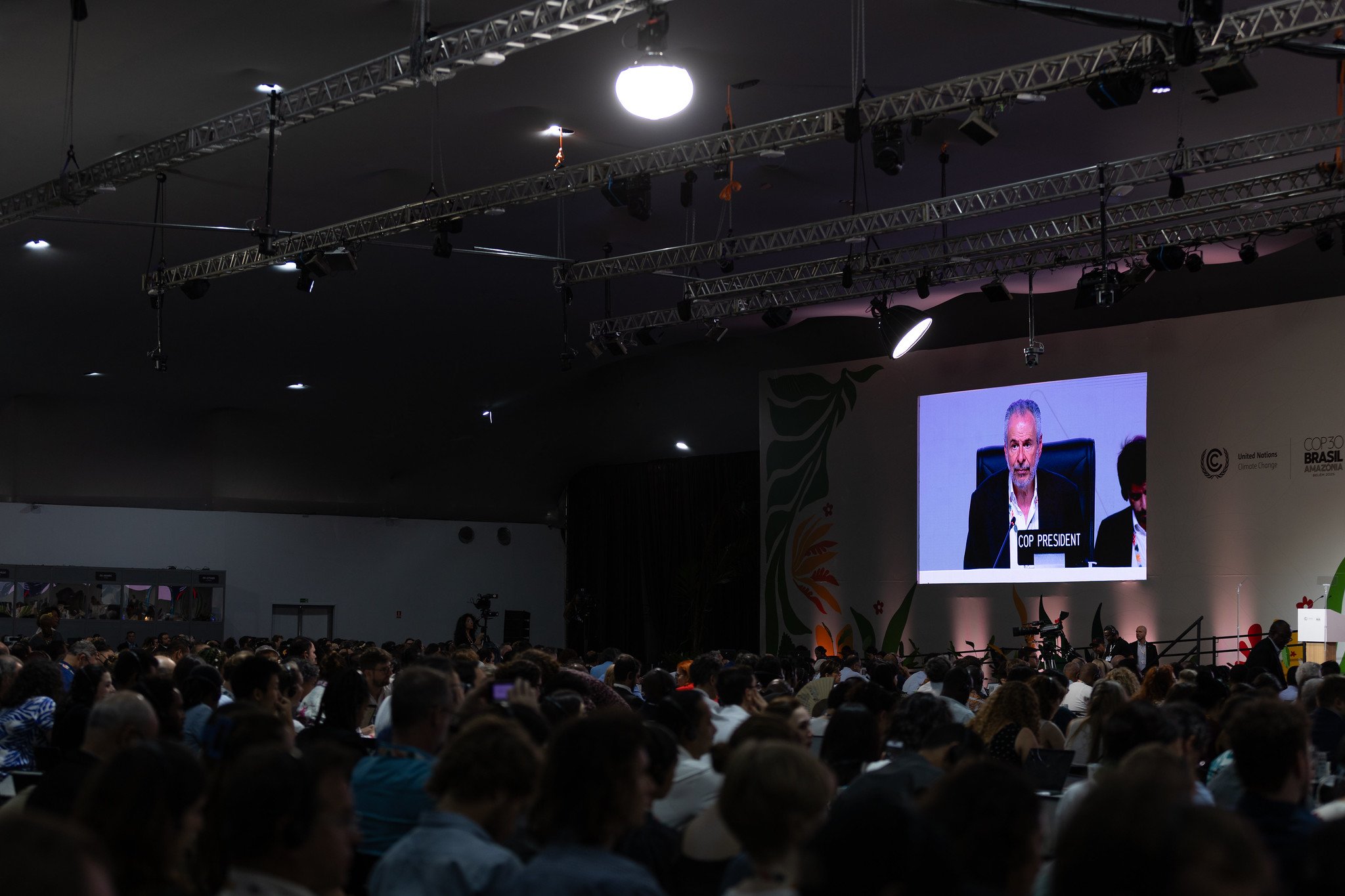
- A Deal Achieved: Despite teetering near collapse, the negotiations ultimately yielded an agreement.
- Adaptation Funding Delayed: Nations consented to triple the funding dedicated to adaptation—capital supplied by wealthy countries and critically required by vulnerable nations for protective measures. However, the target of approximately $120 billion annually was postponed until 2035, a five-year delay.
- Fossil Fuels Omitted: The pivotal final decision made no mention of fossil fuels. This was due to intense opposition and fierce campaigning by petrostates, notably Saudi Arabia and its allies.
- Transition Roadmap: A commitment outlining a roadmap for transitioning away from fossil fuels was excluded from the formal deal finalized in Belém. Nevertheless, Brazil supported an initiative outside the UN process, building upon a plan already backed by Colombia and roughly 90 other nations.
- Deforestation Roadmap: A similar roadmap to halt deforestation also garnered the support of around 90 nations. COP30’s intentional location in the Amazon makes the scarcity of substantial measures within the core COP 30 text particularly disappointing.
- Tropical Forests Forever Facility: Notwithstanding the formal text's weakness, Brazil introduced the Tropical Forests Forever Facility—another effort outside the UN process. This is an investment fund designed to financially reward nations for maintaining their standing forests.
- Just Transition Mechanism (JTM) Agreement: A major, widely welcomed achievement by civil society was the ratification of the Just Transition Mechanism. This plan, agreed upon by all nations, aims to ensure the global shift toward a green economy is conducted equitably, safeguarding the rights of all individuals, including workers, women, and indigenous people. Initial attempts earlier in the talks to allocate dedicated funding to the JTM were unsuccessful.
- Emissions Gap Measures: Pressure to address the substantial disparity between national emissions reduction pledges and the cuts necessary to minimize the 1.5°C overshoot resulted in measures weaker than those desired by progressive nations. This shortfall will be addressed by an “accelerator” programme, which is scheduled to report its progress at the following year’s COP.
COP 30 Deal Gavelled Through
Updated 13:40h – 22/11/25
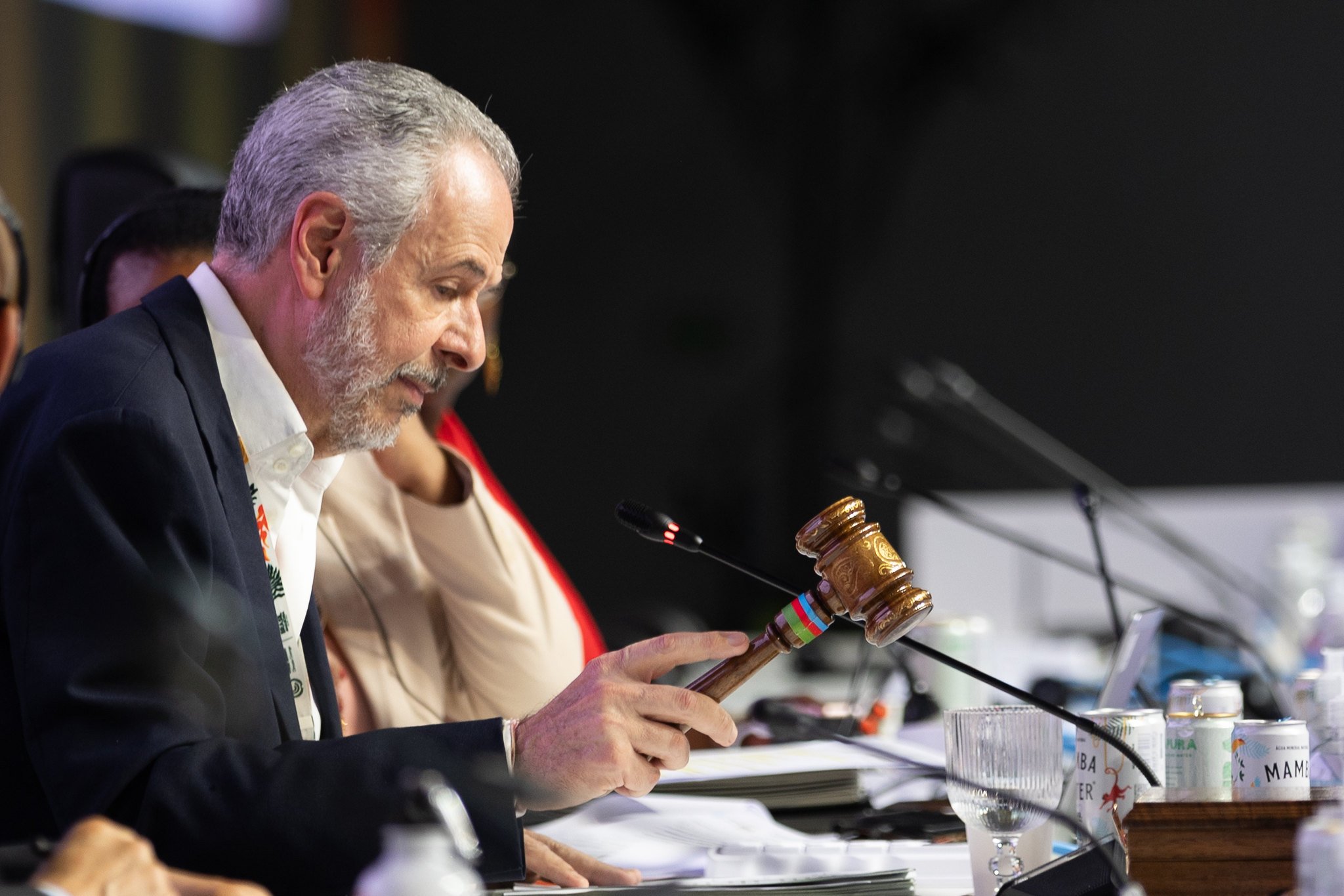
The COP 30 President André Corrêa do Lago has just gavelled through the final deal following a long night and day of prolonged negotiations that has left many countries unhappy. Without opening the floor for country discussions in the final plenary, the President brought the hammer down on a series of major agreements, including the Global Mutirão Decision.
COP President Do Lago acknowledged the disappointment felt by many immediately after the deal was adopted, remarking, “I know some of you had higher ambitions,” and adding, “I know youth and civil society will demand we do more.” He vowed to champion these demands during his tenure as COP30 President. He subsequently announced two new roadmaps—one dedicated to ending deforestation and another focused on transitioning away from fossil fuels. Crucially, these initiatives exist outside the formal UN process and consequently lack the endorsement of all 195 participating countries. Nonetheless, with approximately 90 nations lending their support to both roadmaps, there is optimism that they could significantly accelerate future climate action.
Closing Plenary
Updated 13:15h – 22/11/25
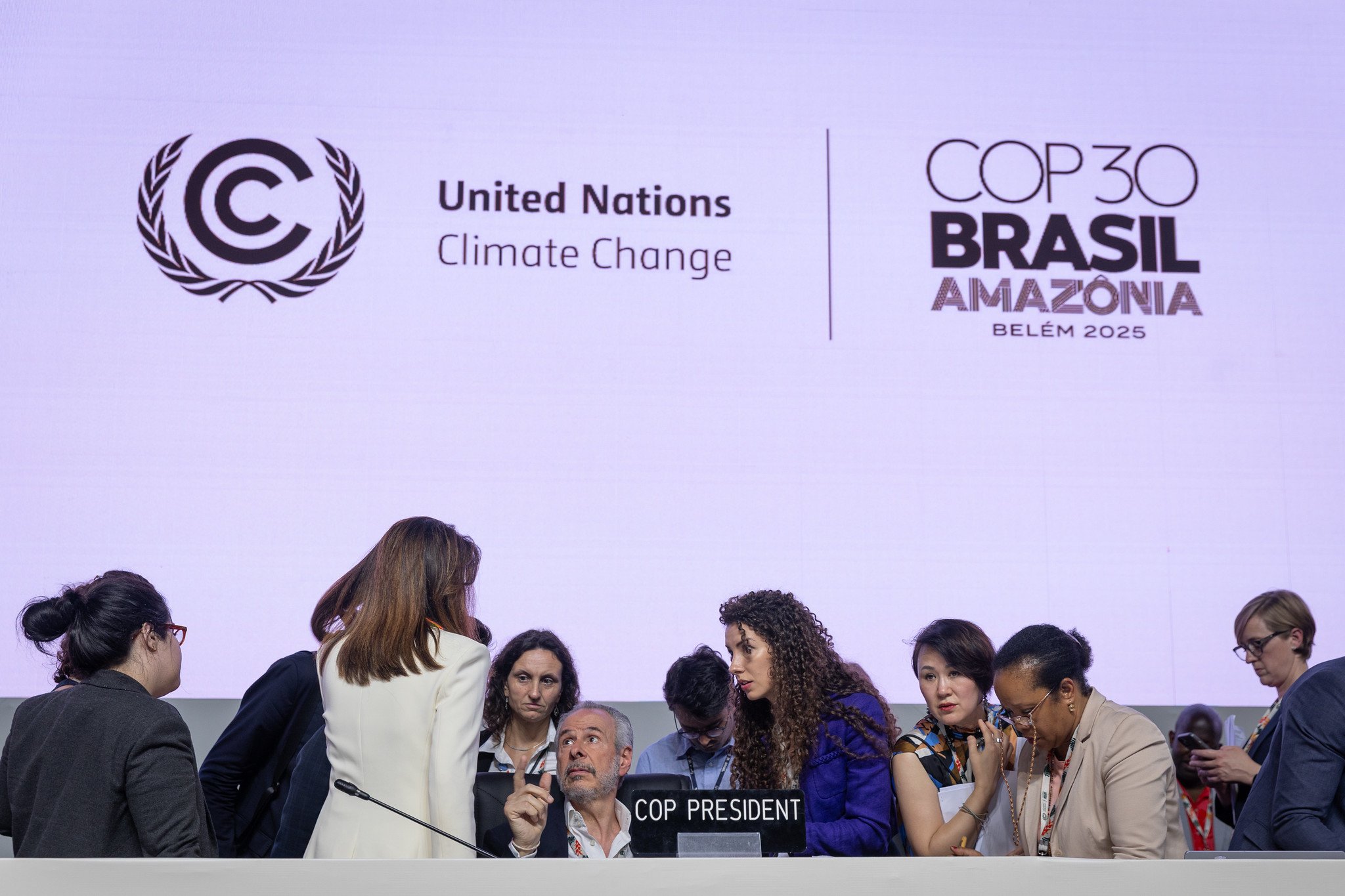
The marathon waiting game here in Belém is finally over: the closing plenary for COP30 is now starting! After an agonizing delay of over an hour and 15 minutes past the last scheduled time, and following three frustrating reschedules that saw the start time bumped from 10:00, to 11:00, to 12:00, and finally to 13:00 (1 PM ESAST), the final session is kicking off.
The "final" COP 30 package, known as the Global Mutirão Decision, will be put forward for adoption among other critical texts. The world is watching to see how the final stretch will play out: will the hard-fought compromises on adaptation finance and the coded language on fossil fuels be accepted, or will countries raise last-minute objections?
The extensive agenda for the four-hour-plus Closing Plenary is designed to systematically move the conference toward its conclusion by addressing both major political issues and routine administrative matters across the Convention (COP), Kyoto Protocol (CMP), and Paris Agreement (CMA). The central focus is on Finance, Adaptation, and Implementation, dedicating significant time to reports on the Green Climate Fund, the new Loss and Damage Fund, and reviewing progress on the Adaptation Committee and National Adaptation Plans. The plenary also includes crucial items such as the follow-up to the Global Stocktake, the Sharm el-Sheikh mitigation work programme, and the highly political item of promoting international cooperation and addressing climate change-related trade-restrictive measures. After tackling reports from all subsidiary bodies, technical items on capacity-building and technology transfer, and administrative issues, the session culminates with the High-Level Segment (statements by Parties and observers) before the final conclusion of the session, where the Mutirão Decision is expected to be adopted.
'Amazon COP' Neglects the Forest
Updated 12:50h – 22/11/25
While we wait for the closing plenary, fierce criticism is mounting that the "Amazon COP" has produced a final Mutirão Decision text that fundamentally neglected the forest it was held to protect. Despite the Brazilian Environment Minister Marina Silva's efforts, the final core agreement contains only a single, vague reference to the Amazon in its preamble, a consequence of the political blunder or sabotage that tied the required deforestation roadmap to the now-blocked fossil fuel phase-out roadmap sought by many nations. This weak outcome has reinforced critics' arguments that the Amazon was merely a backdrop, with Greenpeace Brazil's Carolina Pasquali lamenting the absence of a "map nor a path... for the end of deforestation by 2030." While the text does include language on the rights and knowledge of Indigenous Peoples and people of African descent, and Brazil can point to its separate Tropical Forests Forever Facility and the demarcation of new territories, the document fails to explicitly address the true drivers of deforestation—agribusiness, mining, and infrastructure—which are powerful forces in Brazil's economy and were even sponsors of the conference.
Plenary Delay Again
Updated 12:25h – 22/11/25

Well, it wouldn't be a COP if the plenary started on time! It’s now over 25 minutes past the scheduled 12:00 ESAST start time, and there’s still no sign of things kicking off, despite the whole room having rushed to get there after all the earlier delays (10:00, then 11:00, now 12:00). There are no official updates on the new delay, but delegates are certainly not waiting around: they've broken into little huddles all around the hall, sitting and pouring over the newly published final texts together. The silence is being filled by intense, real-time analysis as everyone tries to figure out what exactly is about to become the outcome of COP 30. The waiting game continues.
Experts Say Trump, Saudi and Russia Killed Fossil Fuel Roadmap
Updated 12:15h – 22/11/25
Reaction to the final draft deal confirms a deep and concerning geopolitical fissure at the core of climate politics, according to Professor Michael Jacobs. He identifies the implacable opposition of the "Axis of Obstruction"—naming Saudi Arabia, the UAE, Russia, and India—to any language on transitioning away from fossil fuels as a direct conflict between those who respect scientific necessity and those actively pursuing "short term energy interests." Jacobs suggests that this obstruction, which saw the fossil fuel roadmap killed from the text, could be linked to recent geopolitical events, including Donald Trump’s remarkably friendly meeting with the Saudi leader and his comments on Ukraine, implying the three countries may have collaborated to stifle climate ambition.
Meanwhile, climate activist Lidy Nacpil offered a sharp critique of the process, stating that the final offer on adaptation finance—despite being a priority for the Brazilian Presidency—was disappointingly low, arguing that the Global North, particularly the EU, used the "circus about the roadmap" as leverage to deliberately water down other critical sections of the text. Nacpil pointed to the hypocrisy of northern governments, noting that if they were truly serious about a fossil fuel phase-out, they would have set an example in their National Determined Contributions (NDCs) or avoided pushing for gas expansion following the invasion of Ukraine, instead relying on a "deceptive narrative" that unfairly blames developing countries for a lack of ambition.
Key Changes in the Final Text from Yesterday
Updated 11:55h – 22/11/25
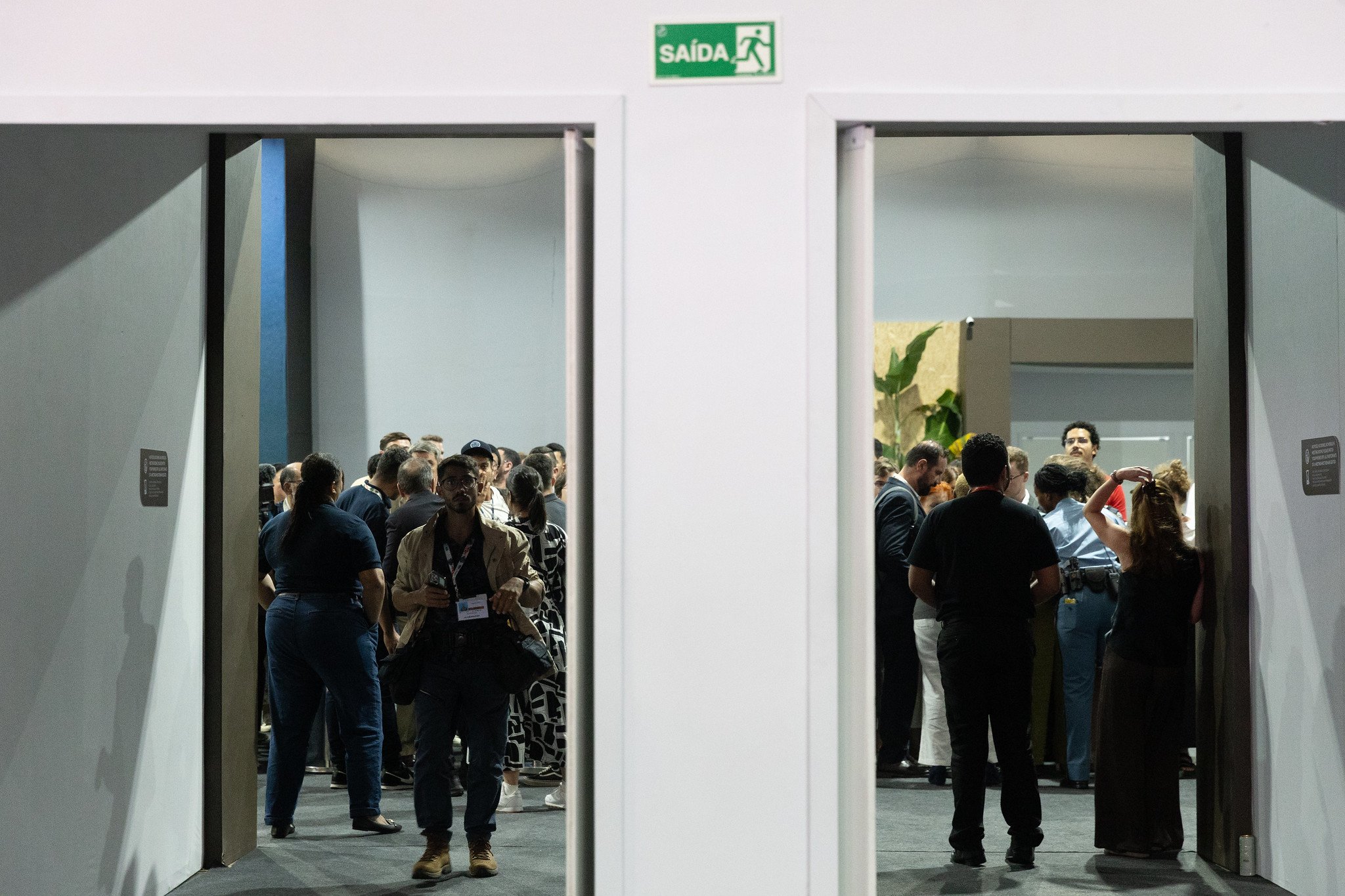
The final version of the key COP 30 mutirão decision text incorporates changes the Brazilian Presidency hopes will secure consensus from all 194 countries in the closing plenary. While formally objecting to the text in plenary remains an option, it is considered a "nuclear option." Here are two of the most significant changes from the draft text released yesterday, which had faced heavy criticism from the EU, Latin American nations, and others pushing for strong climate action:
Fossil Fuels: Coded Reference to COP 28 Deal
The final text continues to omit any direct mention of fossil fuels—the root cause of the climate crisis—due to fierce opposition led by petrostates like Saudi Arabia and their allies. However, a new, albeit coded, reference to the COP28 agreement has been inserted:
- The new language encourages countries to implement their climate plans “taking into account the decisions … such as the United Arab Emirates Consensus.”
- In the jargon-heavy environment of UN climate texts, explicitly referencing the UAE Consensus (which included the first-ever global call to "transition away" from fossil fuels) is considered a win for those pushing for ambition.
- The new text also sets up a high-level meeting on this issue for 2026, creating a dedicated forum to continue pushing for progress outside of the main annual conference.
Adaptation Finance: "At Least" Added, but Deadline Pushed Back
The text addressing adaptation finance—funding vital for vulnerable countries to protect themselves from climate impacts—has seen a minor structural improvement but carries a major catch.
- Small Improvement: The new text now reads that COP30 “calls for efforts to at least triple adaptation finance by 2035,” adding the two crucial words, “at least.”
- The Catch: The deadline for achieving this tripling has been pushed back by five years (to 2035).
- The text also confirms that this adaptation finance is not additional; it remains part of the $300 billion per year climate finance commitment agreed to at COP29, which was a disappointment for many developing countries that wanted new, separate funding.
The reaction from poorer nations, who have done little to cause the climate crisis, is expected to be one of considerable anger regarding the delayed deadline and the lack of additional funding.
Final Text Analysis
Updated 11:45h – 22/11/25

The final COP 30 "Mutirão" Decision text has landed, revealing key compromises on global climate ambition. The text contains no explicit reference to a fossil fuel phase-out roadmap, though it links a new "implementation accelerator" directly to the previous "UAE Consensus" commitment (which called for transitioning away from fossil fuels). On emissions, the decision "calls on" parties to fully implement their Nationally Determined Contributions (NDCs) while "striving to do better," and it "reiterates resolve" to pursue efforts to keep the 1.5°C warming target alive. To move ambition forward, the Presidency will launch the "Belém Mission 1.5" focusing on mitigation and adaptation, which will report its findings to COP31. Furthermore, the text "emphasises" the importance of halting and reversing deforestation by 2030, but stops short of including a specific roadmap.
On the critical issue of finance, the text "calls for" the tripling of adaptation finance, but sets the target deadline at 2035, five years later than earlier drafts. The decision attempts to institutionalize future financial action through a Ministerial roundtable on the $300 billion finance goal and a two-year work program centered on Article 9 finance provisions. Addressing external pressures, the agreement "reaffirms" that unilateral trade measures "should not" discriminate arbitrarily and initiates three new trade dialogues. Finally, in a last-minute move to substitute the missing roadmap, the COP30 president is reportedly set to announce a "Belém Transition Compass" at the closing plenary, an initiative described as being "Like a roadmap. But different."
Final COP 30 Text Drops
Updated 11:40h – 22/11/25
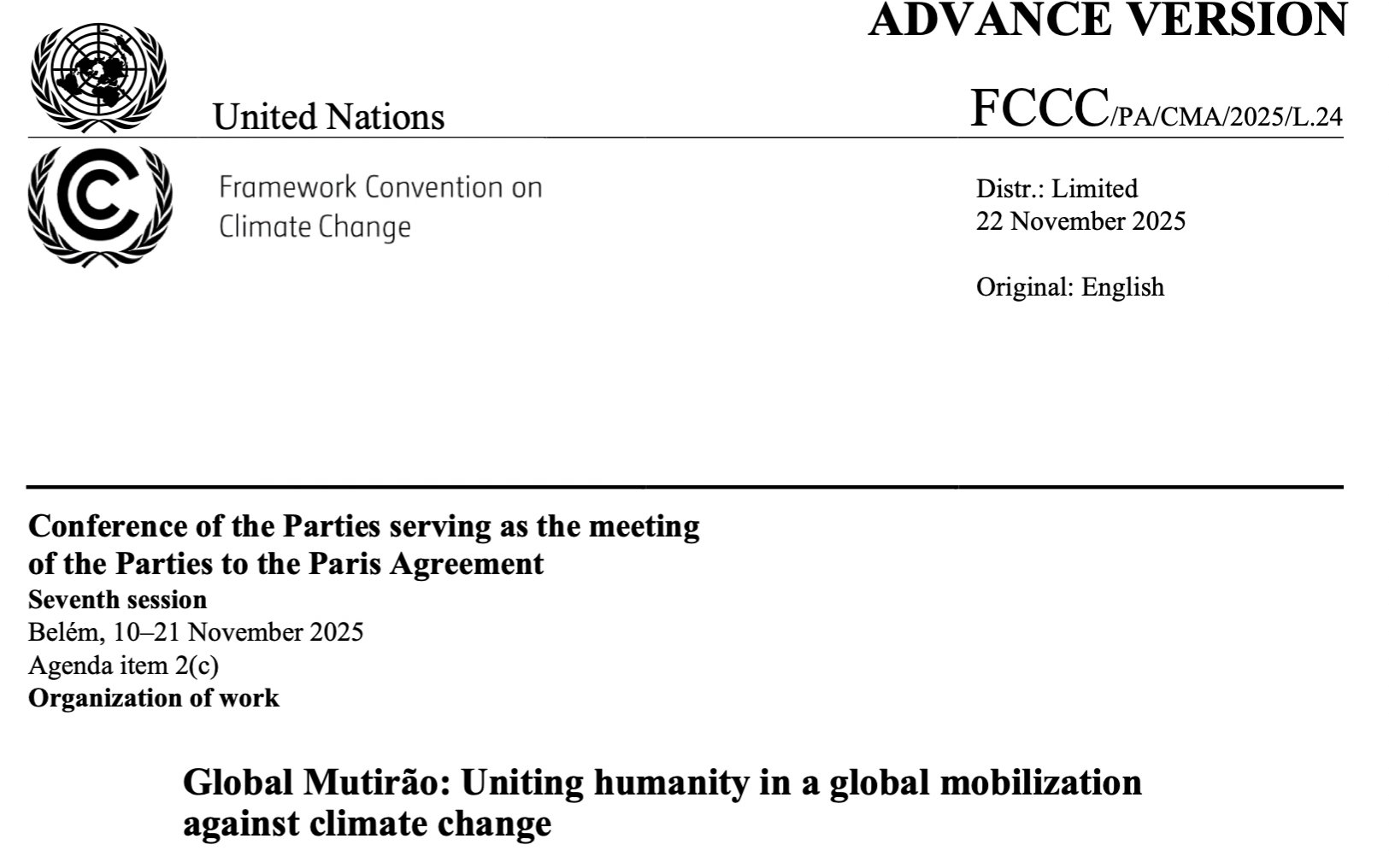
The key Global Mutirão Decision text has just been published! Everyone is currently pouring over the document to analyze the final language on contentious issues like the fossil fuel transition, adaptation finance, and the Belém Mission. You can read the text here. Analysis and reactions shortly.
Finance Win, Fossil Fuel Loss
Updated 11:30h – 22/11/25
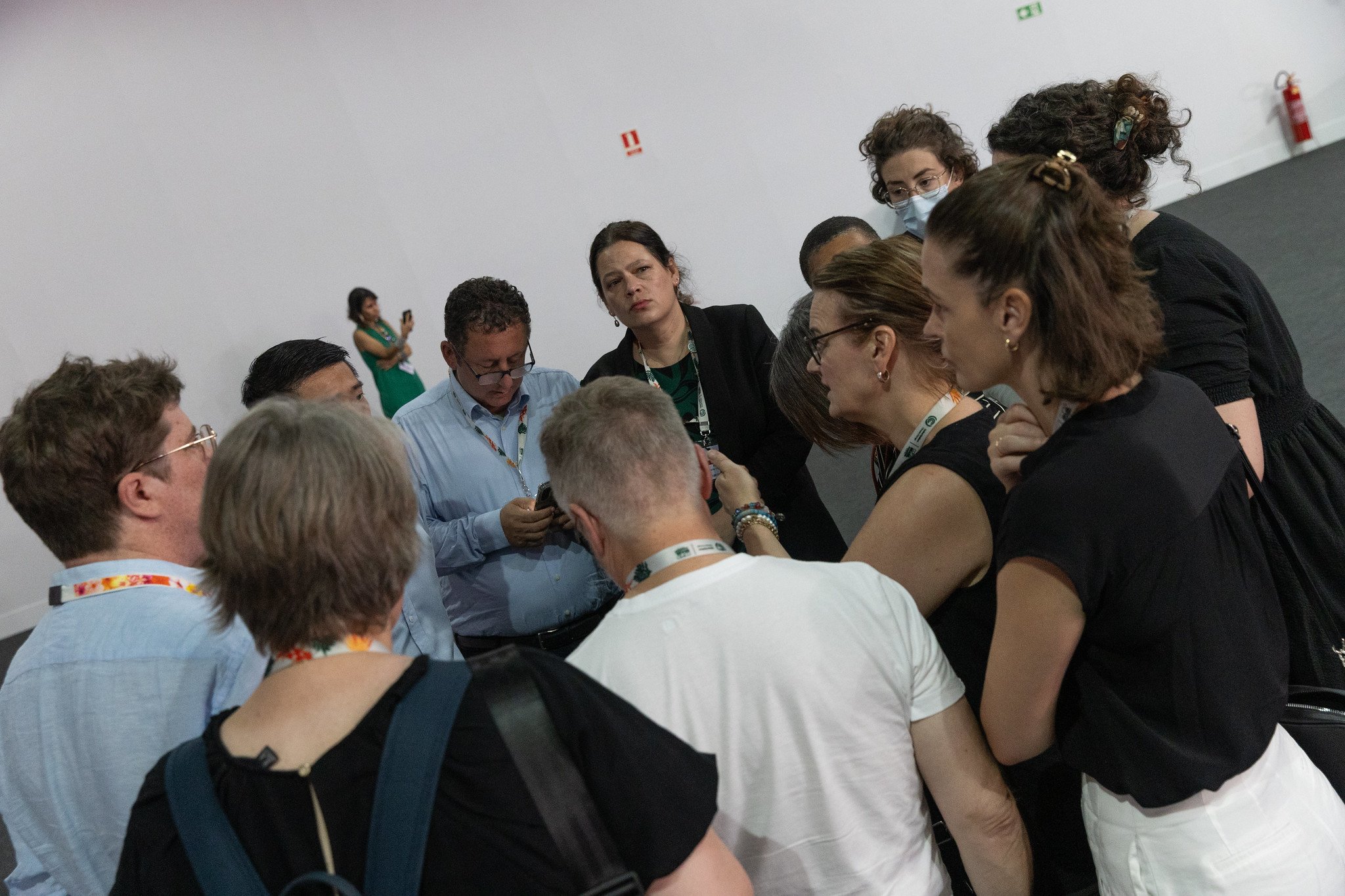
Despite the final text omitting a formal roadmap for transitioning away from fossil fuels, the outcome is being described as "meaningful progress" by climate veteran Jennifer Morgan, who maintains that the Paris Agreement's function is sound and the transition agreed to at COP28 is accelerating.
Morgan explained that while a formal, legally binding roadmap was blocked by major oil-producing nations a key assurance is that the COP 28 commitment to "transition away from fossil fuels" will be referenced in the new text, and Brazil will launch its own initiative after the summit to develop a roadmap with committed nations like Colombia, which Morgan believes will offer a more "just chance" for less developed countries to manage the transition.
Meanwhile, Ana Toni, the Executive Director of COP30, acknowledged the frustration over the lack of a roadmap, calling it "necessary to deal with the climate crisis," but expressed "very happy" relief regarding the financial win on adaptation financing—a vital victory for small island and vulnerable African and Latin American nations—and pledged that the Brazilian presidency remains "totally compromised" to pushing for progress on deforestation in the final hours.
Closing Plenary Delayed, But Texts Are Being Published
Updated 11:10h – 22/11/25
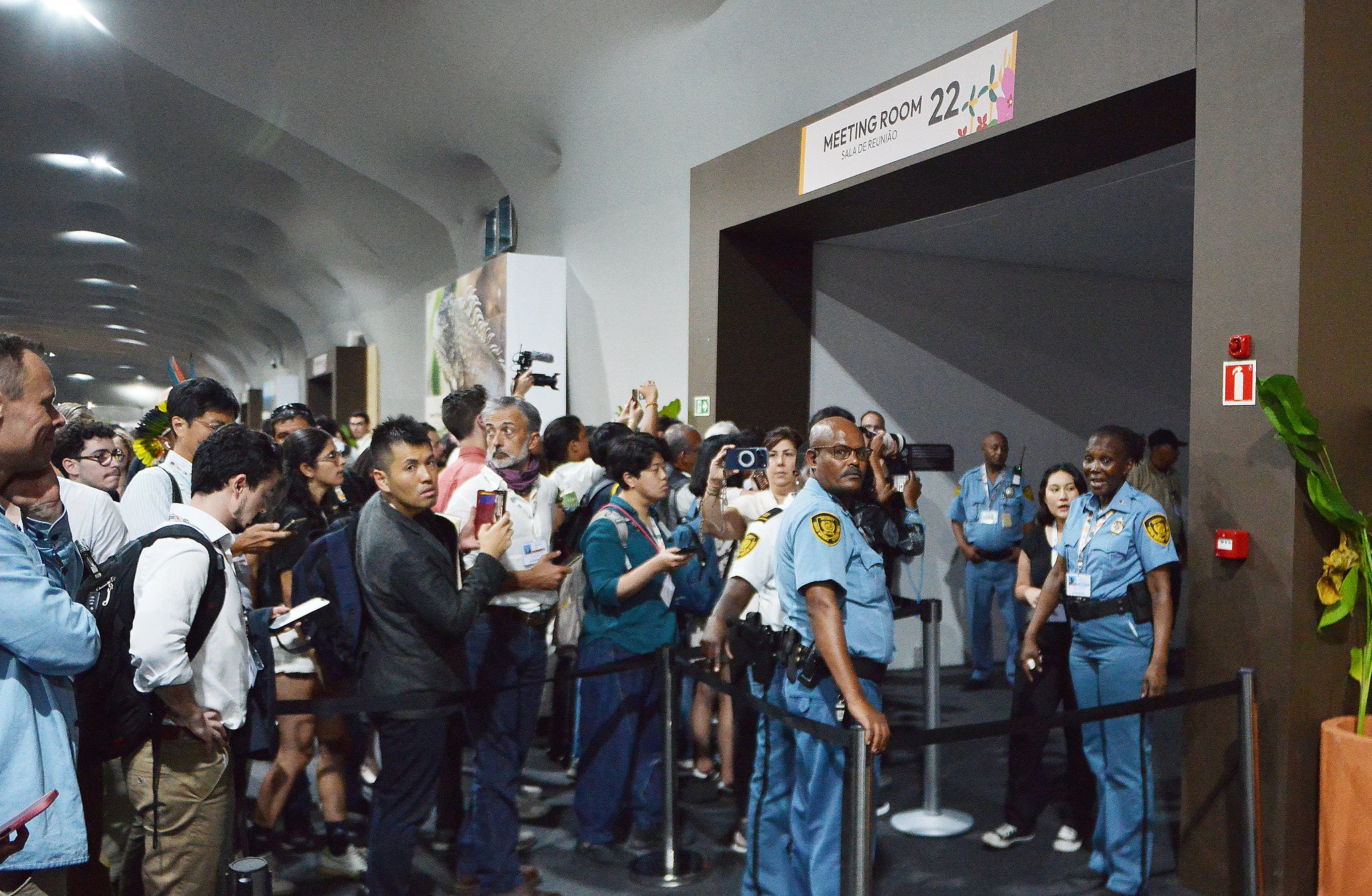
Well, folks, welcome to COP! The official closing session has been pushed back an hour yet again. The "Closing plenaries of COP, CMP, CMA" are now scheduled for 12:00 to 15:00 ESAST, which means the starting time has gone from 10, to 11, and now 12. This whole frantic rush by delegates to get to the room, only for the meeting to be postponed, has become a frustrating, expected ritual—we've seen this exact same chaos play out in Baku, Dubai, and Glasgow.
However, there is a small breakthrough: texts are dropping just now. We're getting the final versions on several important but less contentious issues, including the mitigation work programme, the global stocktake, gender, loss and damage, and the global environment facility. Crucially, we still do not have the big one yet: the final Global Mutirão Decision (which contains the remaining thorny issues like the BAM and Adaptation finance).
COP 30 President Says No Fossil Fuel Phase-Out Roadmap in Final Text
Updated 10:45h – 22/11/25

The COP 30 President, Andre Correa do Lago, has confirmed that the central, most contentious issue of the summit—a roadmap for phasing out fossil fuels—will not be included in the final, negotiated agreement.
Speaking ahead of the closing plenary session, Do Lago expressed optimism that countries would back the final text, noting that they had successfully worked into the "early hours" to finalize the deal. While he indicated that more language on financing has been added to the text, he explicitly stated that the language on phasing out fossil fuels, the primary driver of global heating, would be omitted. Instead of being a mandatory element of the global climate agreement, this issue will now be overseen by the Brazilian government as its own separate post-summit COP 30 initiative. This decision represents a significant setback for the vulnerable nations and campaigners who had made the inclusion of a clear roadmap a red line for success.
Plenary Roulette in Belém
Updated 10:30h – 22/11/25

The venue is currently a scene of chaotic activity, with ministers, delegates, and negotiators arriving and making their way to the Amazonas Plenary hall for the scheduled closing session. Despite the movement, the situation regarding the final agreement remains "as clear as mud." The COP Presidency has formally called the plenary, a fact underscored by the session being first scheduled for 10 am local time and then postponed to 11am, but there is no clear public information on the status of the final draft text itself.
This lack of transparency leaves two high-stakes possibilities for what may unfold next. Negotiators are uncertain if the Presidency will attempt to "gavel something through" immediately without widespread consensus on the remaining contentious issues (like the fossil fuel roadmap and adaptation finance). Alternatively, the plenary might be called only to quickly adjourn, allowing participants to finish final, last-minute negotiations on the text. For now, the entire room is gripped by this tension, with no certainty on whether the closing session will produce a final deal or simply be another procedural pause.
Closing Plenary Scheduled (But Don't Hold Your Breath)
Updated 10:00h – 22/11/25
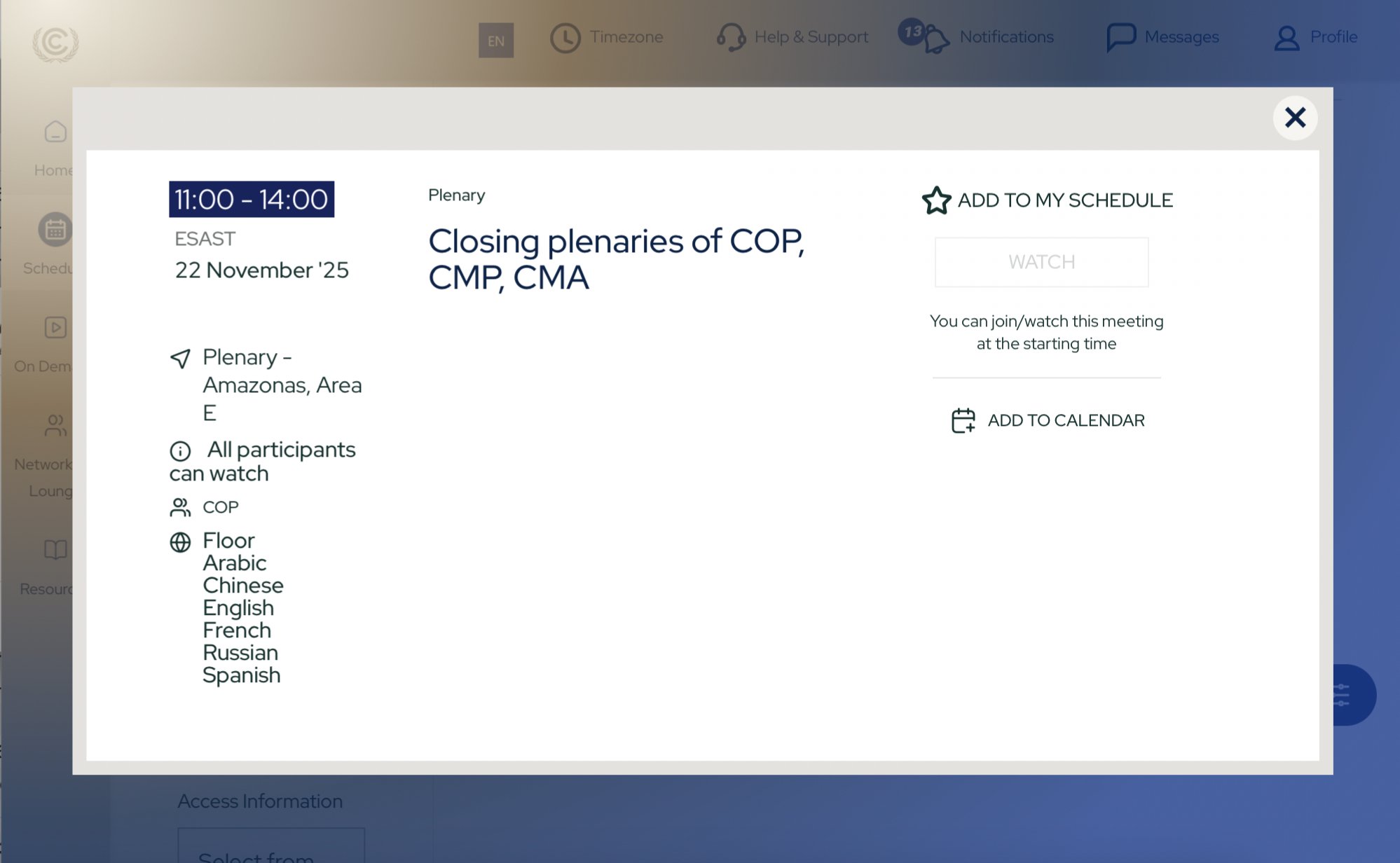
A glimmer of hope has emerged here in Belém, but it is a cautious one. According to the online conference portal, the crucial session for the "Closing plenaries of COP, CMP, CMA" has been officially scheduled to take place in a little over an hour, running from 11:00 to 14:00 ESAST. This session, where the final texts are expected to be presented and adopted, will be held in the Amazonas Plenary hall.
However, this may all be a false dawn. At previous COPs in Baku (COP 29) and Dubai (COP 28), closing plenaries were frequently scheduled, then postponed, sometimes after the hall was already filled with delegates. The focus for the entire conference now hinges on one simple question that has defined the final hours of negotiation: Are the Belém Mission (BAM) and Adaptation finance agreed? The BAM encompasses key mitigation and ambition elements, particularly the contentious issue of a fossil fuel phase-out roadmap, while Adaptation finance remains the "red line" for vulnerable nations. The scheduling of this final plenary suggests a consensus—or, at the very least, a final draft—is near, but the experience of previous summits dictates that delay remains a distinct possibility.
The Risk of Losing Quorum
Updated 09:00h – 22/11/25

If COP30 continues to overrun its scheduled time, the major risk is the loss of quorum, which could legally invalidate any final agreements. For any UN conference to formally adopt a decision, a specific number of government representatives must be present in the room to constitute a quorum. If the number of accredited, attending delegates drops below this required threshold, the meeting must be adjourned, and no decisions can be passed. This scenario is increasingly likely because many delegates, particularly those from Pacific islands and Central Africa who have few representatives and inflexible fixed flight bookings, have nowhere left to stay as chartered cruise ships depart, forcing them to head home. This creates a "race against time" for Brazil, as losing quorum would be an "abject failure" for President Lula, mirroring the disarray of the Biodiversity COP16, which had to be completed months later in Rome.
"It’s Like We are Arguing with Robots...Why even come to COP?"
Updated 08:00h – 22/11/25
Diplomats from vulnerable countries describe the ongoing closed-door negotiations as a "frustrating, dehumanizing battle," especially concerning the core goal of limiting global warming to 1.5°C. As per the Guardian, One representative candidly stated, “Sometimes I feel that this process has lost its humanity. Sometimes it’s like we are arguing with robots.” This feeling stemmed from the belief that other parties—specifically, the "like-minded developing countries" group including Saudi Arabia, China, and India—were ignoring the clear scientific consensus from the IPCC. The delegate lamented that these nations "don’t listen. They don’t want to listen," and accused them of using "power" to argue against the 1.5°C lifeline, despite the devastating impacts already being felt by vulnerable nations.
The conflict was compounded by the refusal of developed countries to adequately commit to and discuss adaptation finance, which is considered "survival" by nations facing the worst effects of climate change, such as severe droughts. Another delegate expressed deep frustration with rich nations, saying, “When we are in the negotiating rooms, I get very frustrated with the developed countries’ positions.” Specifically, they noted that developed nations were resisting calls for a dedicated space to discuss the legal obligation under Article 9.1 of the Paris Agreement to provide public climate finance.
This resistance—which the delegate warned would leave the Loss and Damage Fund an "empty shell"—led some senior Global South negotiators to question the value of attending the summit at all, with one asking, “Without a space to discuss provision, why even come to COP?”
Good Morning from Belém
Updated 05:00h – 22/11/25
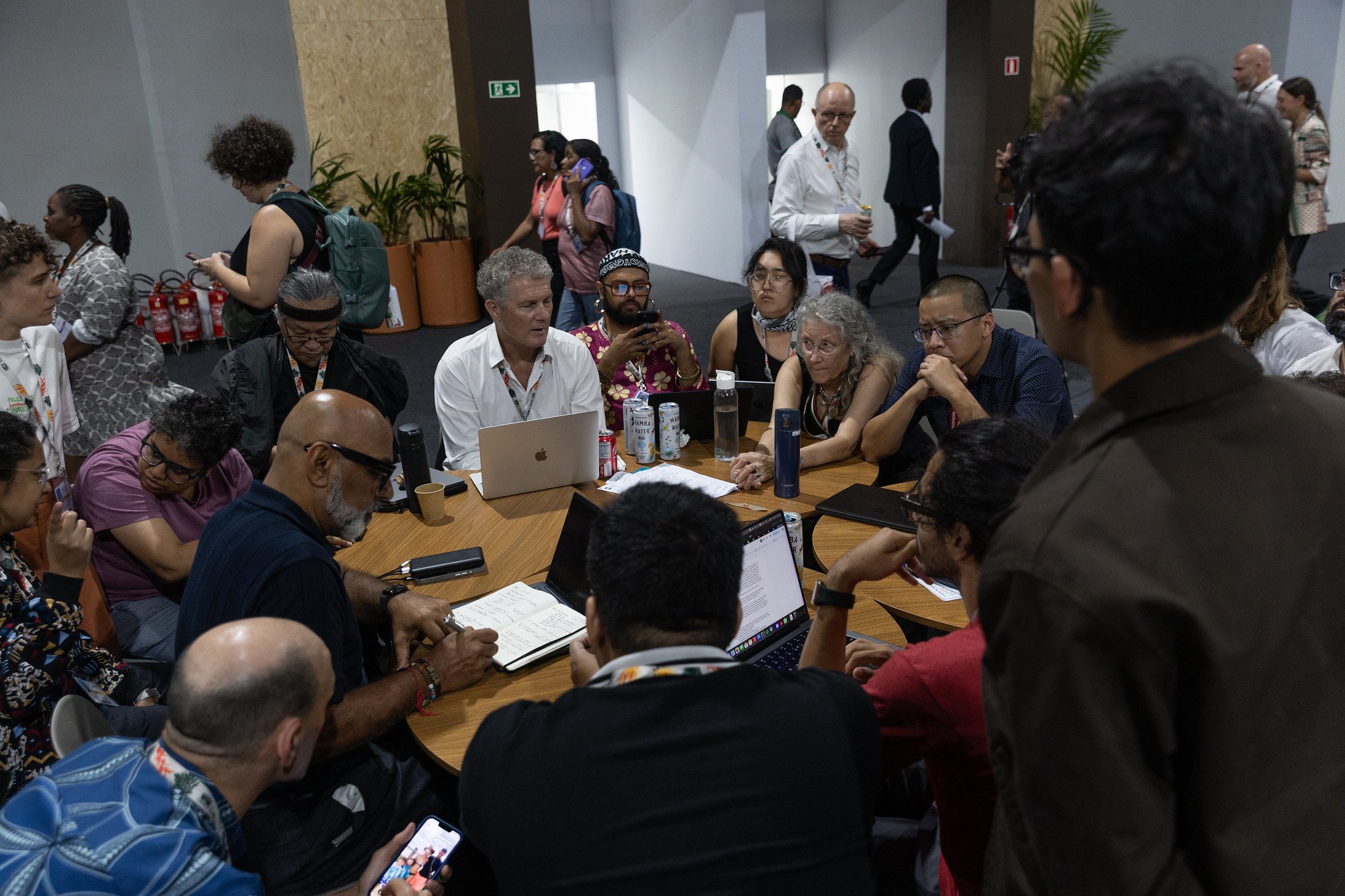
It has been a long night in the negotiation rooms as COP 30 here in Brazil ran into overtime into today, Saturday. No agreement has been struck, and negotiators were locked in a bitter fight overnight over whether to specifically mention fossil fuels in the final text, along with other crucial topics. However, the core disagreement remains centered on the inclusion of the fossil fuel phase-out language.
From outside the room, the simple question everyone is asking is: Are BAM (BAM refers to the Belém Mission and other key mitigation/ambition elements) and Adaptation agreed? We’ll know soon.
LDC Chair Declares Adaptation Finance a "Red Line"
Updated 03:00h – 22/11/25
As COP 30 negotiations extend beyond their scheduled close, the outgoing Chair of the Least Developed Countries (LDC) Group, Evans Njewa of Malawi, has issued a strong statement declaring that adaptation finance is the "red line" for the world's most vulnerable nations.
Njewa emphasized that the current financial provisions for adapting to climate impacts are inadequate for what vulnerable nations require. He called for two specific commitments: a strong replenishment of the LDC Fund and a clear commitment to triple adaptation finance by 2030. The LDC Chair also stressed the urgency of the climate crisis, demanding immediate action to keep the 1.5°C warming limit alive.
Overtime as Negotiations Drag into the Night
Updated 00:10h – 22/11/25
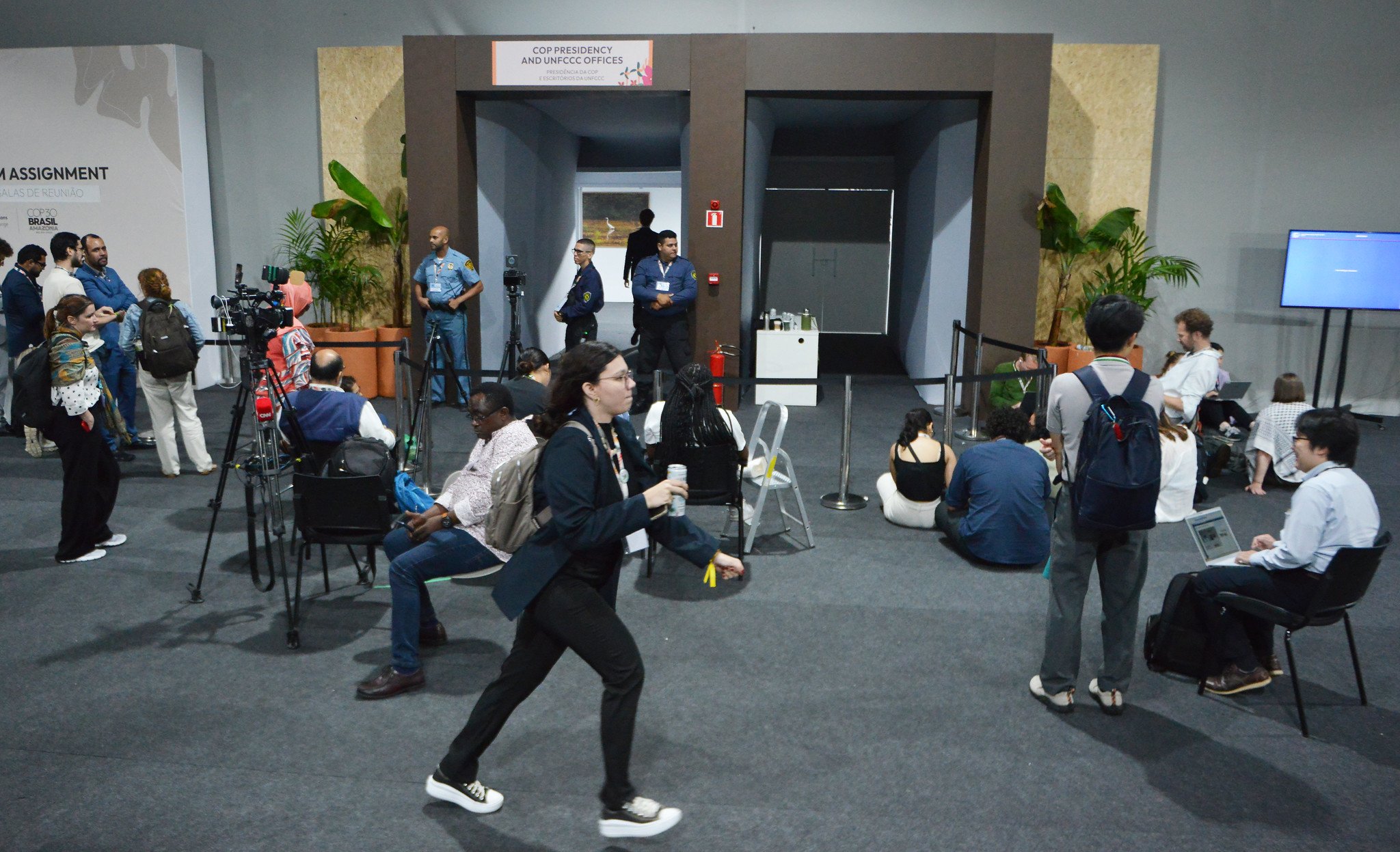
It’s officially the "witching-hour" here in Belém, with the clock now well past midnight on what was supposed to be the final day of COP 30. But for anyone familiar with the COP climate summits, it's no surprise that the talks are running into extra time. The delegates—the ones actually shaping the final deal—are currently locked down in various rooms, intensely poring over the latest draft texts to hammer out a final agreement. Consultations on the “Mutirão” are still ongoing.
Outside the negotiation rooms, a familiar scene is playing out for COP regulars. As the clock keeps ticking, there's little for non-negotiators and observers to do except wait, grab a few hours of sleep, or figure out a new travel plan as flights are missed. It's that classic late-night vibe where everything is on hold while the crucial, last-minute diplomatic sprint takes place behind closed doors.
Update from the Negotiation Room
Updated 23:30h – 21/11/25

Negotiations are continuing past the scheduled end of COP 30, with the Brazilian COP30 Presidency currently focused on brokering an agreement on the comprehensive Mutirão decision text.
In a significant step forward, an agreement was reached on the review of the Warsaw International Mechanism on loss and damage. This mechanism is critical for vulnerable countries, as it addresses climate impacts that go beyond what they can adapt to. While the overall "Mutirão decision" remains a sticking point, this specific agreement marks progress on a key finance and support issue. The talks are expected to continue into the night, as negotiators work to finalize the broader deal.
Paris Agreement Architect Reassures Countries on Fossil Fuel Exit Roadmap
Updated 22:00h – 21/11/25
Laurence Tubiana, chief executive of the European Climate Foundation and an architect of the Paris Agreement, has encouraged nations not to be apprehensive about creating a roadmap to phase out fossil fuels, emphasizing that it will not impose a single path on any country. She clarified that the ultimate decisions on climate action will remain with national governments, allowing them to tailor the transition to their specific circumstances. Tubiana, who is serving as a special envoy for COP30, stated, "We want more renewable energy and less fossil fuel, but every country has to imagine for itself what policies they want, what role they have to play, and what ambition they have."
Furthermore, Tubiana strongly linked the push for adaptation finance—a major priority for vulnerable nations at COP30—to the necessity of a fossil fuel phase-out. She argued that the world's sooner transition away from fossil fuels would inherently reduce the future need for adaptation funds. She contended that it is illogical to advocate for one without the other, stating: "It is just impossible to try to say, we want adaptation finance, but we don’t want a transition away from fossil fuels. Clearly, if you want adaptation, you should support the phase out." She also dismissed the idea of postponing a review of the current Nationally Determined Contributions (NDCs), questioning the purpose of the conference if countries refuse to address the inadequacy of their present climate plans, asking: "What is the point of meeting for a Cop if you do not want to think about NDCs?"
Civil Society Maintains Pressure
Updated 21:00h – 21/11/25
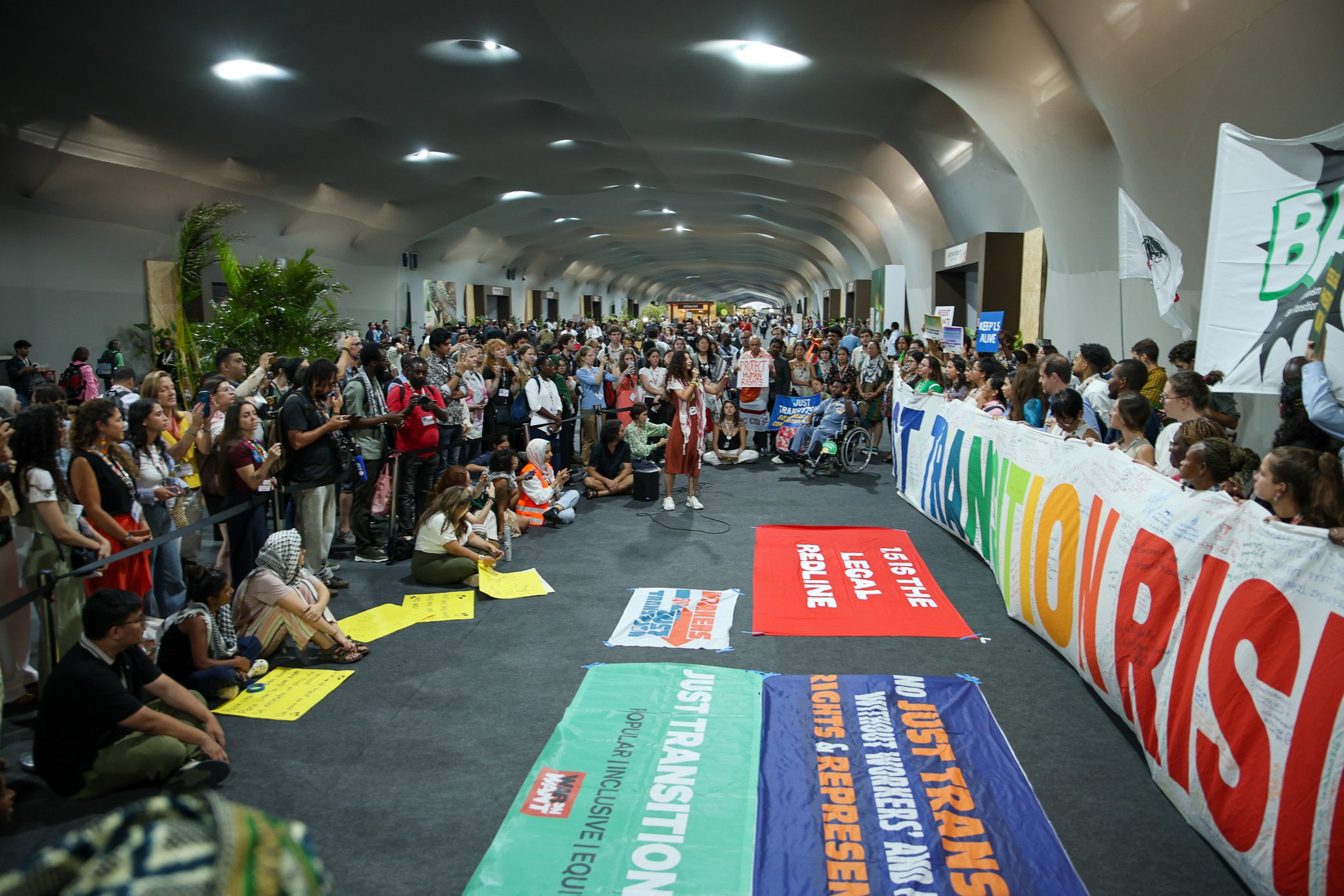
As the negotiations enter the night hours, civil society activists are intensifying their efforts by protesting in the hallways to urge a stronger outcome on key issues. The activists are calling for the summit to deliver a clear plan for a just transition, the phasing out of fossil fuels, the protection of forests, and definitive steps to keep the goal of limiting warming to 1.5°C alive.
COP 30 Struggles to Close 1.5°C Ambition Gap Amid Fossil Fuel Deadlock
Updated 20:30h – 21/11/25
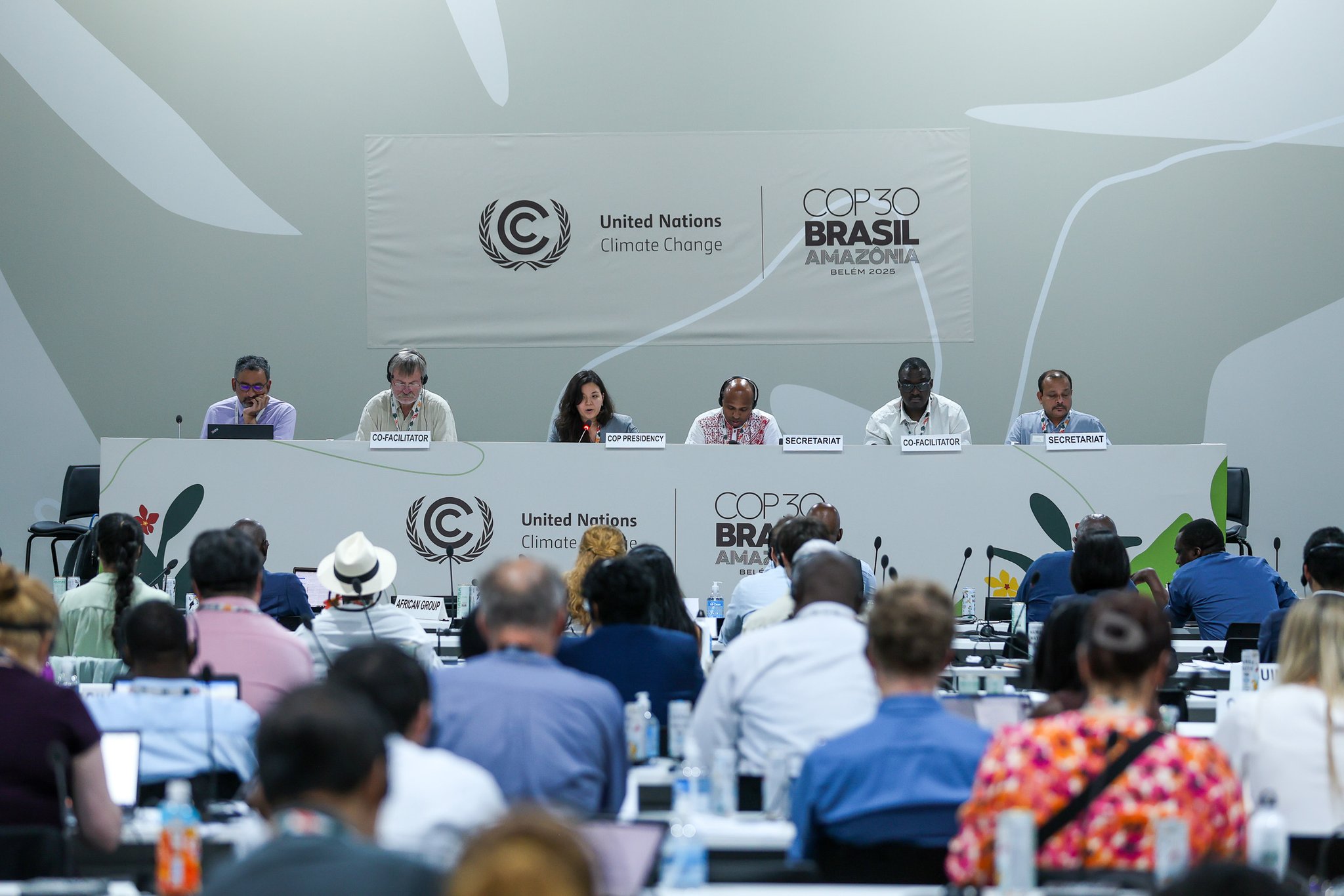
The central concern at COP 30 is whether countries can effectively address the massive gap between current national climate plans (Nationally Determined Contributions or NDCs), which project about 2.5°C of global heating, and the 1.5°C limit set by the Paris Agreement. A delegate from the Alliance of Small Island States noted that this issue is critical for vulnerable countries, yet the draft texts under negotiation only contain options to continue talking about the gap, rather than mandating the necessary carbon cuts. For these nations, the difference between current targets and the 1.5°C goal is a matter of survival, not just discussion.
Adding to the urgency, observers are warning that the lack of progress risks making the summit a failure. Harjeet Singh of the Satat Sampada Climate Foundation warned that without final-hour movement, the meeting would "go down as the deadliest talk show ever produced," criticizing negotiators for "inventing new dialogues solely to avoid the actions that matter." These necessary actions are identified as a concrete commitment to a just transition away from fossil fuels and the provision of adequate climate finance. Despite a call for a roadmap for a fossil fuel transition endorsed by over 80 countries, the latest draft texts have reportedly omitted this roadmap, leading to fears that COP 30 may conclude without a credible plan to align global action with the 1.5°C target
Turkey, Australia Agree to Unique COP 31 Deal
Updated 20:00h – 21/11/25
Turkey and Australia have reached a definitive agreement on the hosting arrangements for COP31, resolving a protracted dispute and establishing an unconventional power-sharing structure for the 2026 summit. Under the terms of the deal, Australia effectively dropped its bid to co-host with Pacific island nations despite having widespread support, conceding to Turkey which will host the physical event in the Mediterranean resort city of Antalya. Turkey will assume the official COP31 presidency and be responsible for all operational and logistical aspects of the conference, as well as managing the action agenda and appointing a high-level climate champion.
Despite not being the host, Australia has secured exclusive authority over the substantive negotiations. Australia's Climate Change and Energy Minister, Chris Bowen, will be appointed Vice-President of the COP and the "president of negotiations," with "exclusive authority" to convene negotiations, select co-facilitators, and produce the draft texts throughout the year and at the summit. Furthermore, in an effort to highlight regional vulnerabilities, Australia will preside over a Pre-COP31 meeting in a yet-to-be-decided Pacific island country. The unusual arrangement, which has been backed by the Western Europe and Others Group (Weog), is still pending a formal sign-off in the plenary.
Observers Warns Ambition "Down the Drain"
Updated 19:30h – 21/11/25
As the COP 30 negotiations continue into extra time, observers are voicing strong concerns over the weakening content of the final draft texts and the lack of progress on core issues. Cat Abreu of the International Climate Politics Hub warned that the ambition level is "heading down the drain," accusing the Brazilian Presidency of "throttling this process" by preventing countries from developing credible plans for cutting fossil fuels, ending deforestation, delivering finance, and advancing adaptation. Dr. Rachel Cleetus of the Union of Concerned Scientists also found the latest texts "weaker than earlier versions" and "disappointing across the board," urging the Presidency to intensify efforts to bridge differences through open and transparent plenaries.
The core fear among observers is that the summit will fail by leaving only "a few words but no clear action," which would fall short of expectations on the tenth anniversary of the Paris Agreement. Experts underscore that meeting science-based goals requires a "fast, fair, funded phaseout of fossil fuels," a commitment currently absent. Joab Okanda stressed that Africa, in particular, "can’t afford to leave Belem with a weak deal" and requires a credible roadmap that delivers both an energy transition and universal renewable energy access, noting that lower-income nations cannot make a rapid transition without essential public finance from richer countries.
African Group Rejects Trading Fossil Fuel Phase-Out for Adaptation Finance
Updated 19:00h – 21/11/25
The African Group of Nations (AGN), led by its chair Richard Muyungi of Tanzania, is maintaining a firm stance at COP30 by insisting on a tripling of adaptation finance from wealthy nations, labeling the "means of implementation" as a non-negotiable compromise they cannot abandon. Muyungi emphasized that the continent is being "held to ransom," as developed countries are demanding the AGN's support for a roadmap to "transition away from fossil fuels" as a prerequisite for increasing adaptation support. The AGN, which argues that the phase-out of fossil fuels is not an "African issue" since the continent contributes only 4% of global emissions, has categorically rejected this linkage, stating, "It’s like you are trading our lives with something we never caused."
The AGN's demand for a tripling of adaptation finance would equate to approximately $120 billion a year, delivered primarily as grants, which is essential because private sector investment is nearly impossible to secure for adaptation projects like flood defenses or crop changes. Muyungi stressed that adaptation is a "just request for the continent" and has no bearing on discussions about phasing out. Furthermore, the group is resisting pressure to remove language calling for increased adaptation finance from the draft text, even as developed countries push for strenuous "indicators" on how the money is spent, creating another major point of contention in the final hours of the negotiations.
Arab Group Rejects Fossil Fuel Phaseout
Updated 18:00h – 21/11/25
It's 6pm and things don't look good; COP30 was to end by now but just now Arab countries reject a fossil fuel phase out as the EU warns of a Cop deal collapse. The Arab group of nations at COP 30 has insisted its energy industry is off limits and any mention of the subject would lead to a collapse of the climate talks, according to NGO observers. The bloc of 22 Middle-Eastern oil-producing countries reportedly said it would not accept any language relating to roadmaps for a fossil fuels transition, gaining the support of the African Group (AGN), which opposed any attempt to put conditions (reducing fossil fuels) on implementation (adaptation funding); however, the AGN's claims to speak for all of Africa were disputed by other countries.
A contrary view was put forward by the European Union, which has warned there was a clear risk that COP 30 would not reach an agreement, according to NGO observers, with Commissioner Wopke Hoekstra expressing dismay at the current text for having no science, no mention of a transition for fossil fuels, and only weakness. The Latin America group is said to have joined Europe in calling the current texts unacceptable due to a lack of ambition, while the least developed countries and small island states demanded language to keep the target of 1.5C alive. Given the impasse, and with negotiations stretching past 11pm into the witching-hour in Belem, the Brazilian presidency then reportedly indicated that a roadmap to transition away from fossil fuels was off the table, citing Saudi Arabia's "red flag" on the issue as the reason it was impossible to debate something that cannot get consensus.
Pakistan Decries Unfair Blame, Cites Developed Nations' Failure on Adaptation Finance
Updated 17:30h – 21/11/25
The head of Pakistan’s delegation, Aisha Humaira, asserted that blaming developing countries for the lack of progress on a fossil fuel transition is unjust when developed nations are failing to provide the necessary finance for a fair shift. She framed the issue as one of climate justice, stressing that the financial burden for current climate change impacts—including the call to triple the adaptation fund—is an obligation under Article 9 of the Paris Agreement that developed countries must fulfill. Humaira highlighted the hypocrisy of industrialized nations that have achieved economic growth through fossil fuels now demanding developing countries, such as Pakistan, which are simultaneously facing extreme climate impacts and widespread poverty, to sacrifice their own economic growth without the promised technology and financial support.
Adaptation Finance Deadlock
Updated 17:00h – 21/11/25
The crucial issue of adaptation finance remains the central roadblock at COP30, preventing progress on the Global Goal on Adaptation (GGA), which is essential for developing countries already facing severe climate impacts. Though the GGA framework, adopted at COP28, set broad themes for adaptation, current efforts are stalled on quantifying targets and, critically, mobilizing the necessary means of implementation (finance, technology, and capacity building). Developed nations are currently resisting calls to link the GGA's new Belém Adaptation Indicators—which are explicitly noted as voluntary, non-prescriptive, and not a basis for comparison—to any financial commitments.
This stance creates a major dilemma, as expressed by advocates: a lack of dedicated finance means the GGA framework, no matter how well-measured, cannot be implemented—likened to measuring a cow without feeding it. Developing countries, united in their position that adaptation finance is a legal obligation, are pushing for an ambitious, fair new adaptation finance goal. However, international public adaptation finance stood at only $26 billion in 2023, far short of the projected $310 billion needed annually by 2035 for developing countries. The failure to meet the COP26 pledge to double adaptation finance by 2025 further underscores the finance gap, which remains a key sticking point that observers say has "paralysed progress" on adaptation plans.
Talks Head to Overtime
Updated 16:00h – 21/11/25
The COP 30 climate talks here in Belém, Brazil, are now set to stretch into "extra time," the weekend as ministers remain deadlocked on the critical issue of phasing out fossil fuels. The conference has been dramatically split,with a large bloc of more than 80 developed and developing countries demanding the initiation of a roadmap for a fossil fuel transition, which would allow governments to set their own pace and measures. However, an equally large bloc of more than 80 countries, including major petrostates like Saudi Arabia and Russia, as well as fossil fuel-consuming nations, finds even this moderate proposal unacceptable. At the insistence of this opposing group, all references to the fossil fuel roadmap were removed from a draft text published early this Friday morning. COP President Correa do Lago acknowledged the growth in importance of the issue but confirmed the strong resistance, stating that more than 80 countries have declared it a "non-starter." Concerns are rising that a new draft text expected this night or early tomorrow will offer only minor "tweaks," disappointing those who want stronger language. One developed country negotiator expressed profound skepticism, "The Brazilians are only listening to the Arab Group."
Afro-Descendant Mention in COP Text: A "Win" or "Chump Change"?
Updated 15:00h – 21/11/25
For the first time in a UNFCCC COP text, people of African descent have been specifically mentioned, a breakthrough that reflects years of organizing by groups like the Global Afrodescendant Climate Justice Collaborative (GACJC). The GACJC views this as a "win" that opens the door for greater participation, data inclusion, and climate justice for a global population of approximately 200 million, including the descendants of the transatlantic slave trade. This inclusion, which Brazil supported, was targeted for at least four operational areas, including just transition and finance, despite pushback from some developed nations like the European Union, the UK, and Australia, which reportedly opposed the mention in the Gender Action Plan.
However, critics argue the mentions are "perfunctory and secondary," with Anthony Karefa Rogers-Wright of the Black Alliance for Peace calling the outcome the "equivalent of going to expect to eat a full meal and only being given appetisers." He noted that the ultimate demand was to establish Afro-descendant peoples as a standalone, officially recognized constituency within the UNFCCC framework, which has not been met. Rogers-Wright characterized the current text's mention—which is not legally binding—as a continuation of ways the UN "continue to dehumanise specific Afro Descendant challenges," cautioning against claiming "easy victories" when the full demand for justice remains unfulfilled.
A Quick Recap: Update from the Negotiation Room
Updated 14:00h – 21/11/25
The COP 30 negotiation room is currently in turmoil after the latest "Mutirão" draft decision failed to include a roadmap for the fossil fuel phaseout, prompting over 80 countries to demand its rejection, stating that the text "refuses to speak the truth" about the climate crisis's primary driver. This lack of ambition is fiercely opposed by the European Union, the Environmental Integrity Group (EIG), and the Independent Alliance of Latin America and the Caribbean (AILAC). Simultaneously, the major developing country blocs are digging in on finance: the Arab Group has declared that text targeting any sector of their economies is "off the table" and insists that adaptation finance is a legal obligation, while the African Group underscores that implementation is being blocked by a lack of funds and that means of implementation are non-negotiable legal "obligations under the UNFCCC and the Paris Agreement" that cannot be tied to conditionalities.
UN Chief Reportedly Names Saudi Arabia as Top Blocker
Updated 13:30h – 21/11/25
The UN Secretary-General, António Guterres, was reportedly identified by sources present at a meeting with EU negotiators as pointing to Saudi Arabia as the primary nation leading blocking tactics that could cause the COP30 talks to fail, an assessment echoed by European officials who noted the country's "vehement" opposition and suggested the Arab Group was "strong-arming" the Brazilian Presidency. However, Guterres's spokesperson, Stephane Dujarric, later stated that the attendees’ interpretation of the closed-door meeting was "inaccurate," clarifying that while Saudi Arabia’s known position was referred to, it was "not singled out," and Guterres had also highlighted opposition from some developed countries regarding adaptation funding pledges. Despite the official clarification, the incident underscores the high tensions surrounding the country, which has a decades-long history of blocking ambitious climate action.
Widespread Outcry Against Draft Text
Updated 12:30h – 21/11/25
The Brazilian Presidency's newest draft text, which omitted the fossil fuel phase-out roadmap and a commitment to tripling adaptation finance, has drawn sharp and widespread criticism from political experts, UN human rights officials, and civil society leaders:
Political and Legal Rejections
- Tactical Infuriation: Political economist Prof. Michael Jacobs argued that the Presidency's proposal is a deliberate tactic, designed to "infuriate" a large group of nations. By heavily favoring the position of the Arab Group and the Like-Minded Developing Countries (LMDCs), the Presidency aims to provoke a public row that will ultimately force the hardline nations to compromise on a more ambitious final text.
- Violation of International Law: Elisa Morgera, the UN Special Rapporteur for human rights and climate change, stated that the draft text constitutes "explicit regression" and does not comply with the ICJ climate ruling or international human rights law. She stressed that under international law, states must transition away from fossil fuels, and the glaring gap in the text, combined with the lack of binding finance, undermines the commitment to limiting global warming to 1.5C.
Civil Society Demands
- "The Deadliest Talk Show": Veteran climate negotiator Harjeet Singh of the Satat Sampada Climate Foundation warned that if the draft text is accepted, COP30 will be remembered as "the deadliest talk show ever produced," criticizing negotiators for "inventing new dialogues solely to avoid the actions that matter". He demanded a three-point "real course correction" right now:
- Establish the Belém Action Mechanism (BAM) for a Just Transition.
- Adopt a binding legal roadmap to phase out fossil fuels.
- Force wealthy nations to provide grant-based public finance for adaptation and loss and damage.
- Lowest Common Denominator: Mohamed Adow, founder of Power Shift Africa, expressed acute dismay that the agreement had been "whittled down through horse-trading to the lowest common denominator," claiming the result fails to reflect scientific urgency or respond to the "lived realities of vulnerable communities". He insisted that the biggest catastrophe of our times is not waiting for governments and urged developed countries to show leadership with real, grant-based finance to prevent the summit from delivering only disappointment.
6 Hours Left: Still Deadlocked
Updated 12:00h – 21/11/25

With only six hours remaining before the official end of COP 30, negotiations are nowhere near a conclusion and are now almost certain to run into overtime, driven by deep rifts on three core issues: establishing a process for a fossil fuel phase-out roadmap, adequately addressing the gap in national climate plans needed to limit heating to 1.5C, and securing climate finance from developed to developing nations. The most contentious issue, the "roadmap to a roadmap," has been excised from the latest draft text, prompting dozens of pro-phase-out nations to maintain that its inclusion remains a "red line," despite strong opposition led by the Arab Group and members of the Like-Minded Developing Countries. Meanwhile, the Brazilian Presidency is facing mounting criticism for its "shuttle diplomacy" approach and for allegedly favoring the positions of the Arab Group, forcing President André Corrêa do Lago to announce a series of ministerial discussions in an urgent attempt to bridge the divides and prevent the conference from breaking down completely.
COP Presidency Pleads for Cooperation Amid Deadlocked Negotiations
Updated 11:30h – 21/11/25
During an informal stocktake plenary where the Presidency updated all Parties on the state of negotiations, André Corrêa do Lago, the Brazilian president of COP30, issued a plea for the world's nations to come together and agree on a deal in Belém.
The negotiations are currently "fraught," facing a stand-off over creating a roadmap to phase out fossil fuels and ongoing rows concerning the provision of climate finance from wealthy to developing nations.
Corrêa do Lago stressed the need to preserve the Paris Accord regime through a "spirit of cooperation," not through a focus on "who is going to win or is willing to lose," warning that without strengthening the regime, "everybody will lose". He defended the rule of consensus, which gives small groups of countries an effective veto, stating that this is the regime's "strength" because it sends the most powerful messages to the world.
The President emphasized the urgency of their work, citing extreme weather events and noting that the world is currently on target for a "catastrophic 2.6C" of global heating. He also framed climate action positively, stating that "We are creating a new economy that offers amazing opportunities for growth, amazing opportunities for jobs". Following the plenary, a meeting of all countries' ministers was planned to try and thrash out an agreement.
Informal Stocktake Plenary to Update Parties on Negotiation Status
Updated 11:00h – 21/11/25
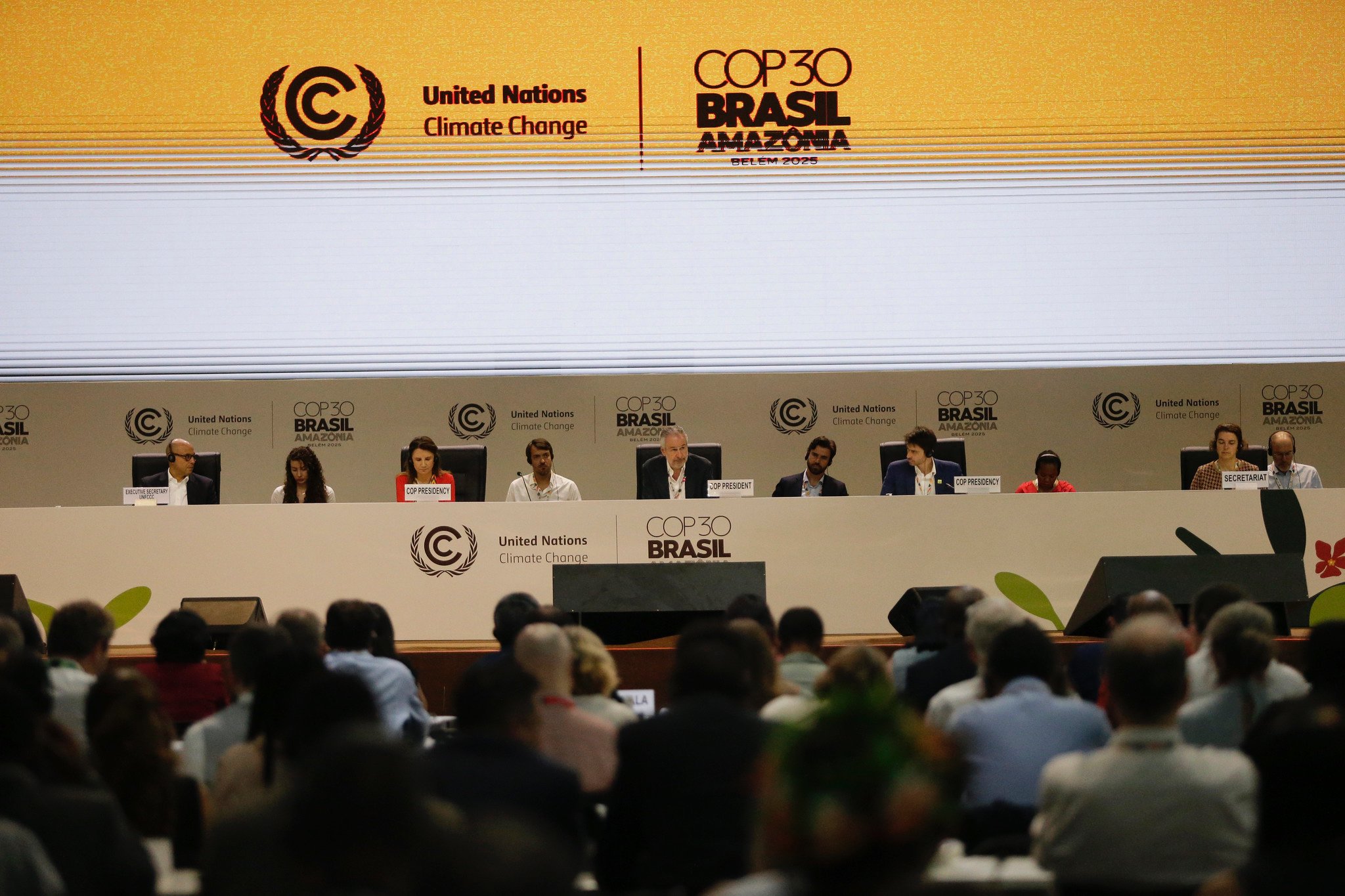
An informal stocktake plenary is currently underway where the Presidency is updating all Parties on the present state of the negotiations.
EU Warns of 'No-Deal Scenario'
Updated 10:30h – 21/11/25
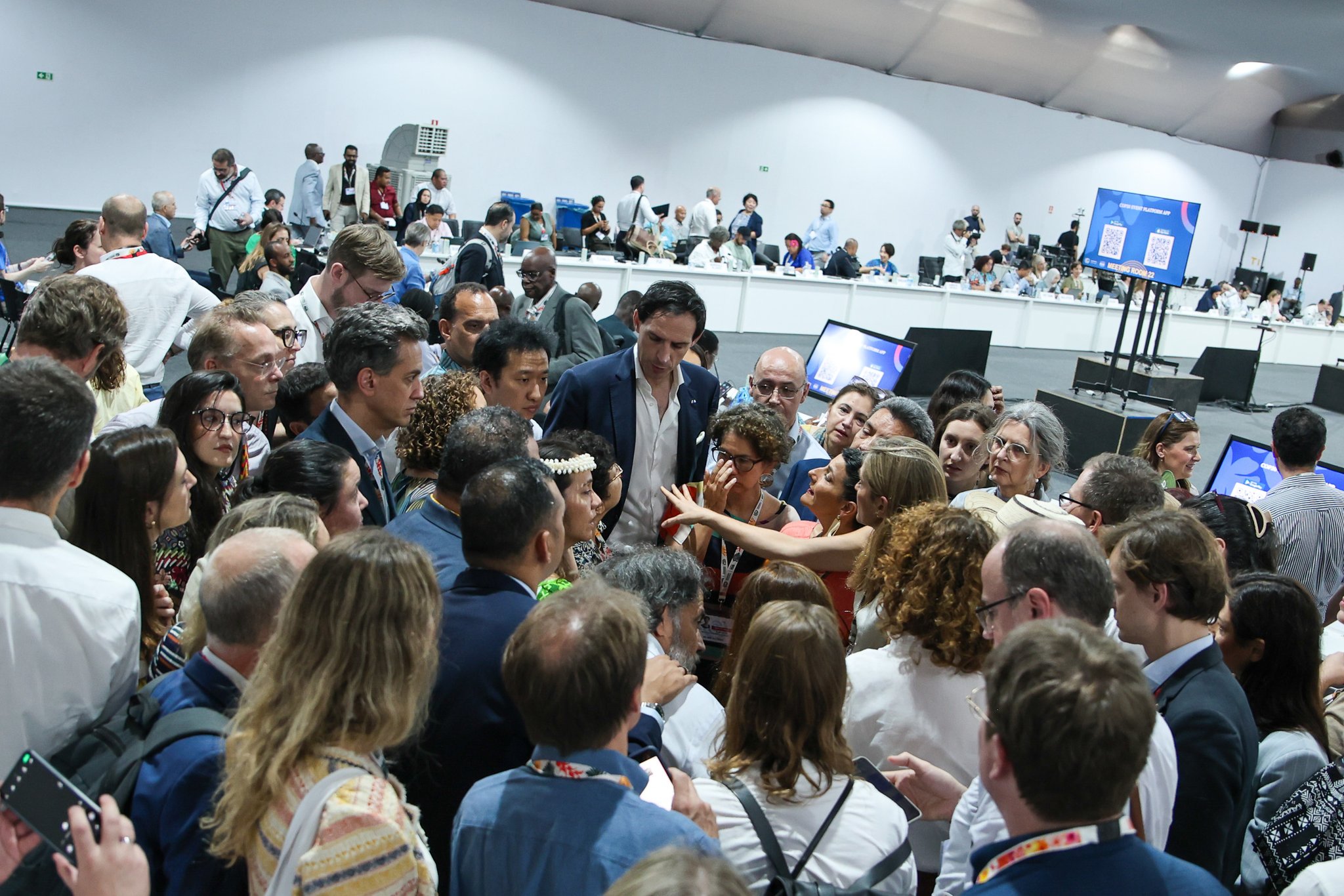
The European Union's Commissioner for Climate, Wopke Hoekstra, has issued a stark warning that the COP 30 could end without an agreement, stating that the latest draft deal proposed by host Brazil is "unacceptable".
The controversy stems from the newest draft text, which was released without any commitment to develop a roadmap to transition away from fossil fuels, a key demand of the EU and over 80 other nations.
Hoekstra told reporters that the text is "in no way close to the ambition we need on mitigation." He expressed disappointment with the current draft but maintained the EU's willingness to be ambitious on adaptation. Critically, he clarified the EU’s stance on finance, stating that "any language on finance should squarely be within the commitment reached last year on the NCQG" (New Collective Quantified Goal).
The EU and its coalition of supporters are now in a final hours showdown with the Brazilian Presidency and nations resistant to the fossil fuel phase-out, as the official closing time for the summit approaches.
From the Negotiation Room: France Accuses Russia, Saudi Arabia, and India of Blocking COP30 Fossil Fuel Deal
Updated 10:00h – 21/11/25
The French Minister for Ecological Transition, Monique Barbut, identified Russia, Saudi Arabia, and India as the primary nations obstructing a COP 30 agreement that includes a commitment to phase out fossil fuels. She noted that these major oil-producing countries are joined by "many emerging countries" in their opposition.
The nations opposing the roadmap for a fossil fuel transition, a key demand by a coalition of over 80 countries, are reportedly driven by their dependence on fossil fuels, either as major producers (like Saudi Arabia and Russia) or as heavy consumers (like India and China). Their resistance poses a significant challenge because consensus is required among all nearly 200 nations for a deal to be adopted.
Reactions to the Draft Text
Updated 09:30h – 21/11/25
The draft text for the COP 30 "Mutirão Decision," released by the presidency, has elicited a strongly negative reaction from major environmental and civil society organizations, who widely condemned it as "shamefully weak" and inadequate for meeting the 1.5°C climate target. The primary criticism centers on the complete omission of crucial language, specifically the failure to mention "fossil fuels" or include a roadmap for transitioning away from them, which had been a key demand backed by a large group of countries. The World Wildlife Fund (WWF) stated the text was "extremely disappointing," suggesting that "Vested fossil fuel interests and big agriculture must be celebrating."
This lack of ambition led Greenpeace to assert that the text "fails to raise ambition, protect forests, deliver finance" and "might as well be blank" for its inability to bridge the 1.5°C ambition gap. Tracy Carty, a climate politics expert for the organization, highlighted that initial proposals for roadmaps to both end deforestation and fossil fuels have "disappeared," leaving the negotiations "lost without a map to 1.5°C." Greenpeace called for countries to reject the draft outright and send it back to the presidency for revision, stressing that reports and further talks are insufficient; what is needed is a clear global response plan to phase out oil, gas, and coal.
Concerns over climate justice and finance formed a second major pillar of the critique. Bronwen Tucker of Oil Change International called the text "outrageous," noting its failure to deliver accountability on "rich countries’ finance obligations" and offering only vague promises on adaptation. A large bloc of developing countries have been vocal in their support for a fossil fuel phaseout but are blocked by rich parties refusing to deliver debt-free public finance on fair terms. Advocates emphasized that without addressing these "systemic barriers," any roadmap would be a "dead-end," and called for the "Belém Action Mechanism for a just transition" to be protected in the final hours.
Despite the widespread condemnation of the core text, expert analysis provided insight into the specific proposals that were included. Ed King of the Global Strategic Communications Council highlighted elements such as calls for efforts to triple adaptation finance, a high-level ministerial roundtable on finance, and the establishment of a two-year work programme on financial provision. Mitigation efforts were watered down to the launch of a voluntary "global implementation accelerator" and the creation of a "Belém Mission to 1.5," both of which will only report back at COP 31. Simon Evans of Carbon Brief confirmed the absence of a roadmap and Paragraph 28 (which calls for deep, rapid emissions cuts), but noted the draft contained what would be a first-ever COP reference to limiting the "magnitude and the duration of any temperature overshoot" of 1.5°C.
29 Nations Threaten to Block COP Agreement Over Fossil Fuel Roadmap
Updated 09:00h – 21/11/25
A coalition of 29 nations supporting the phase-out of fossil fuels sent a letter to the Brazilian COP Presidency, signaling a major escalation in tensions by threatening to block any final agreement that did not include a commitment to transition away from fossil fuels and an accompanying roadmap for its implementation. The nations expressed deep concern that the Presidency's current draft proposal lacked the "minimum conditions" for a credible outcome, arguing that the exclusion of a fossil fuel roadmap and concrete finance and technology elements would undermine the conference's credibility and be perceived as a step backward from previous climate commitments. They emphasized that success depended on an ambitious, balanced text reflecting the majority view, rather than accommodating the least ambitious parties.
Early Morning Draft Reveals Sticking Points
Updated 08:30h – 21/11/25
In the early hours of today, the COP 30 Presidency dropped a new package of texts, including the cover text known as the "global mutirão," revealing several key sticking points in the negotiations. A snap analysis of this text confirmed the fears of many: there is no mention of "fossil fuels" and no roadmap for a transition away from them. The text has also removed the crucial "paragraph 28," the substance of which is not detailed in the available text, and features a voluntary "global implementation accelerator".
The Brazilian Presidency is attempting to build momentum through a new, leadership-driven initiative called the "Belém Mission to 1.5C," which will report back at COP31. On the contentious issue of finance, the text "decides to urgently advance actions to enable the scaling up" of finance from all sources, and only "calls for efforts" to triple adaptation finance. Other elements include a two-year work program on climate finance, referencing Article 9 "as a whole," and three dialogues on trade. The absence of any strong language on phasing out the core cause of the climate crisis, coupled with weak commitments on adaptation finance, highlights the immense challenge facing negotiators as they head into the final hours of the summit.
Snap analysis of mutirão text:
- No roadmap
- No "fossil fuels"
- No paragraph 28
- Voluntary "global implementation accelerator"
- Presidency-led "Belém Mission to 1.5C", reporting back to COP31
- "Decides to urgently advance actions to enable the scaling up" of finance from all sources
- "Calls for efforts" to triple adaptation finance
- Two-year work program on climate finance / Art9 "as a whole"
- Initiates 3 dialogues on trade
Welcome to the Final Hours of COP 30
Updated 08:00h – 21/11/25
Good Morning! I'll be hosting today as we head into what is officially the last scheduled day of the global climate summit. It has been my great pleasure hosting the live blog for this year.
While the fire yesterday has guaranteed we'll run into overtime, these final hours are set to be the most crucial and intense of the entire conference. The national negotiators are locked in high-stakes talks, grappling with a deeply controversial draft text that currently fails to mention fossil fuels or a transition roadmap. Today is where the diplomatic skills of the Brazilian hosts will be tested to the limit as they attempt to broker consensus on the most contentious issues—from the fate of the fossil fuel roadmap to securing vital adaptation finance. Get ready for a fascinating, hectic, and potentially "historic" final phase of COP 30.

Science needs you
Support Make Science Great Again
Get the exclusive cap crafted from 100% recycled cotton and polyester

With your help, we can solve the climate crisis together. We connect you with people, businesses and organizations that needs your comment to improve for the climate. Read more
© 2026 We Don't Have Time – All rights reserved.
We Don’t Have Time is the world’s largest media platform for climate action – with a mission to democratize knowledge about climate solutions and inspire and mobilize global action toward a prosperous, fossil-free future.
The content of the We Don't Have Time social network is user-generated. The We Don’t Have Time organization
does not automatically endorse users’ opinions and claims. All users of We Don’t Have
Time have subscribed to We Don’t Have Time’s Terms of Use, which, among other things, prohibits hateful,
abusive, and violent content. If you discover content that violates our Terms of Use, please notify us
immediately. The platform is operated by the company WeDontHaveTime AB (publ), whose majority shareholder is the WeDontHaveTime Foundation. The Foundation’s principal purpose is to contribute to a reduced climate impact and an ecologically sustainable environment. Our headquarters is located in Stockholm, Sweden.
Please read our Privacy Policy and our Cookie Policy.