Just hours before the new government took power, Colombia’s outgoing administration put a major new obstacle in the way of oil, gas and mining expansion in the Amazon.
“Today, Colombia tells the world that the Amazon is worth more than gold and more than oil,” outgoing Environment Minister Irene Vélez Torres said in a video message. The new protection covers Colombia’s entire Amazon biome — 42 percent of the country’s continental territory. But it was a ”photo-finish decision”, as the Colombian newspaper El Espectador described it. The announcement came on August 6, Gustavo Petro’s final day as president. His successor, right-wing President Abelardo de la Espriella, has promised a sharp change of direction, including renewed oil and gas exploration and fracking. But doing so in the Amazon has suddenly become more difficult.
The entire Colombian Amazon biome is now declared a Renewable Natural Resources Reserve. The measure prevents new large-scale mining concessions, new oil and gas exploration and production contracts and new environmental permits for such projects. Existing legally acquired rights, however, are not automatically cancelled.
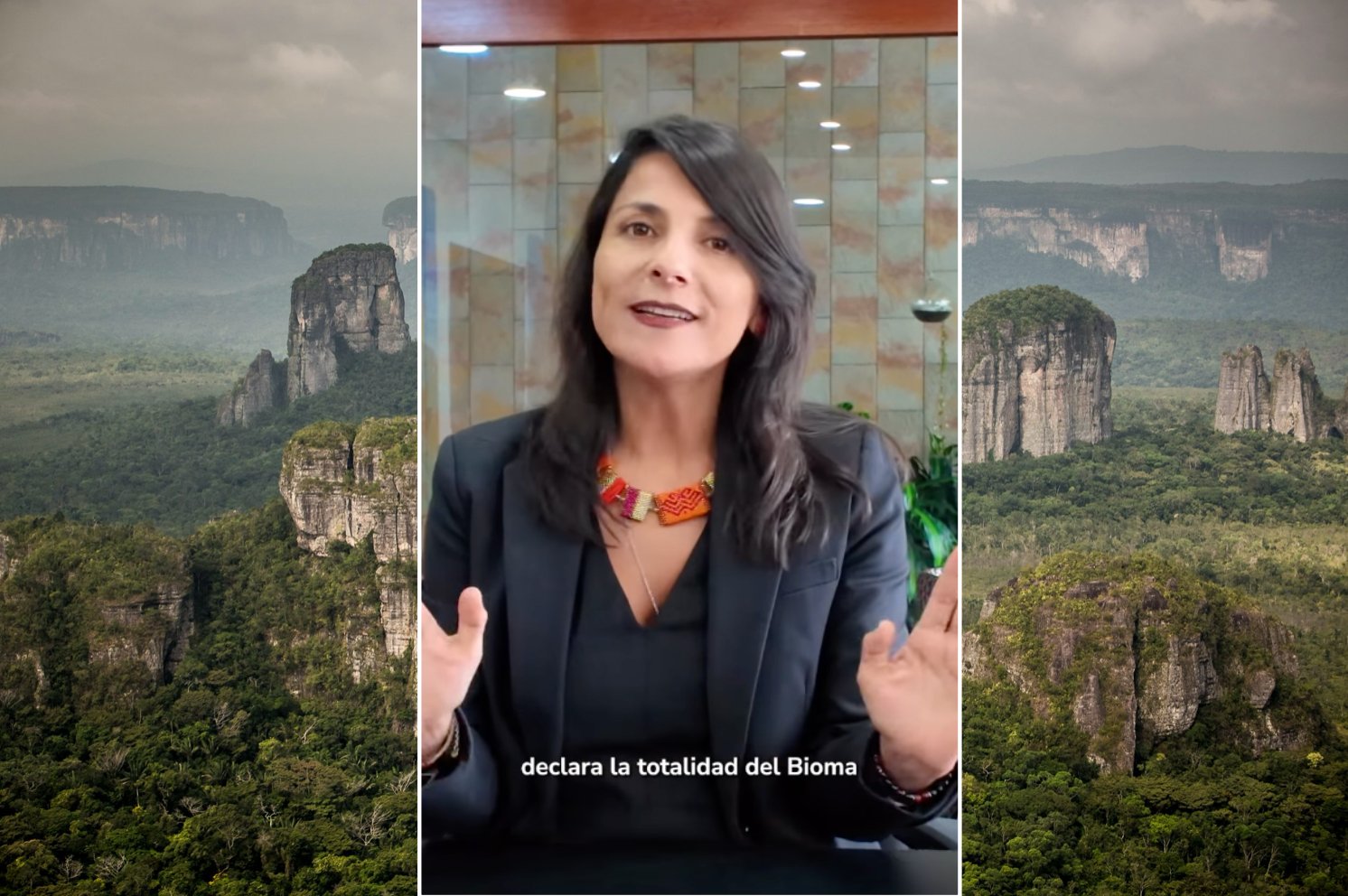
In her final video message as Environmental Minister, Irene Vélez Torres, announced a decision to protect 42% of Colombia’s continental territory from large-scale mining and oil and gas exploration and extraction.
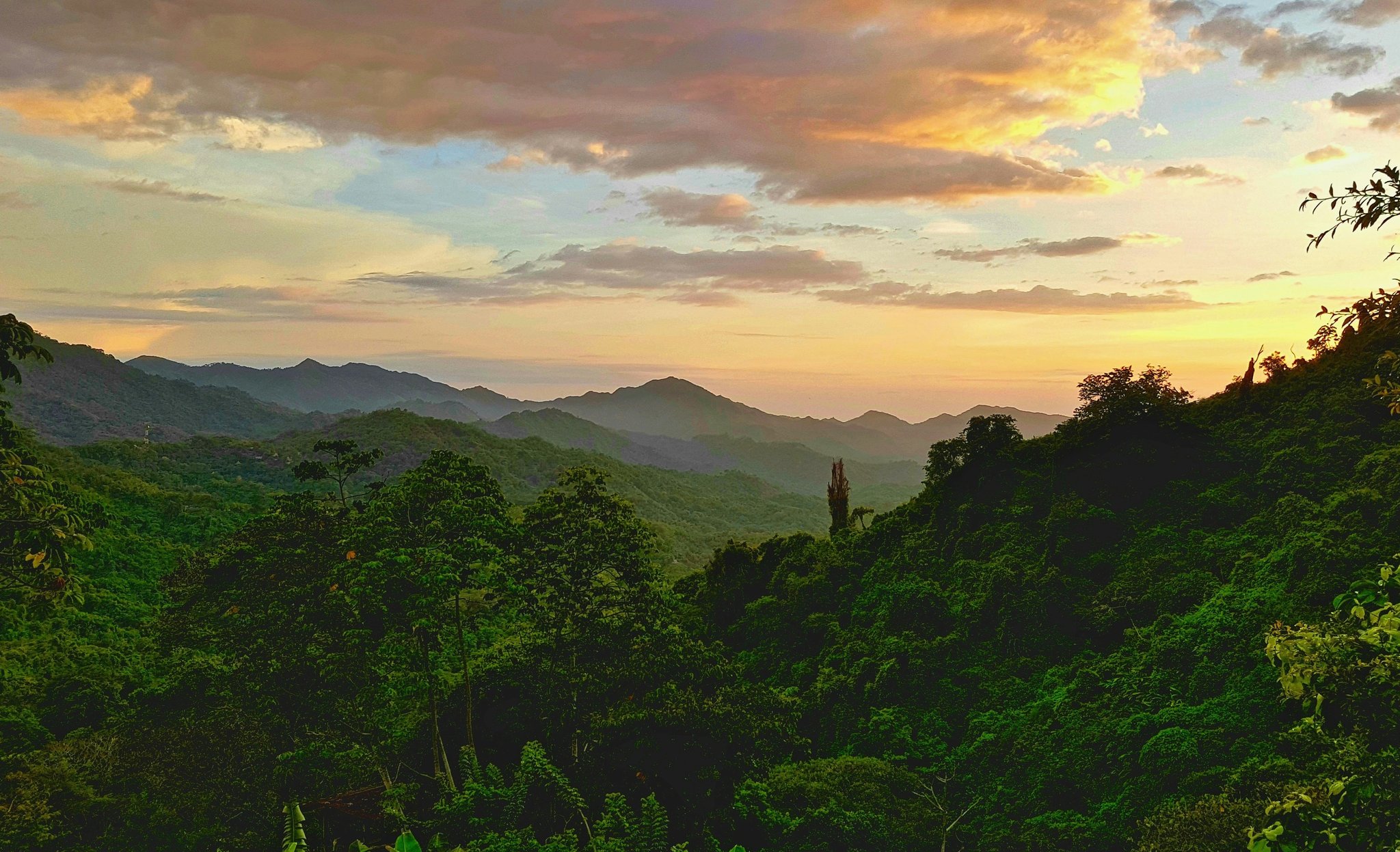
The measure had been promised by Colombia at the COP30 climate summit in Brazil in November 2025. On August 4, 2026, it was formally established through Resolution 0961. Two days later, on the Petro government’s final day in office, the Environment Ministry announced the decision. It was not the only major protection the Petro government put in place during its final months. In June 2026, Colombia also created a permanent 1.5-million-hectare Renewable Natural Resources Reserve in the Sierra Nevada de Santa Marta, blocking new mining concessions and new oil and gas exploration and extraction projects across the area. Together with the Amazon reserve, the measure left the incoming government with substantial new legal barriers to expanding fossil-fuel and mining activity in two of Colombia’s most important natural regions.
Positive trend in Brazil
Positive news for the Amazon is also coming from other nations in the region. Across the border from Colombia, Brazil is seeing one of the sharpest declines in Amazon deforestation in years.
Brazil contains around 60 percent of the Amazon rainforest, making developments there crucial for the future of the entire ecosystem.
Deforestation increased sharply during the presidency of Jair Bolsonaro. Since Luiz Inácio Lula da Silva returned to power in 2023, the direction has changed.
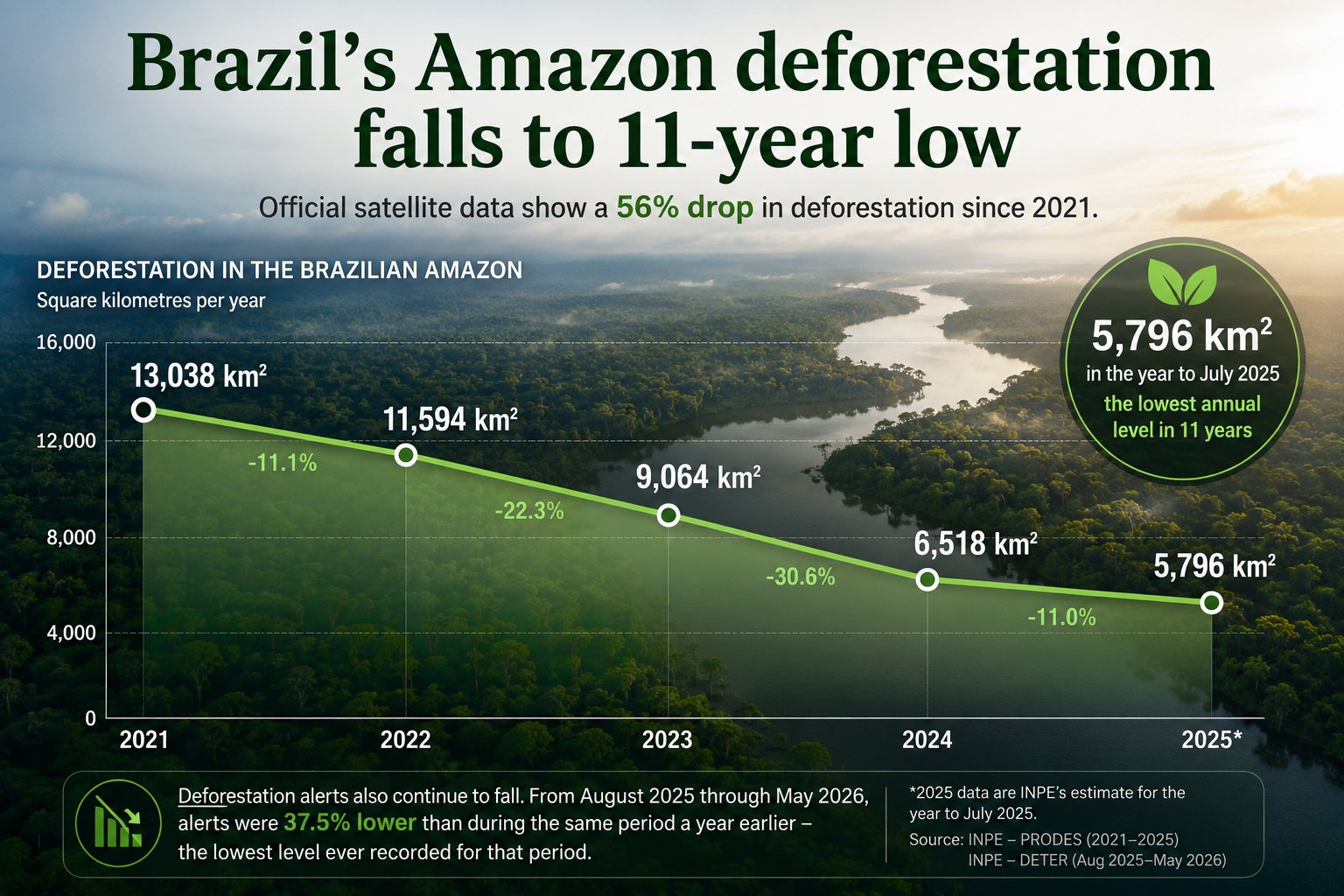
Official data from Brazil’s National Institute for Space Research, INPE, show that Amazon deforestation fell for three consecutive years through 2025. In 2025, 5,731 square kilometres were cleared, according to the final PRODES satellite data. That was roughly half the level recorded in 2022 and the lowest annual figure in 11 years. The same positive trend can be seen in the size of areas burned. And the decline appears to be accelerating. In June alone, deforestation alerts were down 35 percent compared with June 2025. The previous month had produced the lowest May figure since the current monitoring series began.
The numbers do not mean that the Brazilian Amazon is safe. Thousands of square kilometres are still being cleared. Illegal logging and mining continue. Fires, drought and rising temperatures can damage forests even where they are not cut down. Research has also shown that forest degradation can cause enormous carbon losses that are not captured by deforestation statistics alone. Several reports also indicate that the deforestation crisis in Brazil has instead moved to neighbouring Bolivia, where the agribusiness is rapidly expanding. Another threat is Brazil's recent political setbacks on environmental protection. On August 12, its Supreme Court upheld state laws that remove tax incentives from companies participating in the Amazon soy moratorium, a voluntary agreement that has helped prevent soy production from driving new deforestation. Time will tell how this legal decision might affect Brazil's deforestation curve.
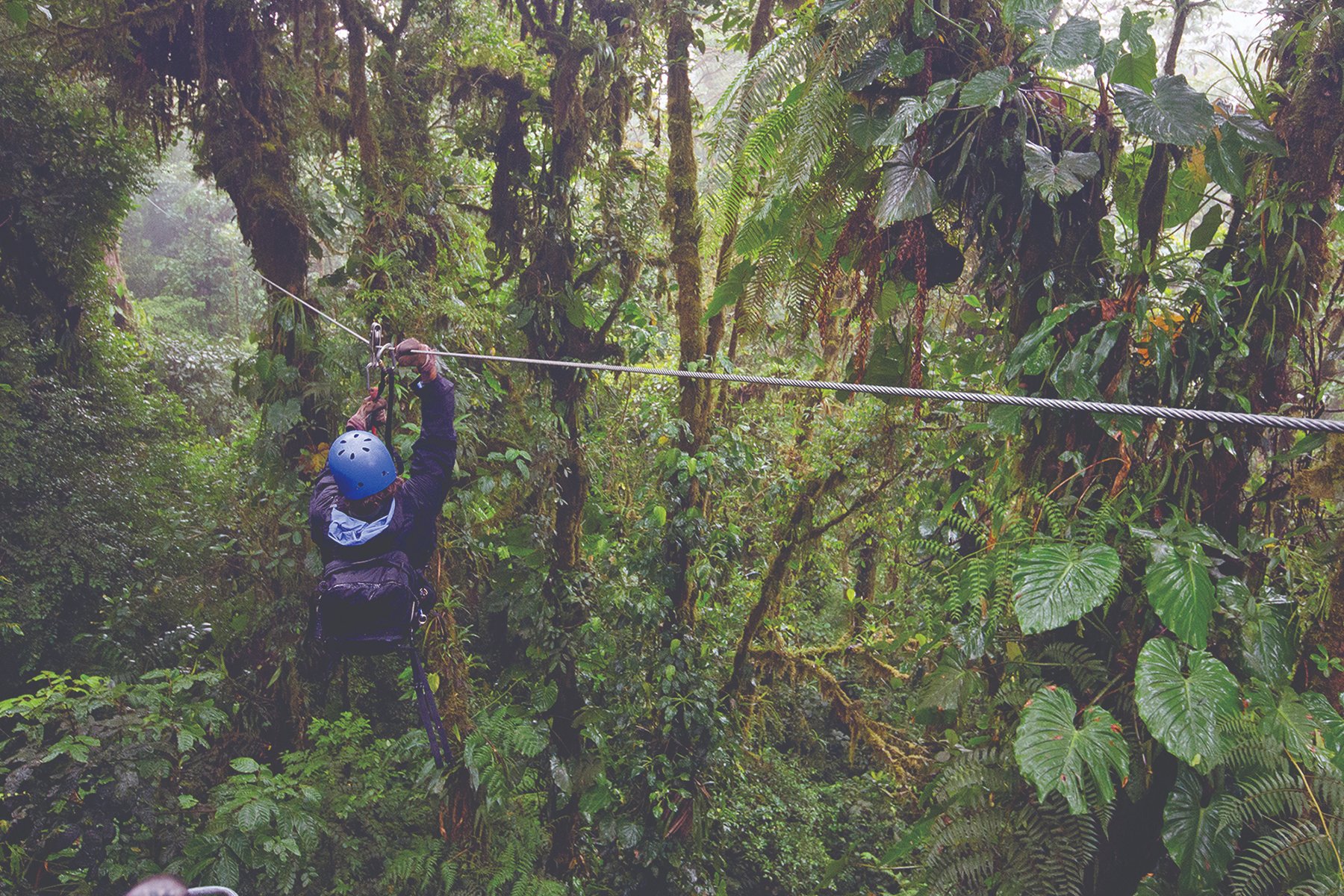
Eco-tourism, like here in the could forests of Monteverde, has helped Costa Rica protect and restore its forests. Photo: Visit Costa Rica
The country where the forest cover has grown back
The greatest success story in Latin American reforestation can be found further north, in the small Central American country of Costa Rica.
In the 1970s and 1980s, the country was losing its forests at an alarming rate. Trees were felled for timber. Large areas were converted to cattle pasture and farmland. Forest cover, once extending across most of the country, fell to around a quarter of its territory.
Then something changed.
Costa Rica expanded its national parks and other protected areas. It tightened restrictions on clearing forests. And in the 1990s, it pioneered a system that paid landowners for the environmental services provided by forests — including storing carbon, protecting water and preserving biodiversity. At the same time, economic changes made cattle ranching less attractive, while tourism and forests themselves became increasingly valuable.
Slowly, the trees returned.
Today, forests cover well over half of Costa Rica. Depending on the dataset and definitions used, estimates are around 60 percent. That means Costa Rica has more than doubled its forest cover from its lowest point. There are encouraging signs elsewhere in the Amazon, not least in Ecuador. In July 2025, the government granted three Shuar communities legal title to 9,317 hectares of their ancestral land in the Ecuadorian Amazon. It was the first such allocation within state forest heritage land in more than a decade. The decision gives the communities greater legal control over forests they have protected for generations — important because research has repeatedly found that Indigenous territories can be highly effective at keeping Amazon forests standing. It follows a $1.5 billion debt-for-nature deal expected to channel around $460 million into Amazon conservation over 17 years. None of these developments, in Colombia, Brazil, Costa Rica or Ecuador, guarantees a healthy future for the Amazon. But together they demonstrate something that can easily disappear beneath the headlines about fires, logging and political setbacks:
Forests can be protected. Deforestation can be driven down. And forests that have disappeared can grow back.
More on this topic: Colombia’s exit from the “Coalition of the Willing” marks a setback, not a defeat