Across Climate Week NYC 2026, held alongside the UN General Assembly from September 20–27, there was one clear red thread: the global transition away from fossil fuels has shifted from ambition to delivery. Electrification took center stage as the linchpin uniting energy security, affordability, and industrial competitiveness.
Alfa Laval’s role in the week’s discussions was clear. The technologies required to achieve the COP31 Presidency’s flagship "35-by-35" target; raising electricity’s share of global final energy consumption to 35% by 2035; already exist. What is lagging is deployment speed, bankable project pipelines, and cross-value-chain execution.
This is where energy efficiency can play a massive role. Trying to double clean power generation without first addressing energy efficiency is like increasing the water flow in a leaky hose. You will gain more, but you will also waste more. Energy efficiency is the fastest, most cost-effective lever to accelerate electrification without overwhelming power grids or triggering unsustainable infrastructure costs.
Grid bottlenecks are not a structural defect of clean electrification; they are the consequence of wasting vast amounts of energy before it reaches its point of use. Energy efficiency acts as a shock absorber that expands grid capacity without requiring trillions in new poles and wires. Alfa Laval’s focus on enabling more efficient, electrified, and integrated energy systems is a perfect fit in this conversation.
Just as importantly, energy efficiency helps preserve affordability. The Electrification special report from the International Energy Agency (IEA), Electrification - IEA, highlights that, in an increasingly electrified economy, every unit of electricity saved reduces energy costs for consumers and businesses while easing the need for expensive investments in generation, grids and storage. The Alfa Laval delegation brought the blueprint of effective energy efficiency directly to their conversations with the COP31 Presidency, governments, policymakers, the IEA, the International Chamber of Commerce, and the wider business community, to enable the kinds of collaborations that are needed for more efficient grids.
From New York to the world
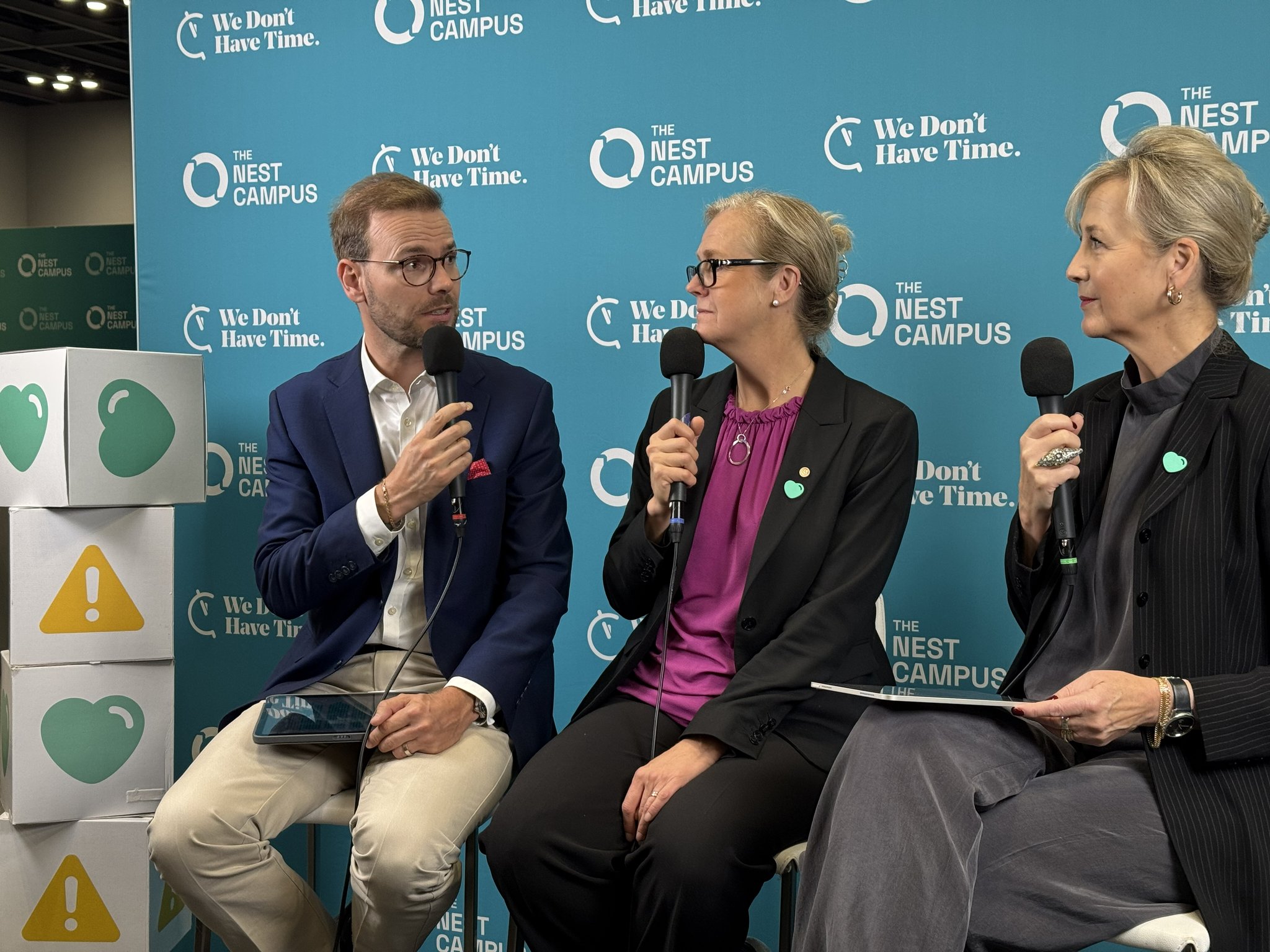
Taking these critical discussions from closed-door boardrooms to a global audience, Anna Hall, Head of Public Affairs for Alfa Laval's Energy Division, joined the We Don’t Have Time studio alongside Mike Umiker, Executive Director of the Energy Efficiency Movement (EEM). Their discussion outlined how industrial process optimization and waste heat recovery shield businesses against volatile energy markets while accelerating decarbonization.
“I think there’s a sense of urgency to reduce energy consumption, move away from fossil fuels, and be energy independent,” said Anna Hall, citing the increase in energy prices due to events like the Middle East crisis as a primary reason for households and businesses wanting to become more energy efficient.
https://youtu.be/pPPjjIONTbY
The Energy Efficiency Movement, of which Alfa Laval is a founding member, also championed this message during the broadcast panel The Full Value of Energy Efficiency: How to Turn Multiple Benefits into Action. Umiker joined Kevin Green (Rare), Paula Glover (Alliance to Save Energy), and Daan Walter (Ember) to dissect the staggering scale of global energy waste and demonstrate how efficiency is an enabler of resilience, cost savings, and emissions reductions.
This is not passive conservation or corporate PR; Waste heat recovery will show up in the balance sheets and deliver immediate returns. “In a system that’s highly electrified, you waste six, seven times less [energy] than in a system that is fossil fuel powered,” said Daan Walter from Ember.
https://youtu.be/0Y7SOUifAzk
Both conversations exposed a crucial blind spot in corporate strategy: energy efficiency can no longer be treated as a sustainability sidebar, and start being managed as a primary performance indicator.
By packaging industrial efficiency projects into investable and bankable portfolios, businesses and financiers can unlock capital at scale. The technologies to secure a clean, competitive, and electrified future are proven and available today. It is time to deploy them.