Right now, beneath Singapore's Punggol district, a 5km network of metal pipes roars as it pumps chilled water to cool offices and classrooms overhead. The technology isn't new. It isn't even recent. District cooling dates back to 1889, when one of the first systems was installed in Denver, Colorado, using ammonia or brine solutions.
Singapore is rediscovering it out of necessity. Temperatures there are rising twice as fast as the global average, and the city-state has to import nearly all its energy. The economics are compelling: district cooling can cut electricity consumption by 30–50% compared to conventional air conditioning, according to Brian Vad Mathiesen, professor of energy systems at Aalborg University in Denmark -
https://bit.ly/4pj9TJn
But here's what the Singapore story actually reveals: we've had the solution for generations and still haven't deployed it at scale.
Stockholm figured this out long ago. Stockholm Exergi's district heating network runs about 2,800 kilometres of pipes beneath the city's streets, alongside a world-class district cooling network covering roughly 300 kilometres. Over 30 data centres in Stockholm are now connected to these heating and cooling networks. Their pioneering model, Open District Heating, does something brilliant: it turns businesses' cooling costs into a revenue stream while heating Stockholm's citizens with the recovered waste heat.
Anders Egelrud, CEO of Stockholm Exergi and President of the Nordic Carbon Removal Association (NCRA) https://nordiccarbon.org/about/
— a new initiative uniting industry, policymakers, and researchers to accelerate carbon dioxide removal across the Nordics — put it this way:
"The debate about how cities should handle extreme heat often centers on new technological breakthroughs. But part of the solution already exists. Stockholm Exergi has invested in district cooling for decades and built the world's largest interconnected district cooling network. That lets us cool everything from hospitals and care homes to offices and data centers in a resource-efficient and reliable way. As heatwaves become more common, more cities need to start seeing cooling as critical infrastructure — just like electricity, water, and heating."
Read that again. Your data centre's waste heat heats someone's apartment. Your cooling cost becomes income. The city's carbon footprint drops.
Near Helsinki, Fortum has just switched on two heat pump plants recovering waste heat from Microsoft data centres — one of the world's largest such projects, set to cover 40% of district heat demand for 250,000 residents in Espoo, Kauniainen and Kirkkonummi.
This is not a pilot. This is not a vision document. This is infrastructure that exists and works.
So why isn't every city in Asia, Africa, the Middle East and Latin America building these systems right now? The uncomfortable answer: upfront capital, political will, and a planning horizon most governments can't hold.
Singapore has committed S$100 billion ($77 billion) to safeguard the city against rising temperatures and sea levels — district cooling is part of that plan. That's what serious climate adaptation looks like. Not just net-zero pledges. Pipes in the ground.
Singapore is also stuck in the negative feedback loop every hot city faces: air conditioners themselves release the emissions that drive demand for even more cooling. District cooling breaks that loop.
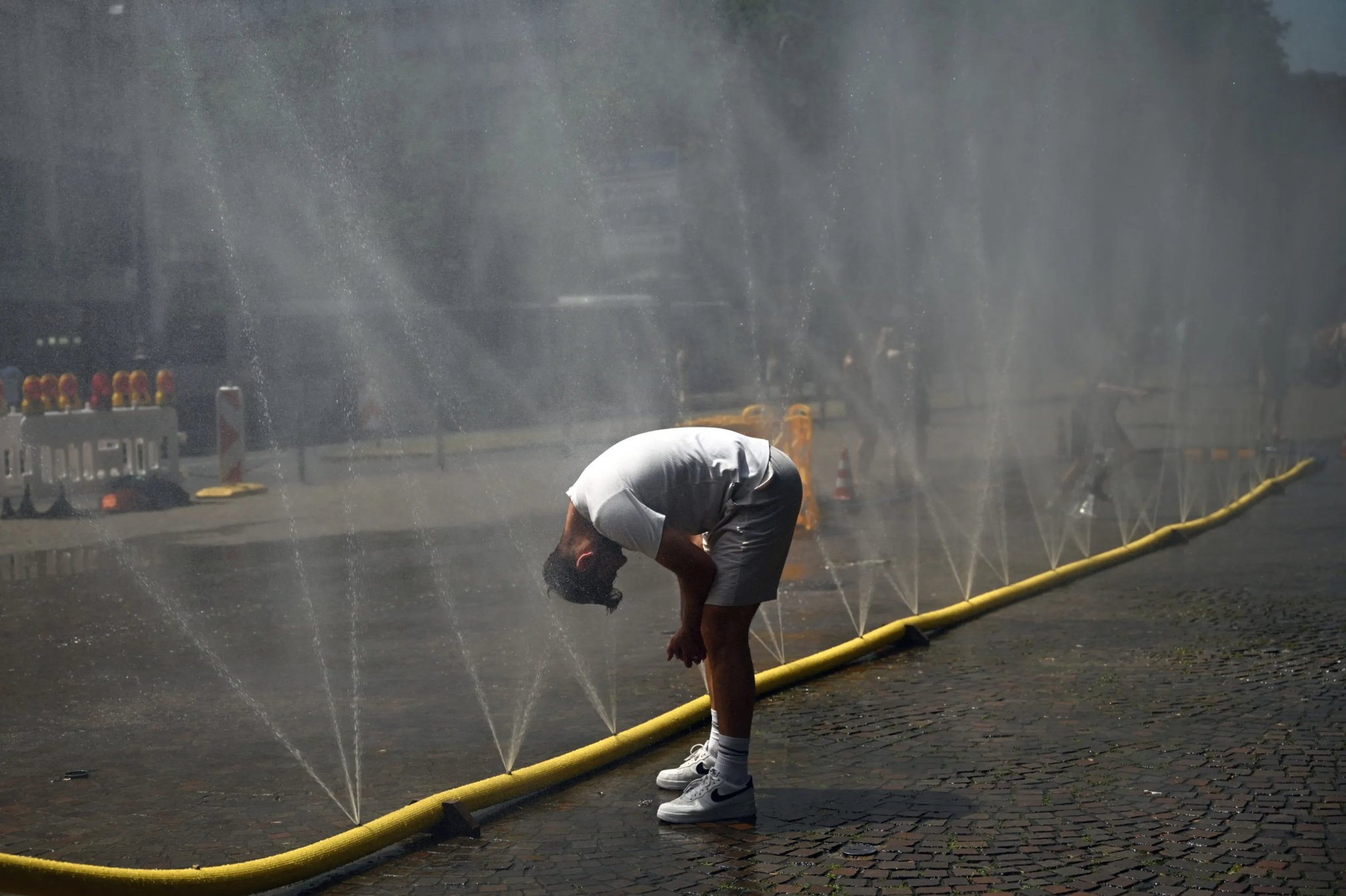
We are entering an era of permanent heat. The IEA projects cooling demand will triple by 2050. Cities that don't plan for this now will spend the next three decades in reactive crisis mode — paying more, emitting more, suffering more.
The Nordic model — district heating and cooling as public infrastructure — was never just a Scandinavian quirk. It was always the blueprint. Singapore is proving it works in the tropics too.
The question for every city, every mayor, every green finance officer is simple: what is stopping you?
I work with ICLEI and city finance officers to develop green finance programmes for exactly this kind of infrastructure. If your city is exploring district energy systems, let's talk.
#DistrictCooling #ClimateAdaptation #UrbanHeat #GreenFinance #Sustainability #CityLeaders #NordicModel #Singapore #Stockholm