The BT Group Annual Report 2024 shows that we have reduced our carbon emissions intensity by 61% since the 2017 fiscal year (FY17). Read on to learn more about how we transition to renewable energy, electrify our vehicle fleet, and work with our supply chain and customers.
As a multinational telecommunications company, our emissions have many facets and categories. While most of our emissions come from our supply chain and customers (scope 3), we do our part to reduce emissions across all of our operations by increasing our use of renewable energy and electrifying our vehicle fleets. See below for some highlights or read the full report here.

In the latest Annual Report, BT Group highlighted a number of actions that improve climate performance
Doing our Part in the Development of Renewable Energy
All electricity we purchase is certified renewable through power purchase agreements (PPAs) and green tariffs, supported by renewable energy certificates. These two systems allow us to ensure that the money we pay for electricity goes towards developing renewable energy in the UK. Long-term PPAs, representing 24% of our UK electricity demand this year, provide funds that can be put into long-term projects such as new renewable infrastructure across the UK grid.
Transitioning our Company and Society to Zero-Emission Transports
BT Group is a founding member of the UK Electric Fleets Coalition, which gathers companies to push for policy measures that support a switch to electric vehicles (EVs) in the UK. At the same time, we continue to work towards a 100% electric fleet of our own. Our commercial fleet of over 33,000 vehicles represents over 80% of our operational emissions (Scopes 1 and 2). To reach our goal of a 100% electric or zero-emission fleet by FY31, we must work hard and invest in this transition every year. This year, we added more than 1,700 EVs to our fleet, putting the total number at over 4,100.
To support the expansion of EV charging infrastructure, our start-up and digital incubation arm, Etc., has developed an EV charging unit built from a street cabinet (traditionally used to store broadband and phone cabling). We’re exploring the potential to turn up to 60,000 cabinets into EV charging points. This would increase the availability of charging infrastructure on the UK’s roads and support governmental sustainability targets and plans to decarbonise the UK transport system.
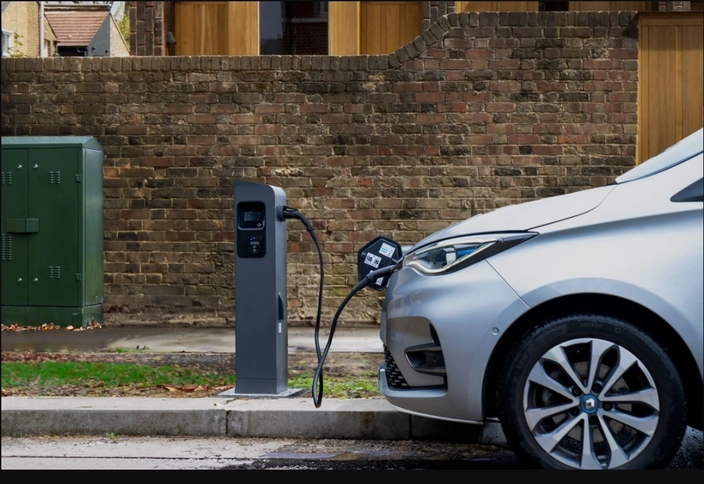
In an effort to support UK electric charging infrastructure, BT Group’s digital incubation arm Etc. has developed an EV charging unit built from a refurbished street cabinet
Developing Circular Business Models
By introducing circular systems into our business, we reduce our resource use and carbon emissions. We encourage our customers to return spent devices through our take-back programmes and reuse the surplus electronics to make new devices.
As an example, through our EE Trade-In service, we collected 166,000 mobile devices, pushing past the milestone of 1m devices traded in since its launch. For FY24, 96% of collected devices went for reuse and a second life. The rest was recycled responsibly.
We have reached a take-back rate of 5% for our distributed mobile devices, aiming for at least 20% by 2030. We also have a goal of a 75% return rate for customer premises equipment by FY26, currently at 67%.
Returned devices getting a new life saves resources. In 2023, we converted over 94,000 surplus BT Smart Hub 2 into Plusnet Hub 2 routers, instead of making new routers. This effort saved around 3,900 tonnes of CO2e. By reusing all the electronics from the Smart Hub 2, we prevented over 80,000 kilograms of new electronics from being produced.
Bringing our Supply Chain Along to Net-Zero
Emissions from purchased goods in our supply chain and customers using our products and services (scope 3) represent 95% of our total emissions, dwarfing the other categories on this list. Reducing these emissions requires collaboration, education, and setting demands, and we have set a target to reach a 42% reduction in supply chain emissions by the end of March 2031. So far, we have reduced our supply chain emissions by 25% since FY17.
To reduce supply chain emissions, we focus on educating and supporting our suppliers in reducing their emissions in line with the Paris Agreement. In collaboration with the Exponential Roadmap Initiative and 1.5°C Supply Chain Leaders, we drive demand for suppliers that comply with the 1.5°C target while supporting the SME Climate Hub and UK Business Climate Hub to give small and medium businesses tools to achieve net-zero.
Helping our Customers Act More Climate-Friendly
To reduce our downstream carbon footprint – the emissions related to our customers using our products and services – we need to enable climate-friendly behavior from our customers while offering products that hold the highest standards in terms of environmental performance. Since 2021, we have helped customers avoid nearly 3.8 million tonnes of carbon emissions (more than 1.5 million tonnes in 2023 alone) by providing them with new technologies like full fibre broadband, mobile solutions, and cloud computing.
One tool we have launched to reduce customers’ emissions is our Digital Carbon Calculator, which helps our larger customers measure, track, and cut carbon footprints across their networks. Today, it shows customers are cutting their carbon emissions by 15% on average when transforming their networks with us. As we move forward in 2024, we are working to improve both the performance and reporting of our environmental impact. We’ve started a pilot using the Circular Transition Indicator Tool on some of our brand consumer devices, and we will expand this to other business areas to improve how we measure circularity going forward.
Sustainable Tech must accelerate our journey to net zero emissions and a circular economy. To contribute to this, we’ll:
- be a net zero business by the end of FY31, and net zero on all Scope 3 emissions by FY41
- help customers avoid 60m tonnes of CO2e by 2030
- build towards a circular BT Group by 2030, and a circular tech and telco ecosystem by 2040,
- while protecting nature and biodiversity.
Read more in our full annual report, which you can find here:
https://www.bt.com/about/annual-reports/2024summary/assets/pdf/bt_annualreport_2024.pdf