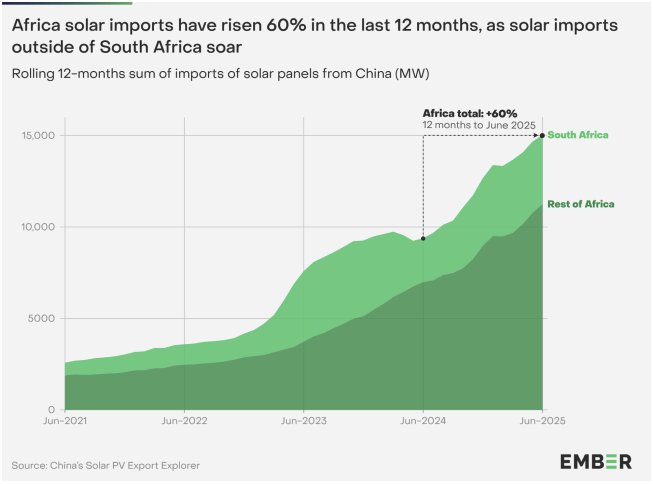
There is some fantastic news in this latest report from the invaluable experts at Ember: Africa is likely reaching an inflection point in the takeoff of solar power. The report’s headline finding is that solar panel imports from China (which produces the vast majority of the world’s PV) have increased by 60% over the last year. This is an incredibly exciting development for a number of reasons.
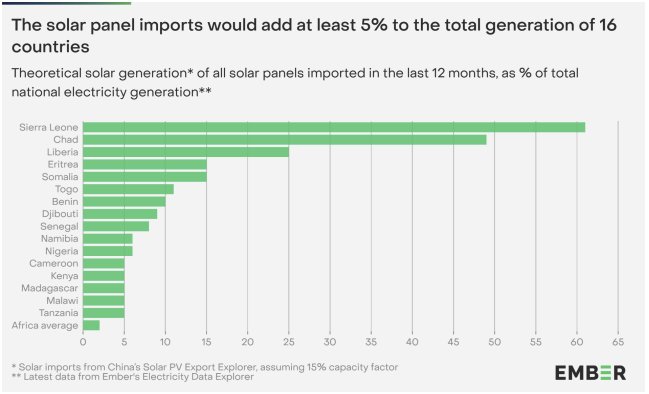
First, Africa remains the most economically underdeveloped continent in the world. According to the UN, about 600 million Africans lack access to electricity, constituting a large majority of the world’s energy-impoverished people. Expanding electricity access is one of the most powerful levers for improving life quality. More solar arriving in Africa means more industry, commerce, education, healthcare, and all the other essentials of poverty alleviation for the people who need them most. As shown in the graph below, the solar surge of the last 12 months implies a dramatic boost to the energy supply of many countries, including an incredible 61% (!!!) increase in Sierra Leone.
Second, Ember finds that this surge in solar is distributed across the continent. While the previous uptick was disproportionately centered in South Africa, the continent’s largest economy, solar imports to other African countries have nearly tripled compared to two years ago. This signals a broadening of the solar market beyond a few dominant players, with countries from Mozambique to Algeria to Kenya ramping up capacity and pointing to a more diversified, resilient trend.
Third, new solar capacity will likely displace fossil fuels, with important benefits for disadvantaged communities. In many regions without reliable grid access, people depend on diesel generators for power. Diesel is both highly polluting and expensive, though widespread because generators are relatively cheap to buy and can be used without grid connections. Ember estimates that in Nigeria, the continent’s biggest diesel consumer, the upfront cost of a solar panel could pay for itself in fuel savings in just six months. And, after that, the panel would continue generating electricity for years. Solar, in other words, won’t just cut carbon emissions and pollution, it will also free people from the financial burden of constantly buying costly fuel.

(Graph by Energy Monitor)
Finally, this news suggests that Africa may be on the verge of proving a powerful idea: that developing countries don’t have to follow the same fossil-fuel-heavy path that wealthier nations once did on their way to prosperity. Just as much of the continent leapfrogged landline telephones and went straight to mobile networks, Africa could leapfrog the fossil fuel stage and move directly into a renewable-powered future. Given that effectively all of the increase in global carbon emissions from recent years has been from developing countries in Asia, this is an incredibly encouraging sign that a cleaner path is available for Africa and other developing regions.
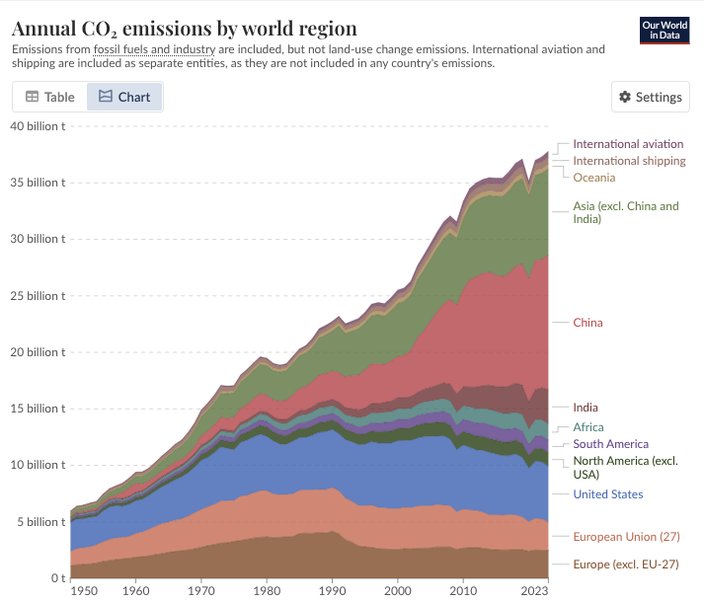
(Graph by Our World In Data showing that developing countries, primarily in Asia, have drive recent increases in emissions)