The war in Ukraine and the shutdown of the Strait of Hormuz have shaken global fossil fuel supply even more severely than the oil crises of 1973 and 1979. But this time, the outcome could be different. According to a new report from Ember, these shocks could accelerate the global shift away from fossil fuels—if governments make the right choices.
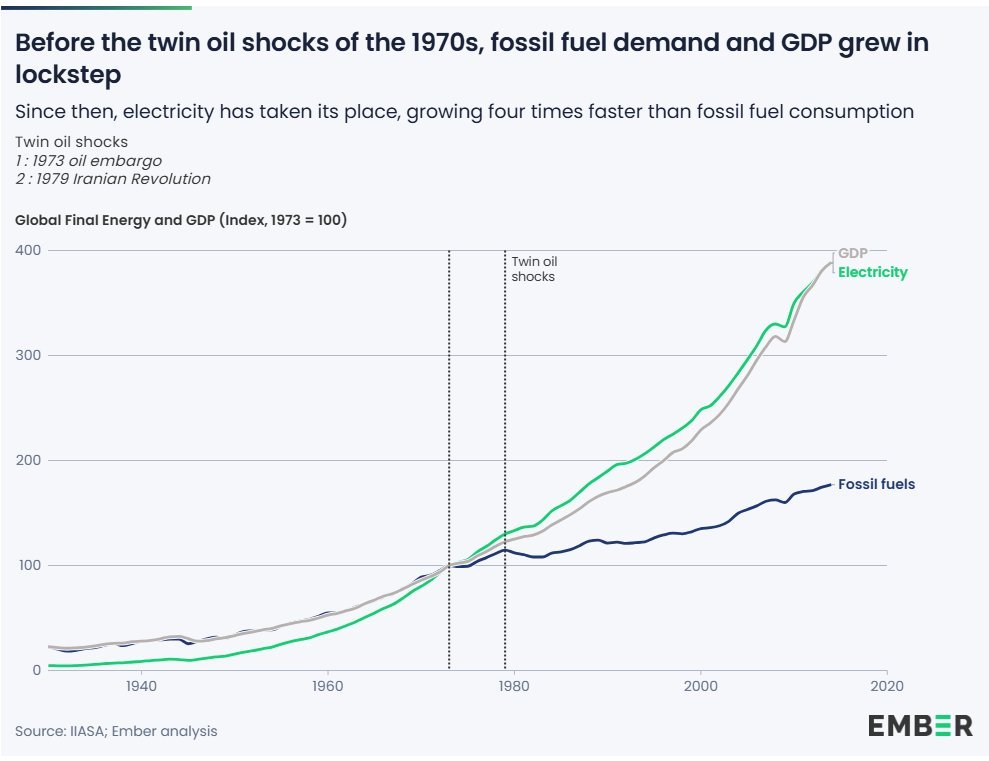
The 2020s have already seen two major fossil fuel shocks. In 2022, Russia’s invasion of Ukraine disrupted global energy markets. In 2026, the closure of the Strait of Hormuz—one of the world’s most important oil and gas chokepoints—triggered an even larger supply shock. The parallels with the 1970s are clear, but so is the difference: today, viable alternatives exist at scale. If we look at the twin shocks of the 1970s, the first shock slowed oil’s growth in electricity. The second pushed it into terminal decline. At risk of repetition, one shock gives a warning; two gives a verdict.
As the era of cheap oil ended, the economic and political shock that followed reshaped the energy system for a generation.
The response came through three main levers: using less fossil fuels, through efficiency; finding more oil from non-OPEC basins; and replacing oil with alternatives.
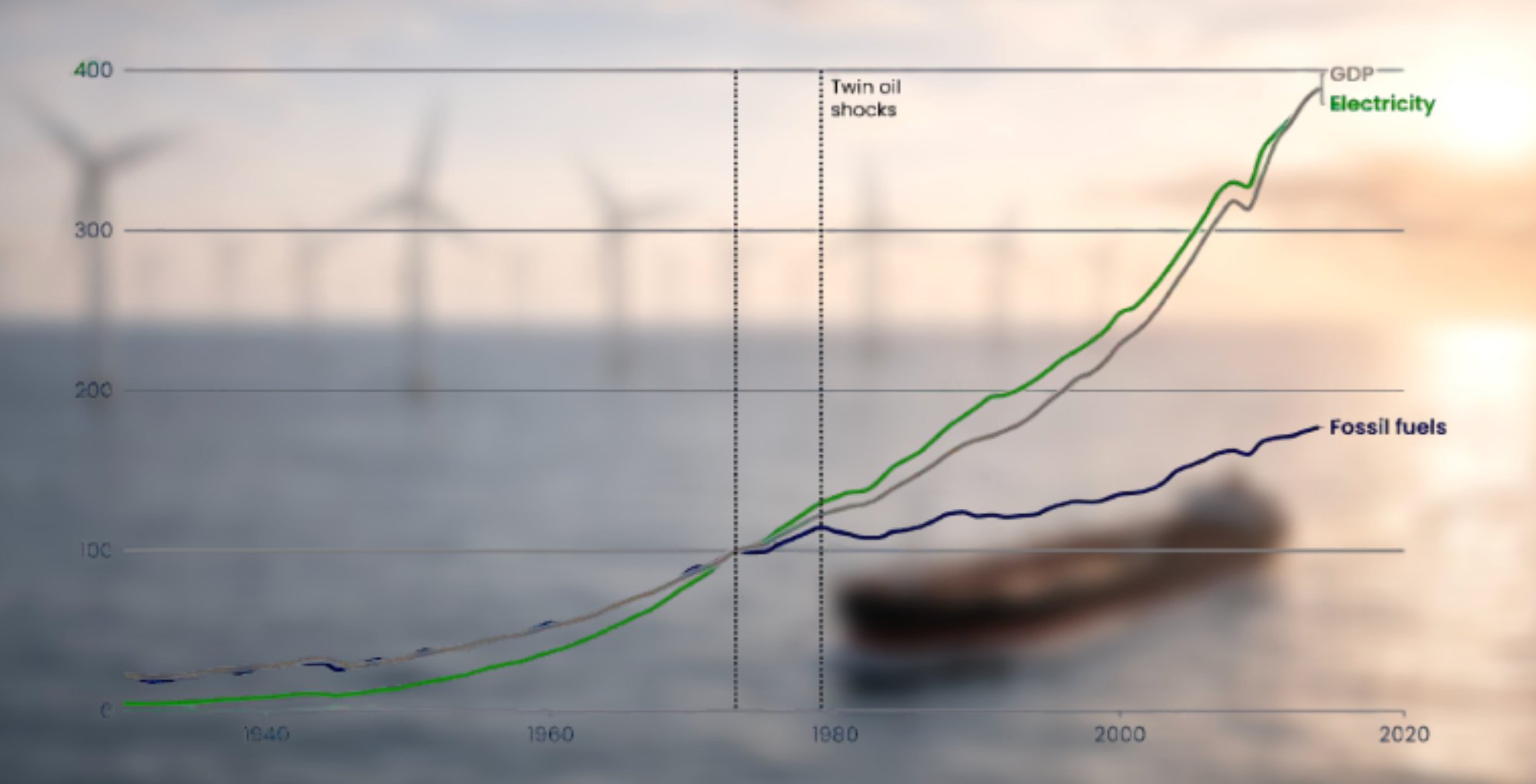
Global final oil demand per capita peaked in 1979 and has never recovered. The main non-fossil alternative was nuclear, which grew during that decade at over 20% a year. In 1973 nuclear was 3% of global electricity generation; fifteen years later it increased to 17%. This helped push oil out of power generation. In 1973 oil was a quarter of global electricity generation. Two decades later, a tenth. Today it is about 2%. Shocks hit the weakest links the hardest. The interesting thing here is that this change happened even though the main alternative – nuclear – was an expensive and slow solution. This was also the reason why fossil fuels resumed growth in the mid-80s. Non-OECD consumption picked up pace, led by China and India. The alternatives were not yet cheap, broad or attractive enough to survive an era of low fossil fuel prices.
That is the major difference between the twin crises in the 1970s and in the 2020s.
Unlike in the 1970s, solar, wind, batteries, and electric vehicles are now not only cleaner, but often cheaper, faster to deploy, and more secure than fossil fuels. Once installed, they are not exposed to fuel price volatility or import disruption. That makes this crisis potentially transformative rather than cyclical. What earlier shocks only started, this one could accelerate, argues global energy think tank Ember in its new report: ”The new Twin Fossil Shock – How the energy crises of the 2020s speed up the electric age”. According to the report, four consequences stand out: Asia is likely to move fastest toward domestic electrification; LNG (Liquefied Natural Gas) will come under growing pressure in power generation; oil will lose ground in transport as EV adoption rises; and global fossil fuel demand may be much closer to absolute decline than many assume.
The report also outlines four priorities for governments to make sure we continue to accelerate this shift:
- Use the crisis to sweep away the regulatory undergrowth. : Use the moment to remove fossil-favoring subsidies, pricing distortions, and regulations that slow clean tech deployment.
- Prioritise electrification, not just generation.: Most import dependence comes from fuel use in transport, heating, and industry—much of which can already switch to electricity.
- Lower electricity prices: High power costs vs. gas have stalled electrification; fixing pricing unlocks market-driven adoption.
- Build electric-era institutions: Just as the 1970s built fossil-focused systems, today requires bold institutions designed to end fossil dependence.
The central message is that this crisis should not be met with the old playbook of more drilling, subsidies, and fuel diversification. Those responses were built for a world without better options. Today, cheaper and more secure electric alternatives exist at scale. The real choice is whether governments use this moment to build the next energy system—or keep patching up the old one.