Belém brought the world to the Amazon. Now it must bring a holistic clean-energy transition to the world.
A summit framed by beauty—and constraint
When delegates stepped off planes in Belém this November, they were greeted by the heat and humidity that define the world’s largest rainforest and greatest ecodiversity. It was a fitting backdrop for a conference meant to protect that forest and a reminder that climate ambition must be matched with energy diversity.
Brazil positioned COP30 as a showcase of environmental progress: deforestation down 30.6% in 2024, record solar and wind installations, and a rising role in climate diplomacy. Yet beneath the celebration lay a critical question—whether renewables alone can reliably sustain a growing, continent-sized nation through the century.
For now, the answer is: not quite yet.
Why hydro can fall short
Brazil’s hydro fleet—once a source of pride—is increasingly vulnerable to climate variability. Droughts have cut output sharply: the 11.2 GW Belo Monte dam averaged just 23% capacity in 2024, as operators released water to preserve the Xingu River’s fish populations. Hydropower still supplies more than half of Brazil’s electricity, but changing rainfall patterns have made it less reliable. Even as policymakers celebrated Brazil’s “green grid,” diesel and gas quietly filled the gaps. In the Amazon’s isolated systems, barges carried imported fuel to towns surrounded by rainforest—producing a small share of power but a large share of emissions. Renewables ascendant—but stability still matters
Brazil’s renewable boom is real and impressive. In 2025, for the first time, wind and solar together supplied over a third of national generation in some months. Costs are falling, transmission lines are expanding, and jobs are multiplying across the Northeast.
But even the strongest renewables systems need reliable partners. When droughts linger or the wind calms, fossil fuels step in. Without a source of firm, zero-carbon power, Brazil’s “100% renewables” goal risks being outpaced by nature.
Furthermore, the land use impact of renewables in Brazil is significant. Wind and solar installations already use 2,148 km² and 102 km² of land, respectively, threatening biodiversity and displacing traditional communities, The missing piece: nuclear
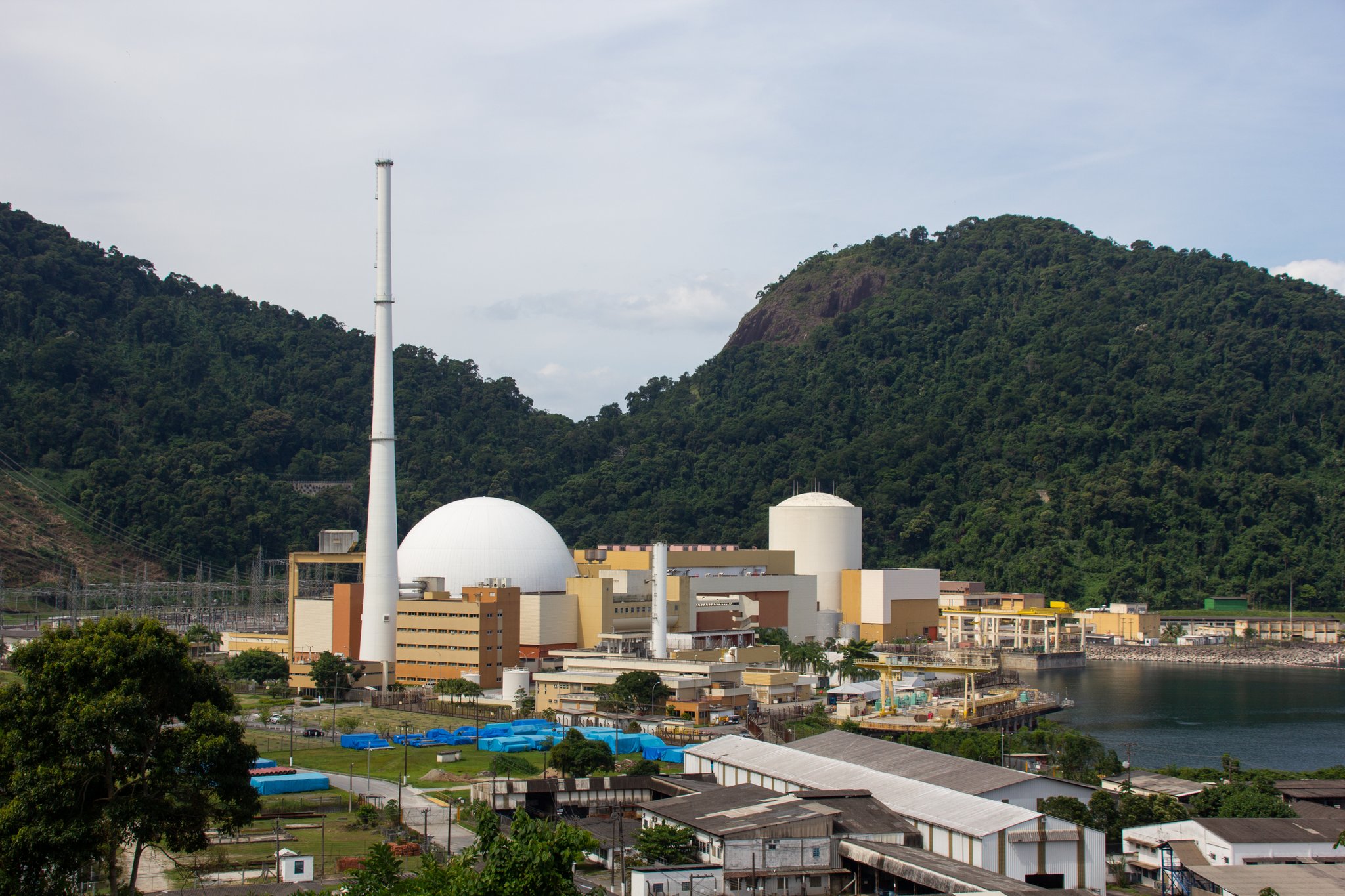
Brazil already operates two nuclear reactors at Angra and has a third—Angra 3—partly built. After years of setbacks, Eletronuclear finally received clearance to resume work, but nuclear power was barely mentioned at COP30. There was no roadmap for completing Angra 3 or piloting small modular reactors (SMRs) to replace diesel in the North.
That’s a missed opportunity. Nuclear isn’t a rival to renewables; it’s their complement. Steady, carbon-free generation allows hydro to operate more ecologically, wind and solar to work without fossil backups, and remote communities to abandon diesel entirely.
Low footprint micro-reactors located on industrial or port sites could deliver round-the-clock electricity without damming rivers or clearing land. The technology is ready—the next step is policy confidence.
What COP30 could have spotlighted
1. Recognize nuclear as “firm clean power.”
Delegates spoke of “diversified low-carbon systems,” but avoided naming nuclear. Yet every major grid model—from the IEA to Brazil’s own EPE—finds that costs and emissions fall fastest when firm clean power is part of the mix.
2. Launch a Diesel-to-Clean Amazon initiative.
A program to replace remote diesel with hybrid systems—advanced nuclear micro-reactors plus solar with storage—would have sent a powerful signal for both climate and equity.
3. Protect rivers with reliable backup.
Maintaining ecologically viable river flows requires flexible generation that isn’t dependent on rainfall to maintain sufficient water flow. Nuclear could provide that buffer.
4. Finish Angra 3—or chart a new path forward.
A clear decision would give investors and engineers the confidence to plan Brazil’s next generation of clean baseload power.
A chance to lead
By leaving nuclear out of the discussion, COP30 postponed a necessary conversation, but it didn’t close the door. Brazil’s technical capacity is unmatched in the region: it trains nuclear engineers, enriches uranium domestically, and builds small-reactor prototypes for its navy. The foundation for leadership is already there.
Brazil now has an opportunity to:
Complete Angra 3 or commission equivalent firm-clean capacity.
- Pilot micro-reactors in the Amazon to replace diesel and protect rivers.
- Reframe nuclear as ecological restoration—giving waterways room to recover.
- Champion a “clean, firm, and fair” energy model for the Global South.
If Belém was a moment of hesitation, the years ahead can be ones of action. The Amazon—and the planet—will benefit from a Brazil that pairs its renewable leadership with the firm power to sustain it.