Recent tragedies in Texas, Pakistan, and Europe are stark reminders of how extreme weather is reshaping human life, and how climate change is increasingly acting as an accelerant. But the connection between climate change and these events is complex, and often misrepresented.
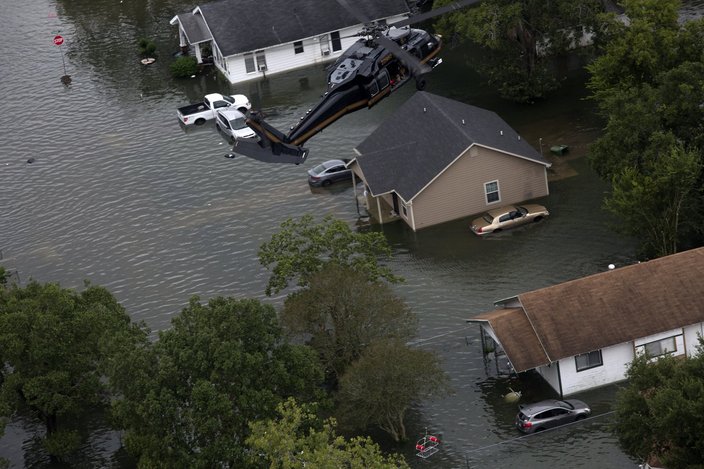
Flooding has been a reality in many parts of Texas for years. Climate change is making it worse.
Tragedies in Texas and Pakistan
Earlier this month, more than 100 people died in catastrophic floods in central Texas. Torrential rain—over 10 inches in just hours—overwhelmed rivers and washed away homes in a region already known as “Flash Flood Alley.” Soon after, thousands of miles away in northern Pakistan, record-shattering heat in the glacier-covered mountains of Gilgit-Baltistan triggered rapid ice melt and the formation of unstable glacial lakes. These burst, unleashing flash floods and landslides that cut off villages and killed dozens.
Scientists agree that climate change is increasing the intensity of such events. Warmer air holds more moisture—roughly 7% more water vapor for every 1°C of warming—which fuels heavier downpours. And rising global temperatures are causing glaciers worldwide to melt at unprecedented rates.
But there’s a challenge: while we can confidently say that climate change makes these kinds of events more likely and more extreme, it's difficult to directly attribute individual events, and the resulting deaths, to climate change.
To take one example: The destruction of flash flooding depends on complex local factors, like terrain, infrastructure, warnings, and preparedness. The same storm that causes deadly destruction in one place might have far milder consequences elsewhere. And the occurrence of severe storms is known to happen in many places across the historical record. So, how much can we really say climate change is the cause of this particular disaster?
A breakthrough in climate attribution
Determining the extent to which climate change is to blame for a particular disaster requires careful research, which can take years. But a groundbreaking study on the June 2025 European heatwave provides us with just such research with unprecedented speed. Scientists estimated that of the 2,300 heat-related deaths across 12 major cities, about 1,500 (65%) were directly linked to climate change. By using peer-reviewed methods to compare today’s world with a modeled one without human-induced warming, researchers concluded that human-caused climate change had nearly tripled the death toll. 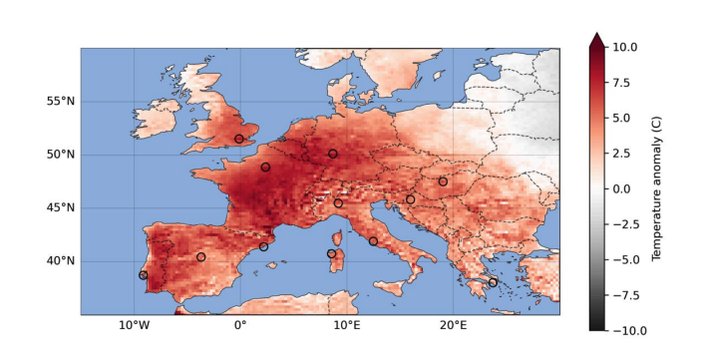
The June 2025 heat wave in Europe contributed to the deaths of thousands. One study attributes 65% of those deaths to climate change.
Such an analysis provides something climate scientists can rarely offer: a high-confidence estimate linking a death toll to global warming, just a couple weeks after the event.
Why we speak in probabilities
Understanding climate attribution requires embracing uncertainty, not for a lack of conviction, but as a framework for responsible analysis. Scientists don’t claim that climate change caused a specific storm, heatwave, or flood. Instead, they show how global warming increased the likelihood and severity of that event. Think of it like loading dice: if sixes start coming up more often, the game has changed even if you can’t prove that any one six wouldn’t have occurred naturally.
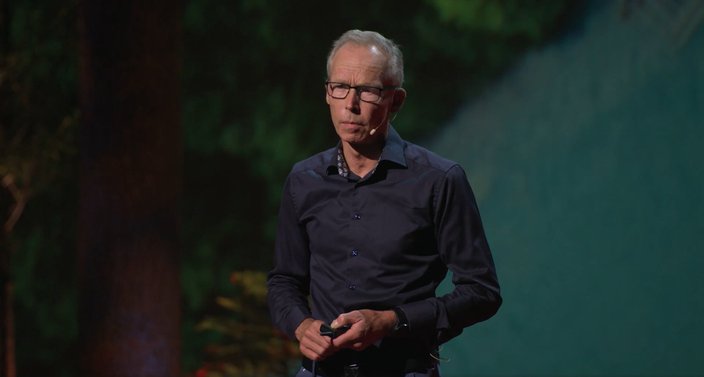
"In science it is very rare to be able to talk of zero uncertainty." - Johan Rockström, Director of the Potsdam Institute for Climate Impact Research
But this probabilistic language is often twisted by climate change deniers to argue that the link between climate and disaster is speculative or overstated. They often make two core claims:
- That deaths from natural disasters have gone down, not up.
- That rising disaster costs are due simply to there being more buildings, roads, and people, not more extreme weather.
Let’s take those claims head-on.
Yes, global deaths from natural disasters have declined over the past century. That’s largely thanks to better forecasting, infrastructure, and emergency response. But that doesn’t mean climate change isn’t making extreme events more dangerous. In fact, that’s happening against the grain of our growing resilience, pushing systems and communities to their limits despite technological advances.
As for rising costs, it’s true that there are more assets, infrastructure, and people exposed to the risk of natural disasters than there were before. But studies have adjusted for increased exposure and still find that climate change is driving up both the frequency and the severity of the most costly disasters, from hurricanes to wildfires. In other words, the rate of increase in damages goes well beyond what can be explained by growth in development alone.
A warming planet is changing the baseline
The truth is that climate change is not just an environmental issue: it's a risk multiplier. It increases the odds that heatwaves become deadly, that storms become floods, and that already-vulnerable communities are overwhelmed. What might once have been a manageable hazard becomes a full-blown disaster under warmer conditions.
In Pakistan, melting glaciers threaten not just lives, but the country’s long-term water supply. In Texas, flash floods are outpacing the systems designed to protect people. And in Europe, thousands of premature deaths can be confidently attributed to extended periods of extreme heat.
We can’t always pinpoint the exact role climate change plays in every tragedy. But we know enough to say these events are becoming more likely, more intense, and more deadly because of human-driven warming.
And that means we have a choice: to treat these tragedies as isolated misfortunes, or as warnings from a planet undergoing profound and dangerous change.