To meet the increasing demand for clean energy, more than 20 countries committed to tripling their nuclear energy supply by 2050 at COP28. This is a promising development as nuclear energy can be a significant source of emission-free energy. Still, the declaration puts into focus a common concern in nuclear expansion: the fear of an increased proliferation of nuclear weapons. However, since the 1960s, there has been no overlap between the development of nuclear energy and nuclear weapons. One of the main reasons for this is the Nuclear Non-Proliferation Treaty, which was put into effect in 1970.
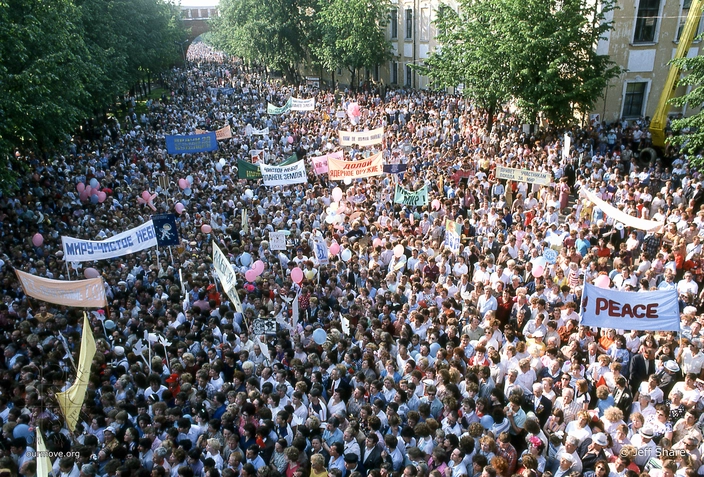
The Nuclear Non-Proliferation Treaty has been instrumental in ensuring that nuclear energy can be used peacefully without fuelling the manufacturing of nuclear weapons. Photo by Our Move Archives on Flickr.
When expanding nuclear energy, consideration must be taken to prevent materials from being used for weapons manufacturing. While fuel-grade uranium is not directly usable for making nuclear weapons, further enrichment can result in weapons-grade uranium. Weapons-grade materials can also be produced through the use of a special type of “production” nuclear reactor operated with frequent fuel changes to produce material with a high proportion of Pu-239, separate from reactors used for power generation. Plutonium and tritium are by-products of certain nuclear reactions present in nuclear energy generation, both of which can be used in nuclear weapons. Systems must be set in place that ensure that the uranium supply and waste products of nuclear power plants are not diverted to producers of nuclear weapons, and that nuclear power technology does not enable nuclear weapons manufacturing.
One such system that has been in operation since 1970 is the Nuclear Non-Proliferation Treaty (NPT). This global agreement outlines measures to ensure that nuclear material and technology are used for peaceful purposes only, while refusing trade or cooperation around nuclear materials and technology with states that are not part of the Treaty, with the end goal of complete nuclear disarmament.
The Treaty has been extended indefinitely and is currently signed by 191 states, including the five states that had developed and exploded nuclear weapons before 1967: China, France, the Russian Federation, the UK, and the USA. Four other states have developed nuclear weapons programs outside of the NPT – Israel, India, Pakistan, and North Korea – and cannot join the Treaty without renouncing or dismantling them.
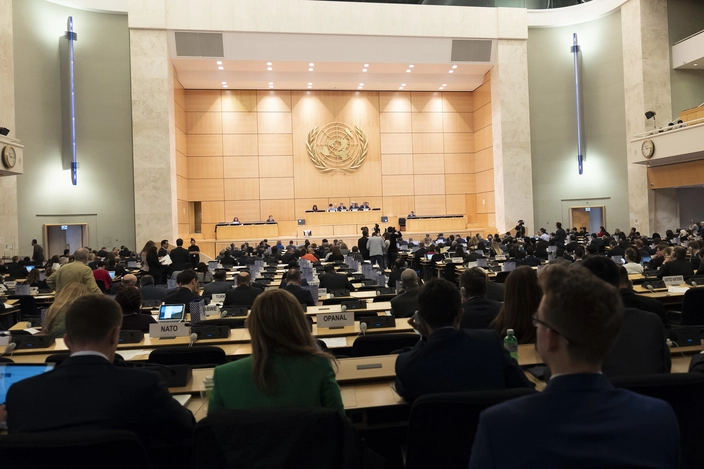
The Nuclear Non-Proliferation Treaty was put into place in 1970, and since then no known nuclear weapons programs have been created from nuclear energy development. Photo from UN Geneva on Flickr.
The safeguards system outlined in the NPT is enforced by the International Atomic Energy Agency (IAEA), a UN agency that conducts inspections of nuclear plants to verify that they comply with the Treaty. These inspections involve checking inventories and analyzing materials, ensuring that no weapons-grade materials are manufactured or diverted to non-peaceful causes. Thousands of tonnes of nuclear material are traded and transported every year, and by taking detailed accounts of all transactions, the nuclear power sector goes to great lengths to see that none of it is used for destructive purposes. The Treaty also mandates significant security measures surrounding stockpiles of nuclear materials to prevent unauthorized people from accessing them and using them for the wrong purposes.
Non-proliferation measures are essential for a safe and sustainable nuclear power system. As governments commit to expanding their nuclear energy programs, it is equally important that sufficient resources are allocated to these safeguards. We want to emphasize that the fears of nuclear weapon proliferation are completely warranted, but as long as we sufficiently support the NPT we can count on it to prevent materials from the nuclear power supply chain from getting into the wrong hands, just as it has in all known cases to date.