Over 140 countries reached a groundbreaking agreement at COP16 on Biodiversity in Rome, backing a plan to mobilize $200 billion a year by 2030 for nature finance. This historic deal underscores a united global effort to halt biodiversity loss and protect at least 30 percent of the world’s land and seas—even amid geopolitical turbulence and environmental crises.
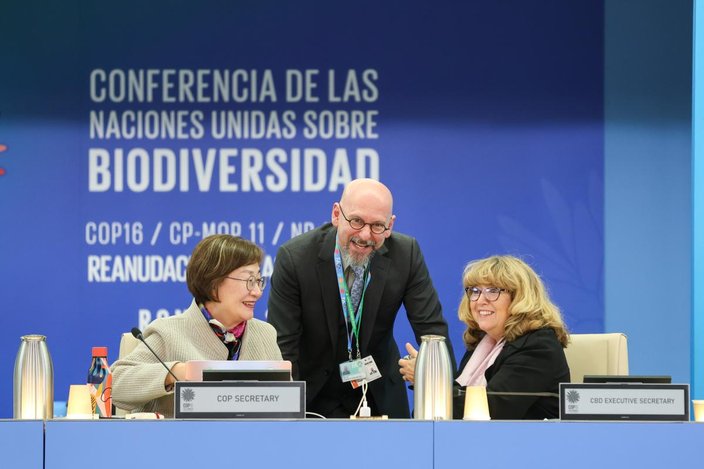
From L-R: COP 16 Secretary Jihyun Lee; David Ainsworth, CBD Secretariat; and CBD Executive Secretary Astrid Schomaker. Photo by IISD/ENB | Mike Muzurakis
Held at the UN Food and Agriculture Organization headquarters and organized under the Convention on Biological Diversity (CBD), the resumed COP16 negotiations marked a second chance after a stalled meeting in Cali, Colombia. In Cali, talks collapsed over disagreements on financial mechanisms, delaying critical decisions. In Rome, persistent regional consultations and bilateral meetings paved the way for consensus. COP16 president Susana Muhamad’s moving declaration of the day as a “light of hope” captured the breakthrough, emphasizing that despite the absence of key players like the United States and a volatile geopolitical landscape, most countries can still come together on climate and environmental issues—a truly hopeful sign for global cooperation, for which the UN deserves great credit.
The agreement is not an immediate allocation of funds but a commitment to generate $200 billion annually by 2030 through innovative financing mechanisms such as biodiversity offsets, carbon credits, and debt-for-nature swaps. Although the decision to create a dedicated nature fund has been postponed until 2028, the newly adopted framework also includes establishing a permanent financial mechanism to ensure long-term support for developing countries—a move hailed as a win for multilateralism in uncertain times.
In a world where wildlife populations have plummeted by more than 70 percent since 1970, this commitment is a rallying cry for environmental stewardship. It calls on wealthy nations and major corporations to share responsibility for preserving essential ecosystems that provide food production, clean air, and climate stability. The positive outlook is bolstered by plans for future summits like COP17 in 2026, which will review progress and enhance accountability.
Sources:
https://www.carbonbrief.org/cop16-key-outcomes-agreed-at-the-resumed-un-biodiversity-conference-in-rome/
https://www.theguardian.com/environment/2025/feb/28/cop-16-climate-nature-funding-agreement
https://www.msn.com/en-gb/money/topstories/light-of-hope-emerges-as-un-summit-ends-with-plan-for-200bn-to-protect-nature/ar-AA1zYAze
The Different COP Summits explained
COP for Climate (UNFCCC COP):
These annual conferences, held under the United Nations Framework Convention on Climate Change, focus on reducing greenhouse gas emissions, adapting to climate change, and enhancing international cooperation on climate action. A notable milestone was COP21 in Paris, where the Paris Agreement was forged.
COP for Biodiversity (CBD COP):
COP16 on Biodiversity, convened in Rome under the Convention on Biological Diversity, targets halting biodiversity loss, protecting 30 percent of the planet’s land and seas by 2030, and mobilizing a plan to generate significant financial resources for nature conservation. This second attempt followed a previously stalled meeting in Cali, Colombia, highlighting the challenges and eventual triumph of international negotiations on nature finance.
COP for Desertification (UNCCD COP):
These meetings, under the United Nations Convention to Combat Desertification, tackle challenges related to land degradation, drought, and desertification. Their focus is on restoring degraded lands, improving livelihoods in vulnerable regions, and promoting sustainable land management practices.
Each COP addresses distinct environmental challenges while sharing a common mission: to foster international cooperation and drive decisive action for a sustainable future.