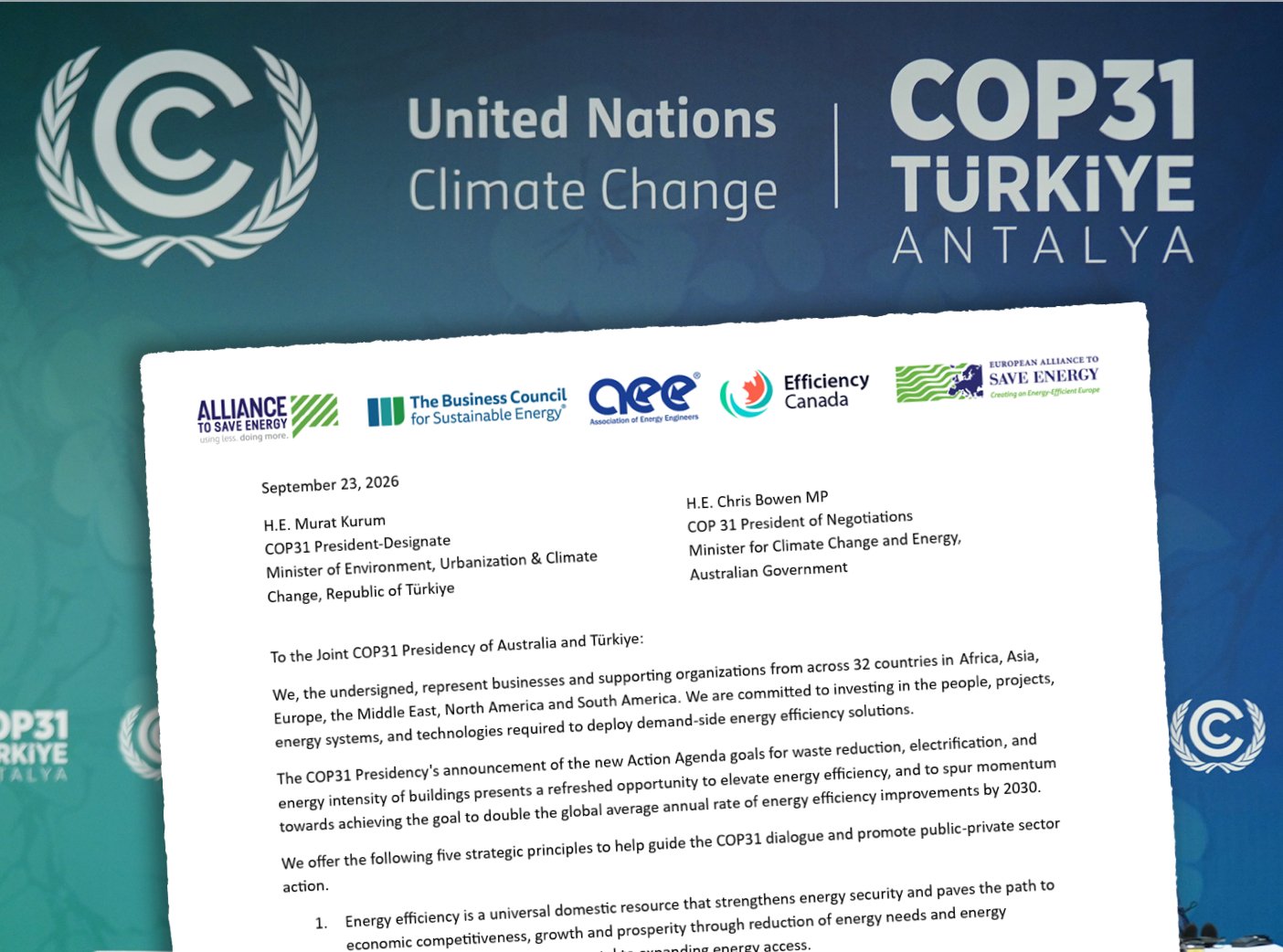
A coalition of 197 businesses and supporting organisations has called on the incoming COP31 Presidency of Australia and Türkiye to give energy efficiency a larger role at the UN climate conference in November.
In a letter sent to the COP31 Presidency, the signatories outline five principles aimed at increasing cooperation between governments and businesses and accelerating progress towards the global target of doubling the annual rate of energy efficiency improvements by 2030. The letter also links energy efficiency to COP31 discussions on electrification, waste reduction and the energy intensity of buildings. "Energy Efficiency is an energy security imperative”
Mario Giordano, Chairman of the EU Alliance to Save Energy.
Progress remains below 2030 target
At COP28 in Dubai 2023, governments agreed to double the global average annual rate of energy efficiency improvements by 2030. Using 2022 as the baseline, this would require annual improvements of more than 4% through the end of the decade. Global energy intensity improved by around 1% in both 2023 and 2024, according to figures from the International Renewable Energy Agency cited by the coalition. The businesses argue that energy efficiency has become more important as electrification, artificial intelligence and data centres increase demand for electricity. They also point to its role in reducing energy costs, strengthening energy security and cutting emissions.
“At a time when global electricity demand is rising rapidly due to electrification, artificial intelligence and the growth of data centers, energy efficiency is no longer only a climate imperative. It is a competitiveness, affordability and energy security imperative,” said Mario Giordano, Global Head of Public & Government Affairs at Signify and Chairman of the EU Alliance to Save Energy.
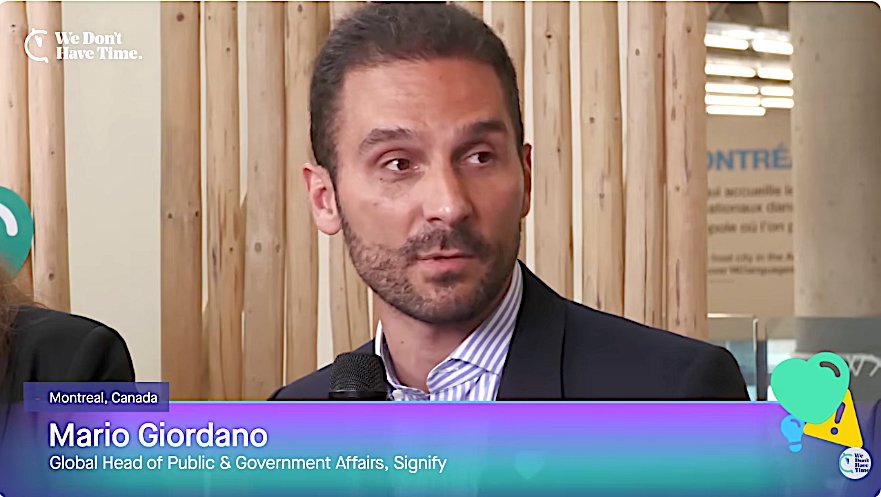
Mario Giardano in We Don't Have Time's broadcast from IEA:s Global Conference on Energy Efficiency in Montreal earlier this year.
The coalition is calling for greater investment in demand-side energy efficiency, including the people, projects, energy systems and technologies needed to implement efficiency measures. It also highlights the need for trained workers and energy professionals to turn international commitments into projects.
“Energy efficiency is foundational to a secure, affordable, and competitive energy future. By using energy more productively, we can reduce waste, meet growing demand more affordably, strengthen the reliability of our energy systems and expand opportunity in communities around the world,” said Paula Glover, President and CEO of the Alliance to Save Energy.
Five strategic principles
These are the five strategic principles outlined in the letter to help guide the COP31 dialogue and promote public-private action.
- Energy efficiency is a universal domestic resource that strengthens energy security and paves the path to economic competitiveness, growth and prosperity through reduction of energy needs and energy optimization that are both instrumental to expanding energy access.
- Energy efficiency technology, equipment and financial solutions are available now, deployable at scale and among the best ways to improve affordability, offset rising energy demand and costs, and boost economic competitiveness.
- Energy efficiency reduces waste across local economies and global supply chains. Efficient equipment and systems help avoid energy, water, and economic losses.
- Energy efficiency is a critical investment in our infrastructure, especially in our buildings and our cities. It delivers energy reliability, emissions reductions, as well as health, safety and productivity benefits to our people and businesses.
- Energy efficiency projects stimulate investment, help close the global gap in skilled energy professionals, generate quality, local jobs across sectors, advancing a just and inclusive energy transition.
The International Energy Agency, IEA, estimates that doubling the global rate of energy efficiency improvements could cut energy bills in advanced economies by one-third, create 4.5 million jobs and deliver 40% of the emissions reductions required under pathways aligned with the Paris Agreement, according to figures cited in the letter.
COP31 will take place from November 9 to 20 in Antalya, Türkiye.