Two climate emergencies, two countries, one shared lesson: trusted local information saves more than time.
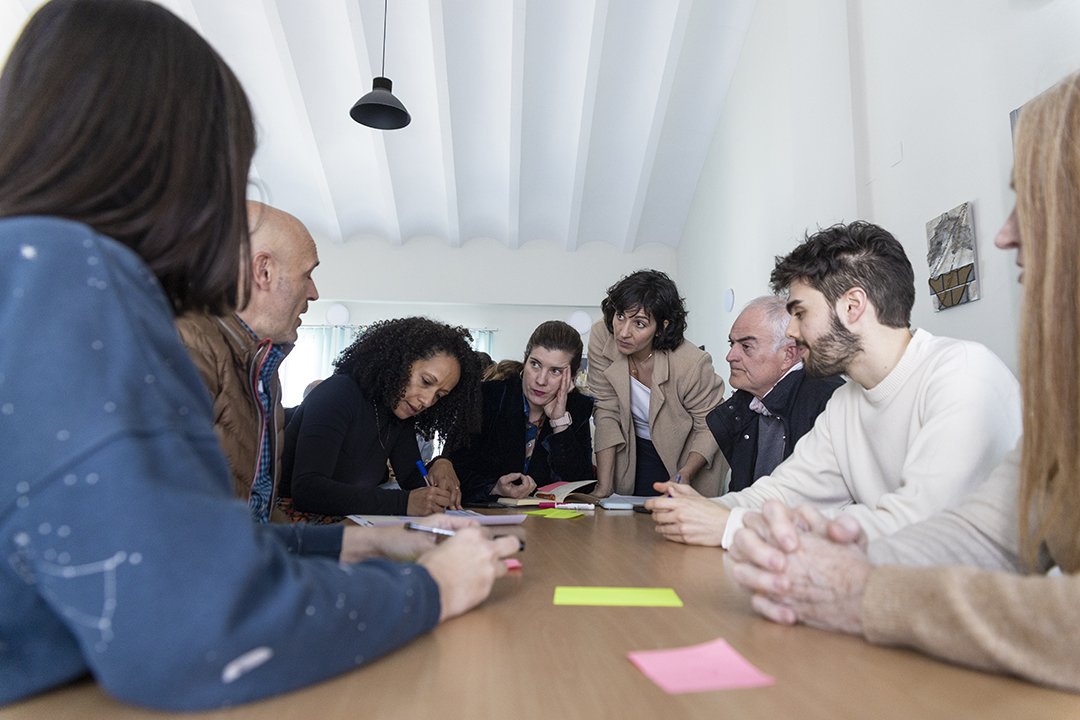
In October 2024, deadly floods hit Valencia. Sixteen months later, we brought together the people who lived through them: victims, firefighters, local reconstruction committees, scientists and journalists. We wanted to understand how information flowed before, during and after the disaster, and where it broke down. They agreed on something simple. When disaster strikes, a local newsroom isn’t just covering the story. It’s part of the response. Our Climate Frontline community dialogue findings put it in five words: “Communication is core resilience infrastructure.”
Why this matters now
This week, UNDRR, UNESCO and the Red Cross meet in Geneva for “From Knowledge to Action: Communication for a Safer World”. One of their questions is whether today’s disaster-risk approaches “adequately account for information risks and communication vulnerabilities”. Our answer is yes, they can, if we treat local media as infrastructure. That’s not a statement about journalism. It’s about budgets and protocols. If local newsrooms are infrastructure, they belong in emergency plans and funding lines. What we learned
Climate Frontline, co-created by the European Journalism Centre and REVOLVE, has worked since June 2025 with four local newsrooms in Spain and Portugal. We held community dialogues in Valencia and in Coimbra. What stood out most was how much they agreed. Both landed on the same principle: alert without alarming. Put verified, actionable, solution-focused information ahead of spectacle. And both arrived at a similar set of practices:
- Go first to those who know.
- Confirm before amplifying.
- Treat images with particular care.
- Work with official sources to reach affected communities, while keeping editorial independence.
Each place added its own insight. In Coimbra, participants warned that misused images and AI-generated content become a bigger risk during recovery, when visual verification gets harder. In Valencia, they saw that misinformation moves in wherever official communication is slow, fragmented or missing and that strong local outlets help everyone share the same verified facts.
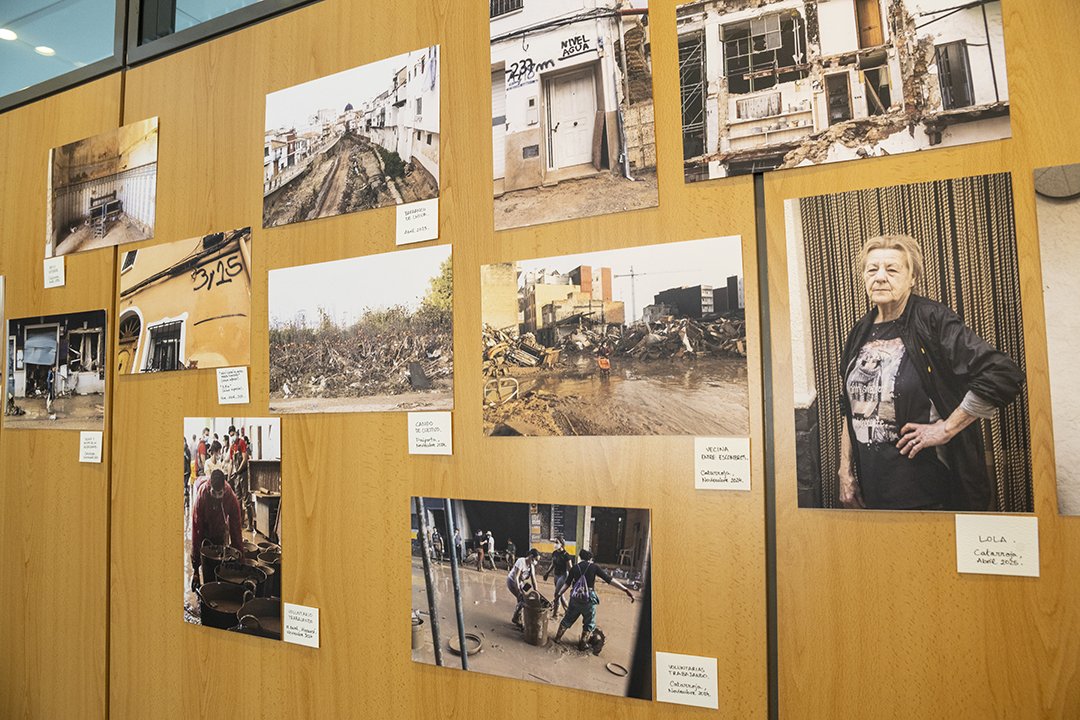
Photo exhibition at the event Climate, Stories and Territory. Cooperativa Eléctrica de Castellar, February 2026. © Paula Rivas
It starts with prevention
In Valencia, Yaisa Córdoba of Fundación Felisa set the scene with three lessons from the floods: 1. build a preventive understanding of current and future risks, 2. improve how emergency preparedness is coordinated, and 3. bring social vulnerability into the story. Her premise is blunt: “Disasters are not natural.” As long as we blame nature, we avoid the work of prevention.
The strongest voice at the opening roundtable belonged to those who lived the floods. Mariló Gradolí, president of the Association of Victims of DANA 29-O, reminded journalists that the media is a public service. That means respecting people’s lived reality and putting them at the centre of the story, not just the statistics. Alongside her, a firefighter from Paterna, a member of Paiporta’s reconstruction committee and an educator from Escola CiutaDANA agreed on what comes next: clearer risk information before the next event and rebuilding the trust the floods broke.
Our hypothesis
Here it is, plainly. When local media are part of crisis-response infrastructure, communities get more trusted and actionable information. That makes them more resilient. And resilient communities pay a lower social and economic price when the next flood, fire or heatwave arrives.
Our Climate Frontline approach supports the first step. What’s needed now is to test, in more places, the actual social and economic benefit when local media take a more prominent role in crisis response. That’s a question that can only be answered together with those who measure what disasters cost.
What needs to change
It’s a focused one. Disaster-risk frameworks should treat local media as infrastructure and write journalism into emergency planning. Newsrooms can do their part too: know who is responsible for what, and agree protocols before a crisis hits.
If our hypothesis holds, better local information should show up where it matters most: in lower losses when the next event arrives. Testing that takes more than journalists. So we’re looking for partners who want to try it with us: municipalities and civil protection, funders and media networks, and those who understand the true cost of disasters, from insurers to risk analysts. If that’s you, let’s talk.
Explore the resources
Everything Climate Frontline has produced is free to use. Start with the Climate Frontline Reporting Toolkit, with its four printable Field Guides, one for each stage of reporting before, during and after a climate hazard:
Boris van Westering is Strategic Advisor to Climate Frontline, a project of the European Journalism Centre and REVOLVE that supports local newsrooms in reporting before, during and after climate emergencies.