What are business leaders really saying behind the scenes? In our interviews with CEOs and energy experts, one theme comes up again and again: the technology is ready, the money is there—but one important piece of the puzzle is missing.
At COP28 in Dubai, nearly 200 governments made a landmark commitment: to double the global rate of energy efficiency improvement by 2030, reaching 4% annual progress. It was hailed as one of the conference's historic achievements. Just over two years later, the world is nowhere near on track.
According to the IEA's Energy Efficiency 2025 report, the global improvement rate has averaged just 1.3% per year since 2019, less than a third of what the COP28 pledge demands. While there was a modest uptick in 2025, thanks largely to China and India, progress actually backslid in the US and EU, dropping below the 1% mark. This gap between promise and delivery is not for a lack of know-how or some technical shortfall. It is, as business leaders gathered at the IEA 10th Annual Global Conference on Energy Efficiency last June made clear, fundamentally a failure of will.
”Energy efficiency is profitable”
But the time for action may finally be at hand. One of the most significant outcomes of the aforementioned IEA conference was the Brussels CEO Four Point Action Plan, drawn up by business leaders from 60 global companies at a roundtable hosted by the Energy Efficiency Movement. The message is direct: The private sector is ready to act, and it is spelling out exactly what it needs from policymakers to do so.
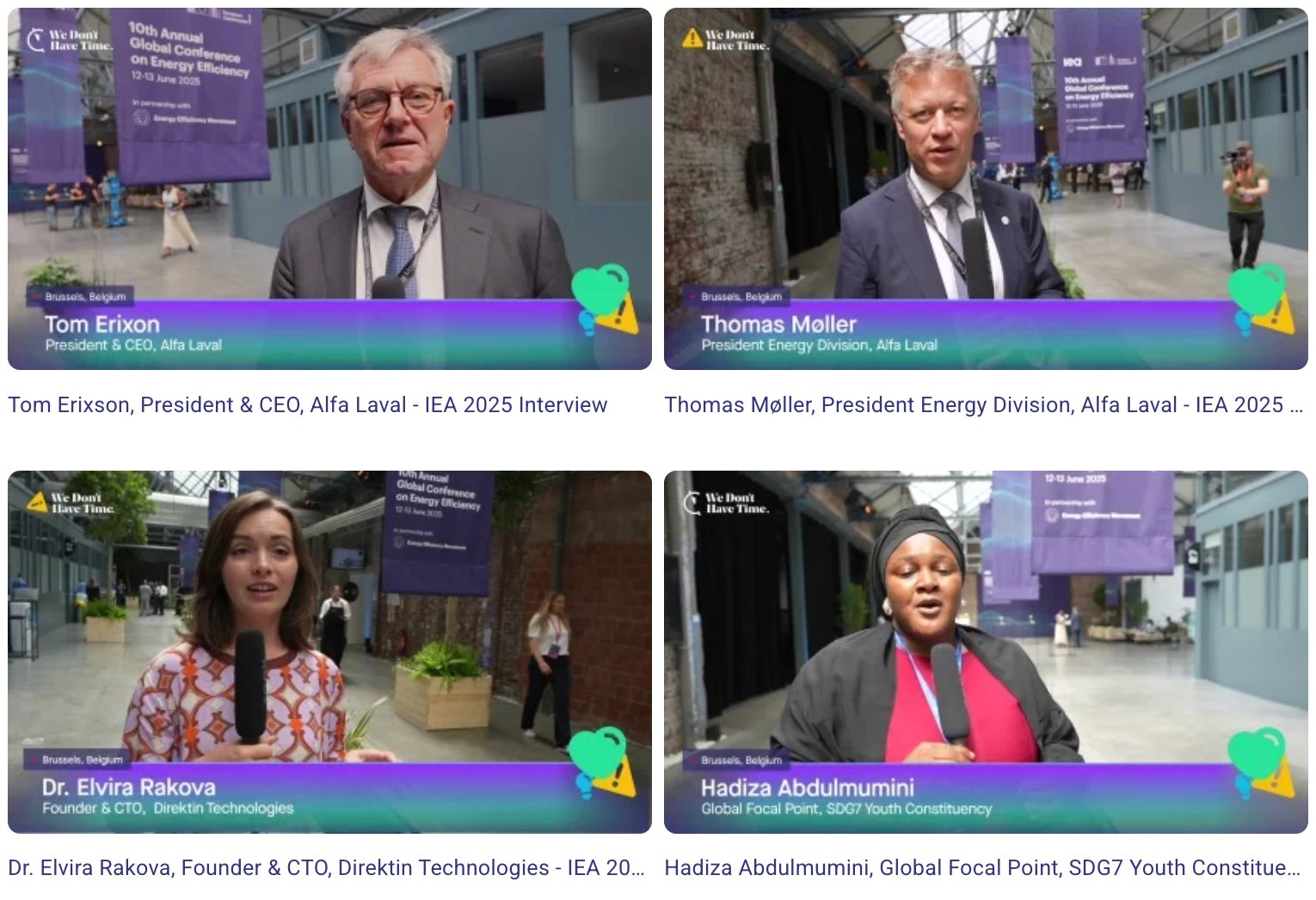
There is no shortage of misunderstandings when it comes to energy efficiency, and one persistent myth is that it constitutes a cost. "Energy efficiency is profitable. It's not a burden," says Dr. Elvira Rakova, Founder and CTO of Direktin Technologies. Erich Labuda, President of ABB's Motion Services Division, goes further: "It's not only driving the basic climate agenda, but it's actually a real competitive advantage for industry. The technology is there. Let's embrace it." For Ulrik Gernow, Chief Operating Officer of Grundfos, the competitive stakes are concrete and urgent. As he points out, European energy prices are significantly higher than those in Asia and the United States. As such, energy efficiency for European industry is a matter of survival in a global market.
Yet the business case alone has not been enough to unlock action at scale. The Action Plan's second and third pillars (advancing efficiency as an enabler for productivity and decarbonization, and recognising the energy-efficiency-first principle as a driver of energy security) point to a structural problem: policies have not kept pace with technology. The solutions exist. The appetite for investment exists. What is missing is a stable, long-term framework that allows companies to commit capital with confidence.
This is where the Action Plan's fourth pillar, and its most direct challenge to policymakers, comes in: Unlock investment through genuine public-private collaboration.
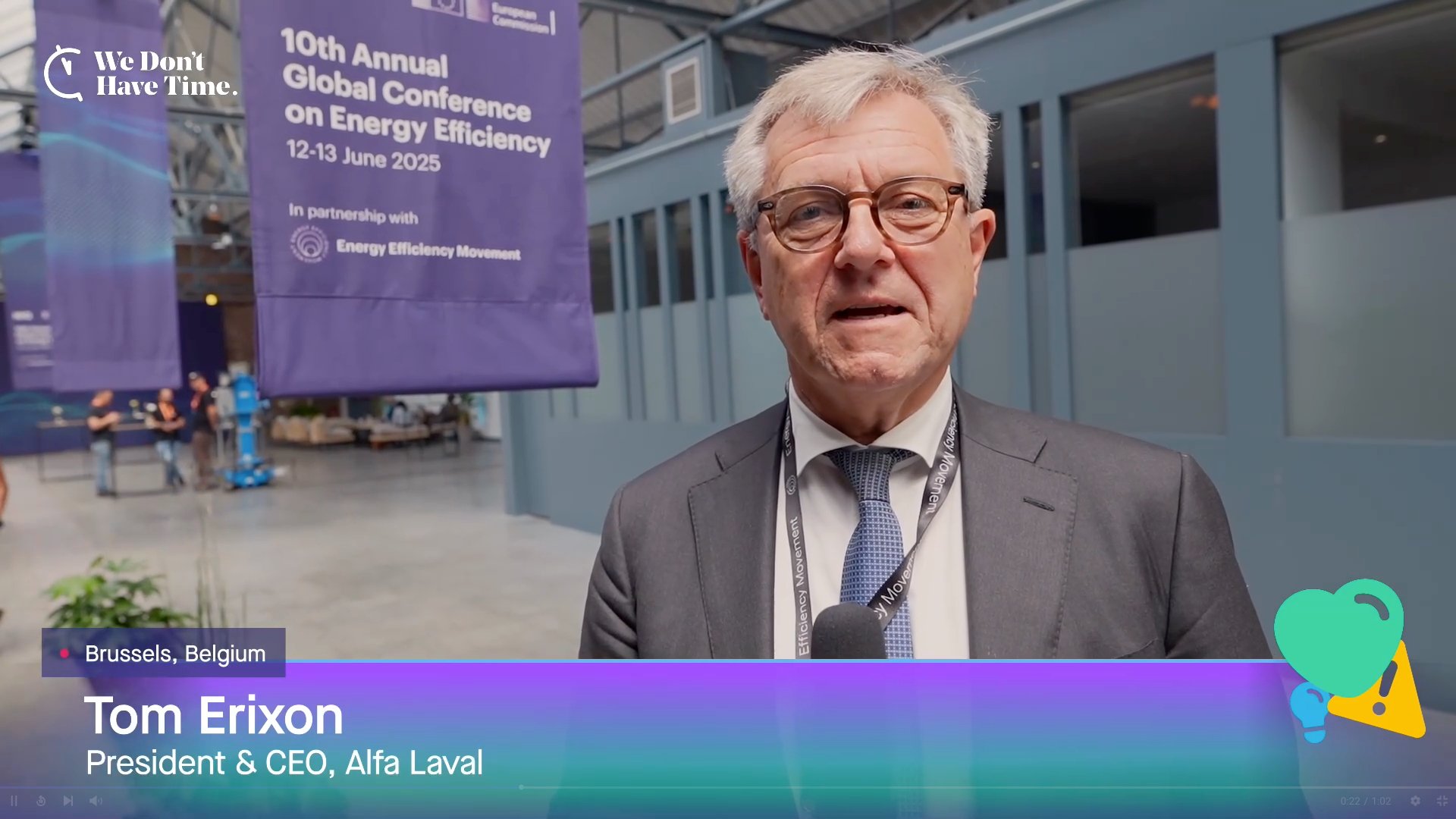
Tom Erixon, President and CEO of Alfa Laval, puts it plainly: "The private sector cannot carry the whole burden of the transition. Let's find a framework for co-investment, for risk sharing, and then we can get all our important projects going." Tjarko Bouman, CEO of BDR Thermea Group, has an even blunter message about what that requires from governments: "Stop making plans or changing the plans and start delivering." The frustration is understandable. As Thomas Møller, President of Alfa Laval's Energy Division, notes, the turbulence of the current geopolitical moment (trade tensions, conflict, economic uncertainty) makes it tempting to pause. "Climate change is also happening, and we cannot take a pause from that," he says. "We need to stay firm."
The Brussels Action Plan is an attempt to turn that resolve into a concrete roadmap. The technology is ready. The business case is solid. The question now is whether policymakers will hold up their end of the bargain, and whether business leaders themselves will stop waiting for permission to act.
https://app.wedonthavetime.org/frontpage/energyefficiencyaction