Why the Iran fuel shock is an accelerant for energy independence and for Trine investors.
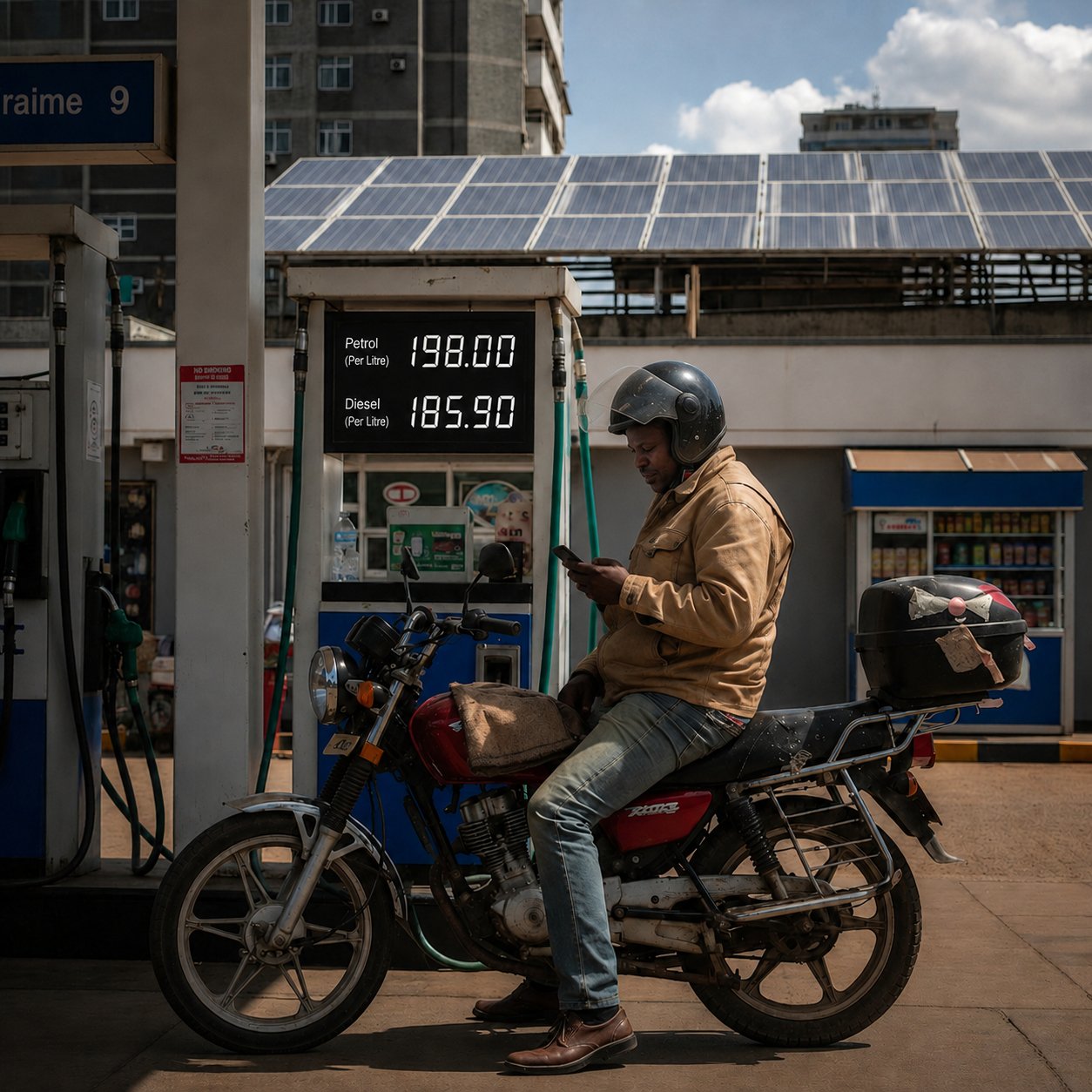
On a Tuesday morning in Nairobi, Kenya, a boda boda rider, a motorcycle taxi common across East Africa, sits on his stationary motorbike at the petrol station, doing math on his phone. Petrol is at 198 shillings a litre, up by close to twenty shillings in a single pricing cycle, even after a last-minute VAT cut from the Treasury. A full tank is the better part of a day's earnings before he has carried a single passenger. He turns the engine off and waits to see whether the next customer is going far enough to make it worth filling up. A continent away, in the Strait of Hormuz, a critical artery of the global oil market is under pressure.
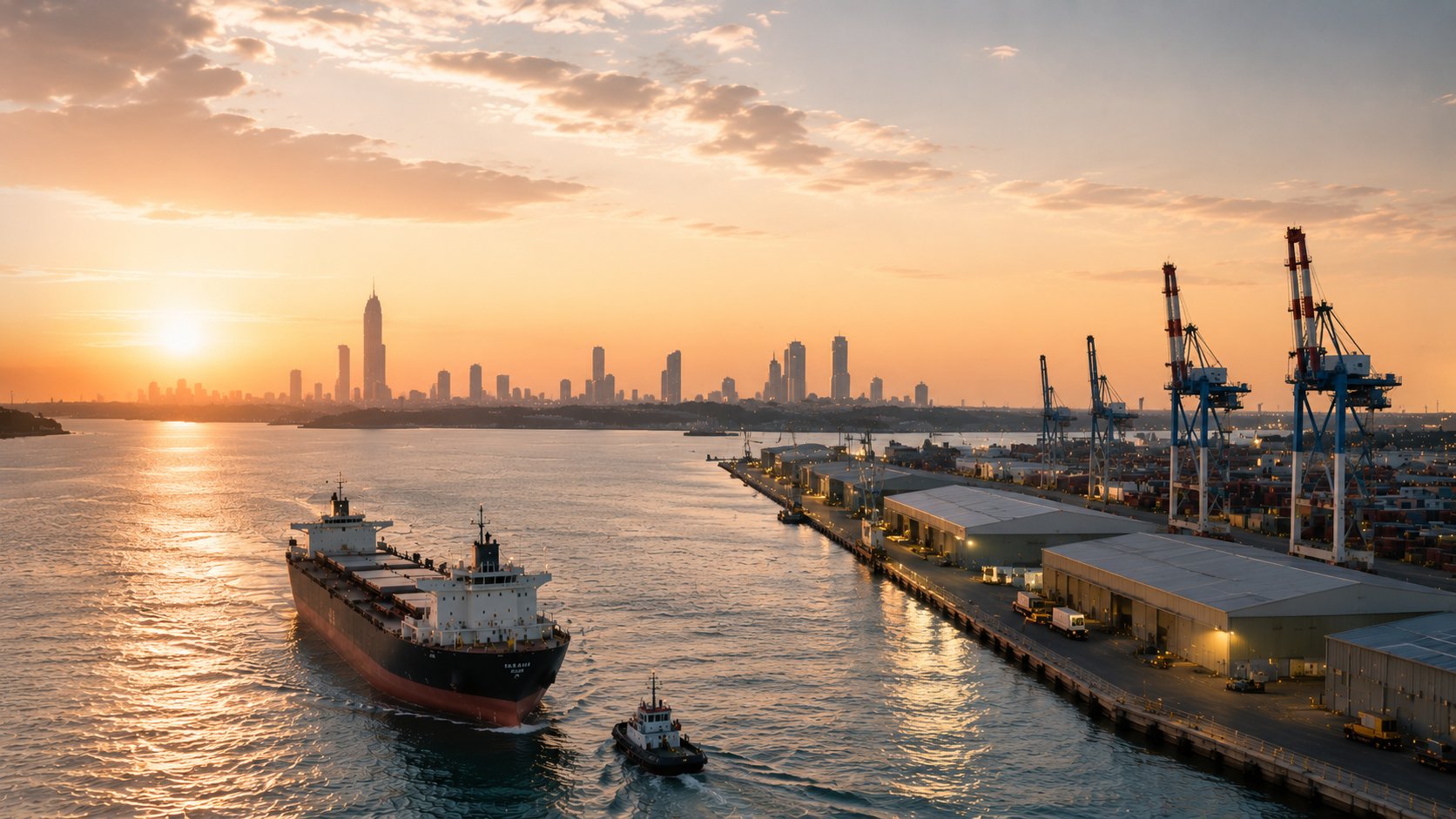
The narrow waterway between Iran and Oman carries about twenty million barrels of crude oil, refined products and gas a day, roughly a quarter of all seaborne oil trade, and around a fifth of everything the world consumes. After the latest escalation, traffic has slowed to a trickle. Brent crude, the global benchmark, is trading above $100 a barrel, and West Texas Intermediate (WTI), its American counterpart, averaged $91 in March. The International Energy Agency has called it the largest supply disruption in the history of the global oil market.
The rider at the petrol station in Nairobi is thousands of kilometres from the source of the shock. He did not set the price of crude. He feels the impact.
A structural wound, not a bandageable one
The reflex in a moment like this is to reach for short-term tools, release strategic petroleum reserves, cap prices, lean on diplomacy, and all of those matter. But they treat the symptom rather than the wound underneath, which is structural.
Whole economies have built their growth on a supply chain that runs through a single strait, controlled by politics that no one at the negotiating table can influence. Across sub-Saharan Africa, much of the electricity generation actually relies on back-up generators humming behind shopfronts and warehouses. When Brent prices move, their lights flicker, and their margins disappear with them.
There is only one durable answer to a fuel-import crisis, and it is not more fuel. It is less of it.
For a decade, "energy independence" lived somewhere between climate goals and national security concerns, a phrase that sounded important without doing much practical work. The Iran shock has collapsed the distance between the two and turned the idea into something far more concrete: a financial calculation about energy costs, margins, and exposure to global fuel prices.
The logic is simple. Every kilowatt-hour generated on a rooftop solar panel is energy that does not need to be imported, refined, trucked, or paid for in foreign currency. Every kilometre driven on a battery is one that no longer has a barrel of oil behind it. Independence, in other words, has stopped being a slogan and started showing up as a line on the spreadsheet.
That is what Trine exists to finance: companies that reduce dependence on imported fuel through local energy generation and electrification. It is also why the current fuel shock is one of the strongest tailwinds the platform's portfolio has ever had.
Short term: electrifying the things that move
The fastest way to cut a country's exposure to oil is to retire the engines that burn it, and two of Trine's partners are doing exactly that.
In Indonesia, where petrol subsidies bend the national budget every time oil spikes, Charged Asia is putting electric two-wheelers into a market of more than 130 million motorbikes. Each rider who switches is a household immediately less exposed to fuel prices. Multiply that across a fleet, a city, and a network of battery-swap stations, and both fuel demand and import dependence begin to fall.
In Africa, Bisedge is replacing diesel forklifts with electric ones across warehouses, ports and industrial yards. This is the kind of high-utilisation swap that pays back faster when diesel doubles in price, and every unit deployed takes a line item off an importer's bill for the next ten years.
Longer horizon: putting generation where consumption happens
The second wave is slower but bigger, and it puts power where it is actually used. Commercial and industrial (C&I) solar means panels installed on the rooftops of factories, warehouses and offices, generating electricity for the building underneath.
VuPhong and Stride in Vietnam are building rooftop solar for manufacturers whose export competitiveness is squeezed every time fuel-linked electricity tariffs rise. Miale Solar in Kenya is bringing reliable, affordable power to businesses currently surviving on an unstable grid topped up with expensive diesel. Alpha Solar in Brazil is letting households and small businesses lock in their power cost for two decades in a country whose currency and fuel-import dynamics have burned family budgets before.
None of these companies depends on the current fuel shock to operate, but rising fuel costs strengthen demand for what they offer, and all of them need debt capital to grow.
What this means if you invest with Trine
The headlines will tell you the recent spike in fuel prices is bad for the global economy, and that is true. The quieter story is that it is also the clearest proof point in a decade that the energy transition pays, not someday, not in theory, but in how it reduces exposure to volatile global energy markets today.
If you have been waiting for a reason to put capital on the right side of that shift, you can explore the investment opportunities currently available on Trine.