
Article

Nuclear's Hidden Benefits: Medicine, Food, and More

Nuclear technology is mainly used in the energy sector, and for obvious reasons – nuclear reactors create large amounts of fossil-free, reliable electricity. However, this isn’t the only benefit of the technology. These reactors have applications in many other sectors, from medicine to food, and even paper!

The benefits of nuclear research extend beyond the environmental gains of replacing fossil fuels in energy production. These co-benefits, positive effects of climate action beyond the actual emission reductions, significantly increase the value of nuclear research.

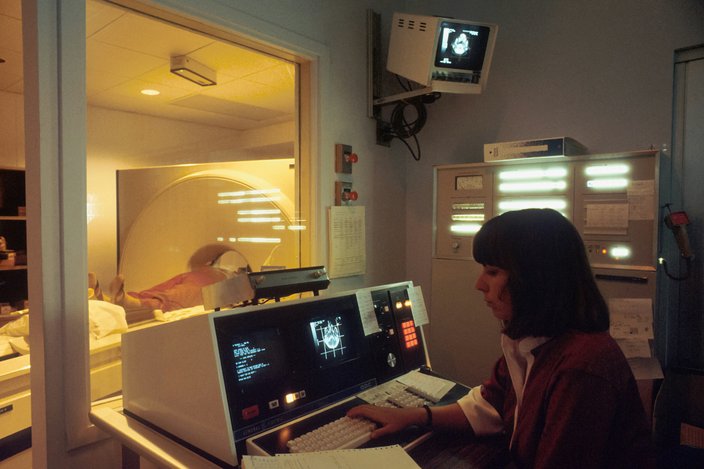
Nuclear research has been instrumental in tracking diseases such as cancer and various heart conditions. Photo by National Cancer Institute on Unsplash.

Nuclear research has been instrumental in tracking diseases such as cancer and various heart conditions. Photo by National Cancer Institute on Unsplash.


Nuclear Materials In Medicine

In the medical field, radioactive tracers produced in a nuclear reactor can be used to track the progression of heart disease, cancer, and other diseases by injecting them into the patient’s blood or organs. The radiation they release when decaying can be detected, tracing their path through the body. This is an accurate means of identifying cancer and other diseases, with a radiation risk no more than a standard chest X-ray. Nuclear medicine can also treat cancer through radiopharmaceuticals produced in research reactors or particle accelerators. These drugs are specifically designed to target cancer cells and bombard them with radiation, destroying them without harming healthy cells. Radioactive materials are also used to irradiate food, medical, dental, and household materials. The nature and degree of this radiation are not harmful and do not meaningfully impact the product itself. However, any bacteria, insects, and other diseases that would render it unsafe to use are killed. The irradiation can delay the sprouting and ripening of foods, or completely sterilize them, meaning that they can be stored for years without refrigeration, an important aspect of hospital food, for example.

Everyday Applications of Nuclear Technology


Nuclear technology can also protect crops or stimulate their growth. Radiation-based techniques have been used in everything from monitoring soil health to sterilizing insects without pesticides and genetically altering crop species to be more resilient and nutritious. Radioactive material is used in many other mechanisms that you encounter in your everyday life. Smoke detectors contain a small amount of radioactive americium-241, nuclear reactors are used to desalinate seawater into drinking water, and the paper you buy uses nuclear gauges to ensure it is all equally thick. Nuclear technology has affected much more than just energy production. Radiation or nuclear physics is used in many areas of research. As development continues, more applications of nuclear techniques will reveal themselves. Research must be protected, and universities must be allowed to continue their crucial work to give us a future with a more stable climate, healthier people, and safer societies.

    Follow us

    © 2026 We Don't Have Time – All rights reserved.

    We Don’t Have Time is the world’s largest media platform for climate action – with a mission to democratize knowledge about climate solutions and inspire and mobilize global action toward a prosperous, fossil-free future. The content of the We Don't Have Time social network is user-generated. The We Don’t Have Time organization does not automatically endorse users’ opinions and claims. All users of We Don’t Have Time have subscribed to We Don’t Have Time’s Terms of Use, which, among other things, prohibits hateful, abusive, and violent content. If you discover content that violates our Terms of Use, please notify us immediately. The platform is operated by the company WeDontHaveTime AB (publ), whose majority shareholder is the WeDontHaveTime Foundation. The Foundation’s principal purpose is to contribute to a reduced climate impact and an ecologically sustainable environment. Our headquarters is located in Stockholm, Sweden.

    Please read our Privacy Policy and our Cookie Policy.