When mud-coloured floodwaters came crashing through villages and infrastructure in Nepal and Tibet, glaciologist Donovan Dennis was in the Austrian Alps, at a workshop devoted to modelling the future of the world’s mountain glaciers.
The timing was chillingly appropriate.
Scientists are still piecing together exactly what triggered the catastrophe on August 26. A catastrophe that left at least 1,000 people dead and more than 4,000 missing. Satellite evidence suggests that a huge mass of rock and glacier ice collapsed at an altitude of 5,200 meters and crashed down into a valley, blocking a river and creating temporary lakes that then burst. The event was so violent that it was initially reported as a small earthquake.
Donovan Dennis is a glaciologist and project coordinator for the Tipping Points Modelling Intercomparison Project (TIPMIP) based at the Potsdam Institute for Climate Impact Research and the Max Planck Institute of Geoanthropology. He was not surprised that this happened. ”No, not at all. The scale of destruction and the catastrophe was surprising, of course. But rockfalls happen often in the mountains, and in regions of permafrost thaw, rockfalls are becoming more common. Mountain regions are warming faster than the lowlands around them. Permafrost is thawing, glaciers are retreating and landscapes that have remained frozen for centuries are entering a new state.”
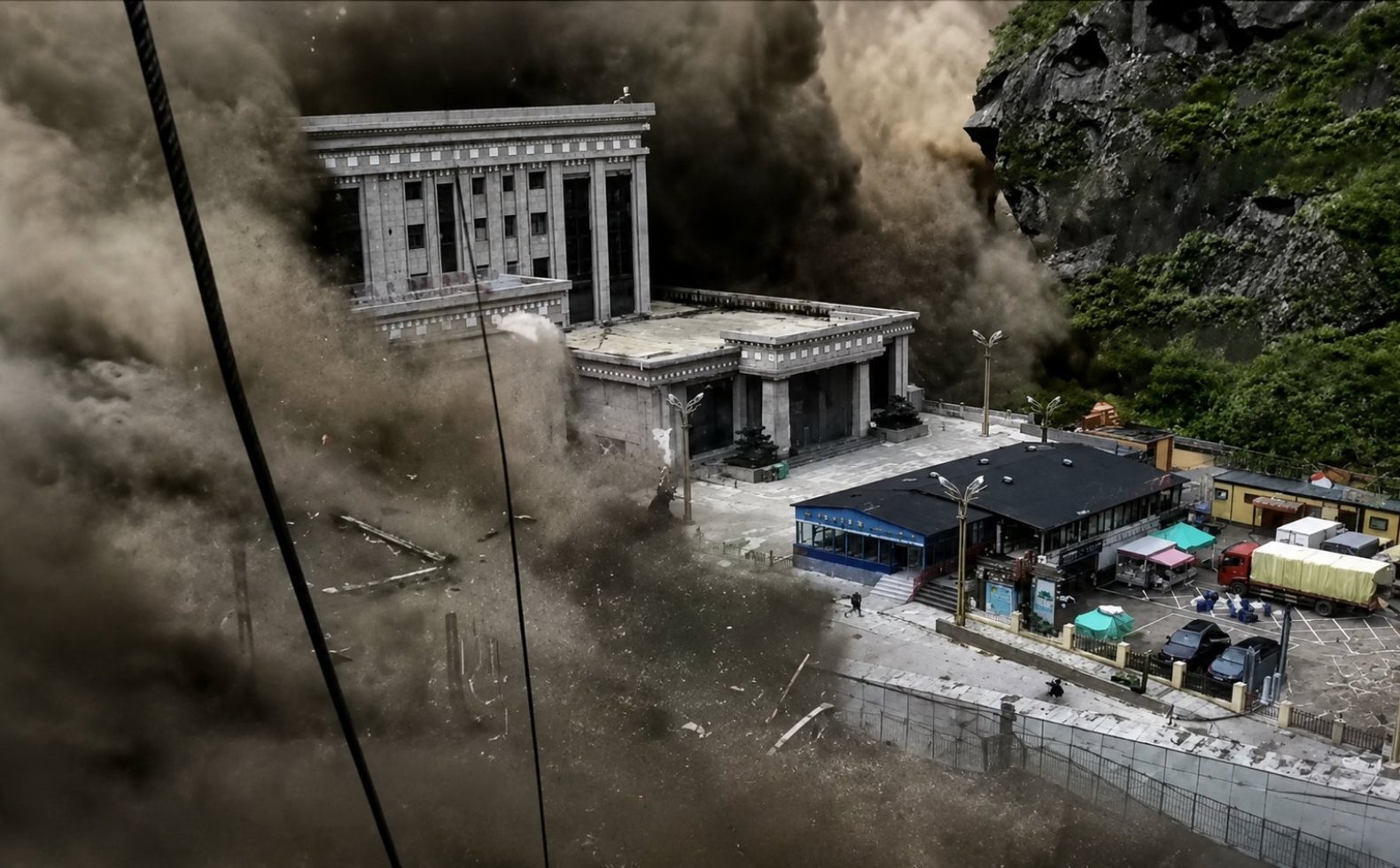
On 26 August 2026, a violent flood swept through Nepal's Rasuwa district after a massive chunk of glacial ice and rock broke off from an altitude of about 5,200 meters and plunged 1,200 meters into the valley below.
Is it possible to make a reliable assessment of how climate change contributed to the likelihood of the disaster in Nepal and Tibet?
”In terms of one singular event, it's always difficult to assign an attribution to this. What we can say is that when you warm a mountain, you induce feedback effects that lead to more warming and more rapid warming. When you remove a glacier, you get rid of cold winds, and you increase the dark surface area that's exposed to the sun, leading to more warming. All of it contributes to the thawing of permafrost regions. It has been observed in the Alps that permafrost thaw leads to these really big rockfalls. From this, we can extrapolate to other regions because we have well-observed systems in the Alps.”
Your research focuses on systems in transition. Would you say that the Himalayas are a system in transition?
”Absolutely. My PhD was on mountain permafrost and erosion in the Alps. But the glaciers in the Himalayas are so much bigger and so much more complex because there's also a higher distribution of glaciers there that have rock cover. And rock cover changes the way that a glacier responds to climate change. The mountains in the Himalayas are also very steep, and when you warm these steep slopes, you transition that system into a new thermal regime. You have so much rock just glued into the hill slope. When you put a hair dryer to it, which is global warming, it will respond.”
New data from Climate TRACE show that emissions continued to increase during the first half of this year, and UNEP just published a report saying that 1.5 ºC is now officially dead. How does this affect the risk of similar disasters in the upcoming years or decades? ”We know that with every 0.1 degree of global warming we add to the total degradation of the system. So yes, it's concerning to see that we yet again continue to increase the amount of carbon dioxide in the atmosphere when we absolutely know we have to reduce it.”
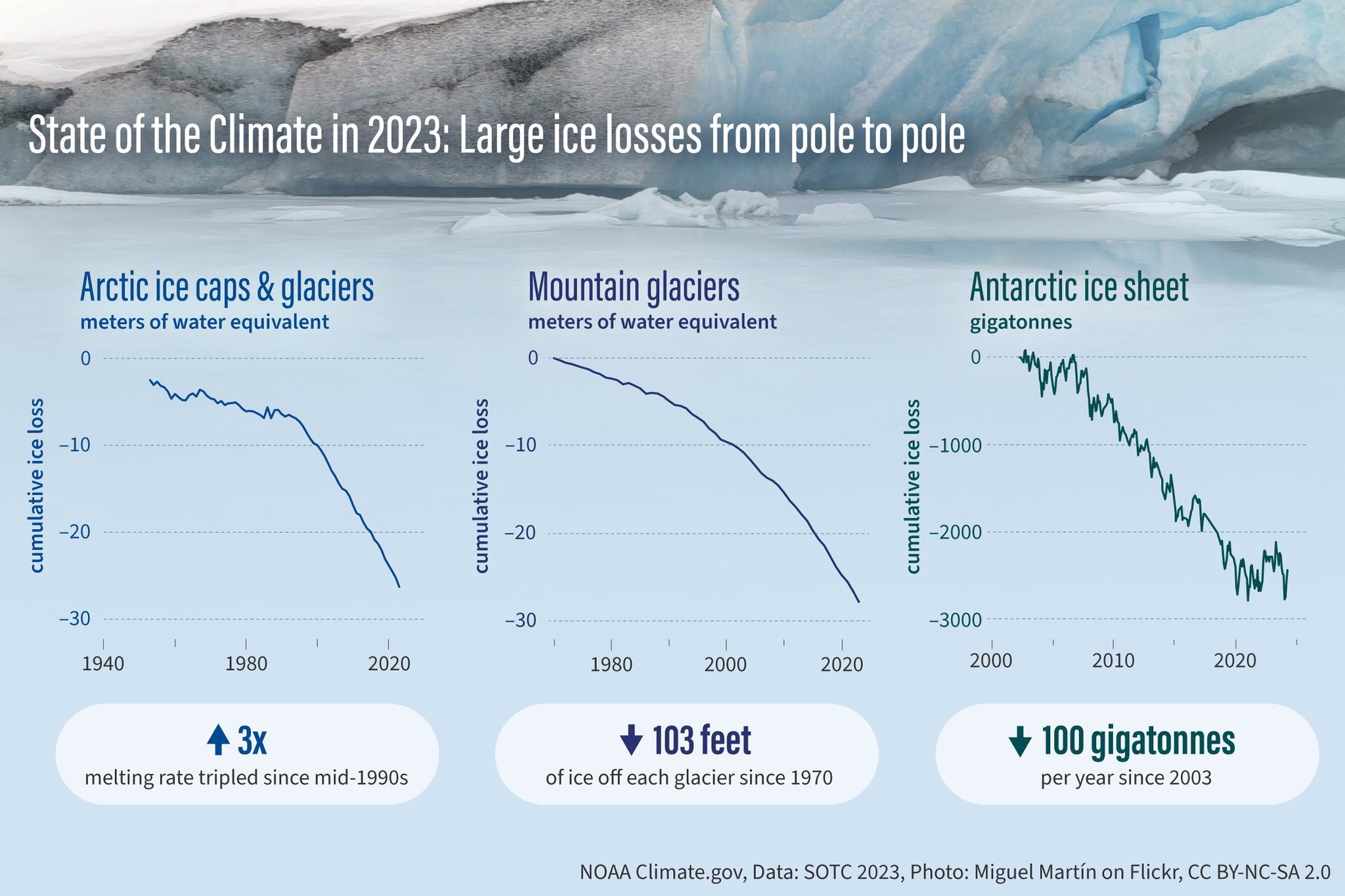
You are involved in modeling tipping points for mountain glaciers. Tell me about this work and why it is needed. ”The work that I've been doing for the last year and a half is on the Greenland ice sheet, which due to the feedback loops at play is subject to these critical thresholds (tipping points). But in mountain glaciers, there hasn't been as much work. And part of that reason is because we know that the risk of losing an ice sheet will be catastrophic. Around seven meters of sea level rise in Greenland, and 50 to 60 meters of sea level rise from the Antarctic.
But as we're seeing, the loss of mountain glaciers can also lead to major hazards. And if we lose them potentially even more rapidly than we thought we might due to unforeseen tipping points, then this is a cause of immediate concern. In mountain glaciers, the timescales are decades instead of centuries to millennia for feeling the impacts of this loss. And as I said, it's nascent work. Mountain glaciers are very difficult to model because they are smaller, they're more complex. Anticipating the flow and the changes to the flow requires a higher level of modeling. So we're working on how to do this best, and in the meantime, trying to use existing datasets to evaluate which glaciers or which regions might experience tipping.”
There are glaciers in many other regions beyond the Himalayas and the Alps — for instance in New Zealand, Patagonia, Alaska and Canada. Are all these mountain ranges at risk, or do the risks differ significantly between them?
”It's a good question. The jury is still out on mountain range-specific rates of warming. Particularly when it comes to future rates of warming. We know that mountain ranges globally are warming more rapidly than lowlands, and that glaciated regions around the world will continue to lose their ice. This will happen on the scale of decades to centuries. There's work that suggests that the loss of these glaciers may be irreversible, even if we do stabilize or even reduce temperature change.
And with the warming of these mountains comes additional hazards. For example, in Southeast Alaska, there's the Juneau Icefield adjacent to the state capital. It sits at relatively low elevation and therefore has experienced very rapid change. One of the consequences of this rapid change has been the formation of glacial lakes. These glacier lakes now burst and flood neighborhoods in the capital. This is just one place of many, many, where this might occur. And the only reason we can study it well is because it's adjacent to where people live, and in particularly a wealthy country like the United States.”
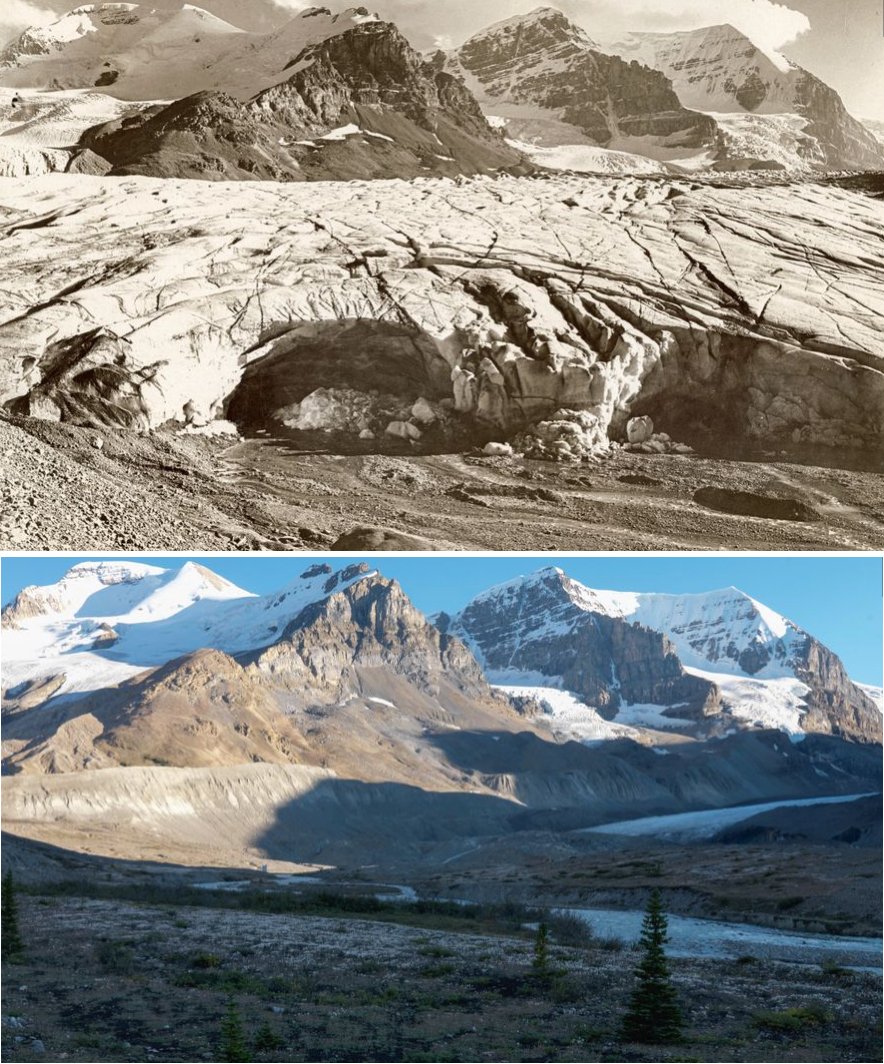
The state of the Athabasca Glacier in Canada in 1918 and today.
A Nepali official said the country will need $5 billion for recovery. A recent estimate by Triodos Bank also suggested that the cost of extreme weather events in Europe could wipe out all projected EU growth in 2026. Why do numbers like these still not seem to affect our politics? Why is delaying climate action still treated as a saving rather than a cost? ”I don't know why it doesn't. When the Nepal catastrophe happened last week, I was at a conference for the modeling of mountain glaciers. So I was with some of the world's leading experts, people who have been lead authors for chapters in IPCC reports. And I asked some of them the question, ‘how do you keep going?’ Because they've really seen this. I've grown up in the era of climate change, but these folks have been going for 40 years and they've been warning about this over and over.”
So what did they say?
”The answers were mixed. Most of it boiled down to curiosity. I think that also speaks to the role of the scientist. Our role is to provide knowledge, not to provide political assessment. But that doesn't mean that we aren't angry, right? It doesn't mean that we don't have emotions about these kinds of things. And when it comes to costs, the number that really sticks out to me is this: Nepal has contributed approximately 0.1% of the carbon dioxide that contributed to global warming. And yet, according to the latest numbers of missing people, it's possible that they just lost 4,000 people.
It could probably have happened in the absence of global warming, but the event becomes more likely with global warming. And just imagine if 4,000 people had died in Paris? I'm an American citizen, and this is a controversial thing to say, but the United States went to war for 20 years in the Middle East over the sudden, catastrophic death of around 3,000 people. A similar injustice was just perpetrated against the people of Nepal, and yet I don’t expect to see a similar response by the American, or global, community.”
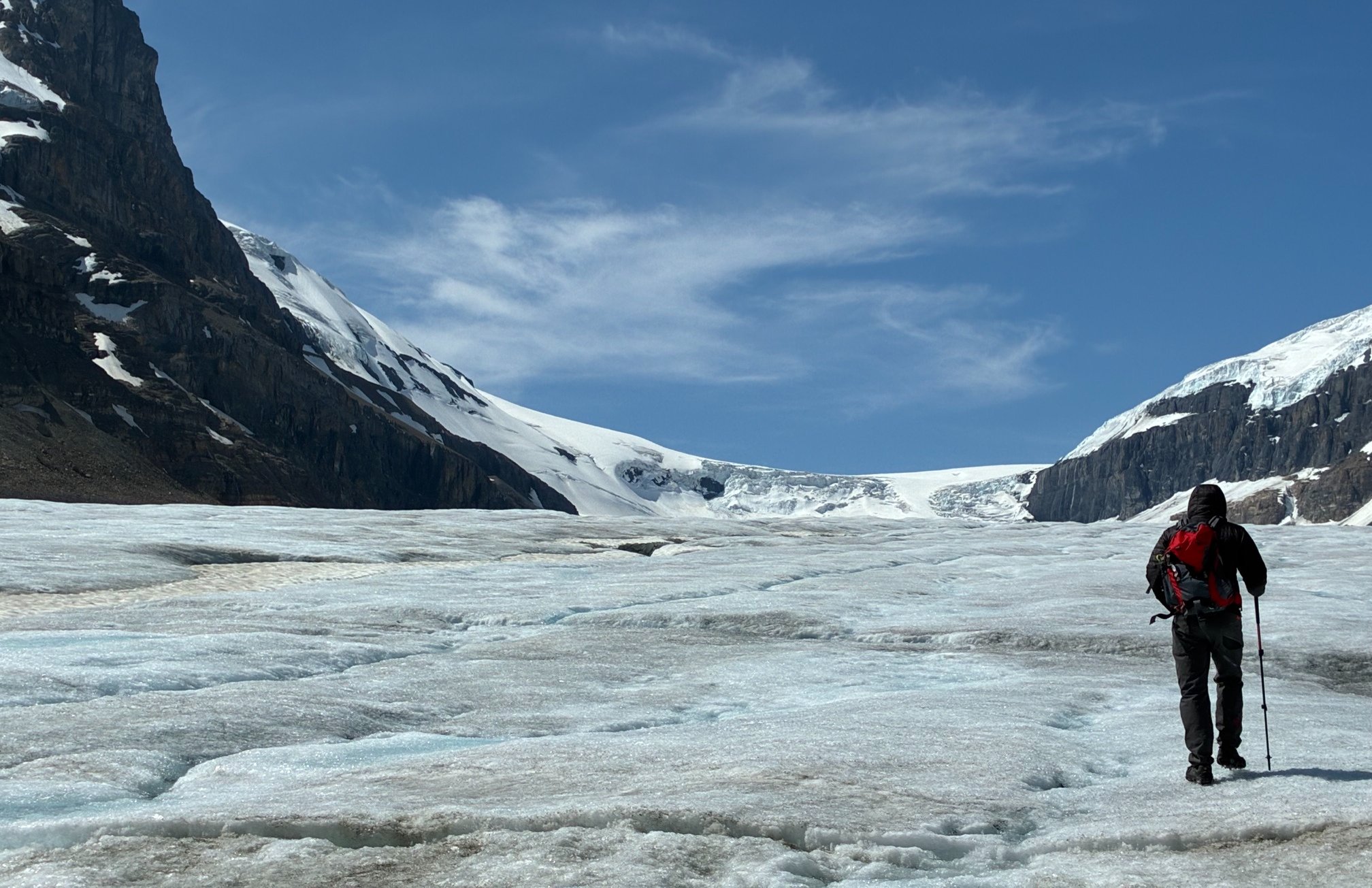
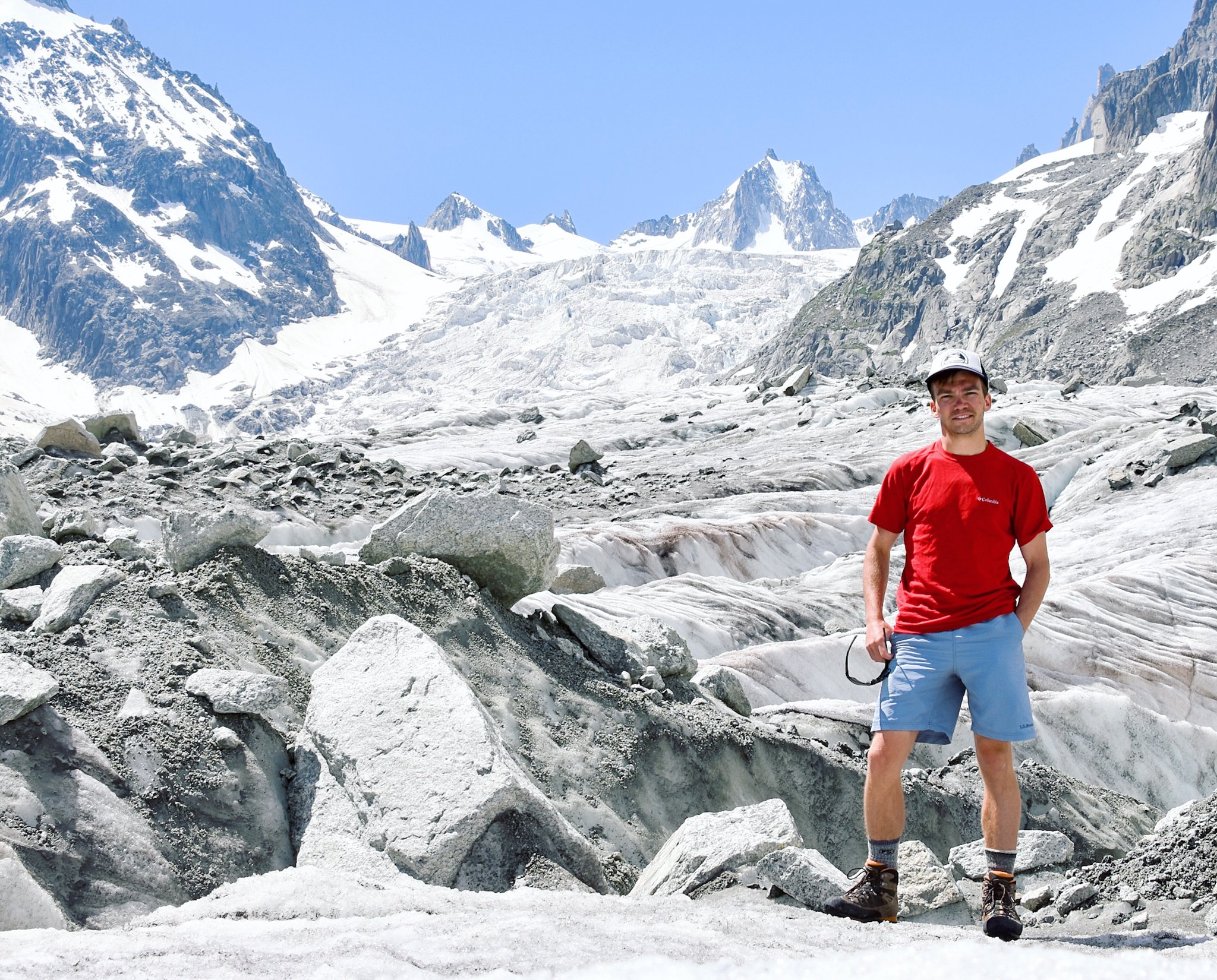
"With every 0.1 degree of global warming we add to the total degradation of the system”, says Donovan Dennis, here walking on the Athabasca Glacier in Canada.
There are also broader changes at stake here, particularly how disappearing glaciers will affect the lives and livelihoods of people around the world. What is your take on this?
”Just over a billion people live in watersheds that are fed by glacial waters, and that are dependent on glacial water in some context. Many of these are in water-stressed regions. The Himalayas are the water towers of Southern Asia and parts of China, which means we certainly risk stressing these environments. The water will flow away. It's stored as ice and then it flows into the sea. Maybe it gets captured along the way by a dam at some point. But for the most part, it's a transformation of freshwater into saltwater. And saltwater isn't drinkable.”
What would you say is the most important thing we can do to reduce the likelihood and risks of events like this in the future?
”As drastically as we can tolerate, reduce global emissions. I think we are also becoming more aware of the fact that removing carbon dioxide from the atmosphere is increasingly important. So advancing the nature-based solutions that will allow us to remove carbon dioxide from the atmosphere while at the same time dramatically reducing the amount that we put in.
But this will still never be enough for people like me, because the melt of the glaciers today is from the warming of 20, 30, 40, 50 years ago. They respond on a timescale that isn't immediate. And so it will never be enough because I want no glacier to continue to retreat.”
ABOUT
- Donovan Dennis is a glaciologist and project coordinator for the Tipping Points Modelling Intercomparison Project (TIPMIP) based at the Potsdam Institute for Climate Impact Research and the Max Planck Institute of Geoarchaeology.
- His research focuses on systems in transition, ranging from mountain permafrost to the polar ice sheets.
- In addition to his research and coordinating the TIPMIP, Donovan is committed to public outreach, and has presented his work everywhere from art museums to black box theatres to a shack high up on the Juneau Icefield.
- He has served as Co-Chief Editor of Polarforschung, the journal of the German Society for Polar Research (DGP), and is a former member of the the APECS international council and APECS-Germany executive board.
- He is one of the founding Core Team leaders of "Out on the 'Berg 🌈," the LGBTQ+ network for the Potsdam Telegrafenberg research institutes.