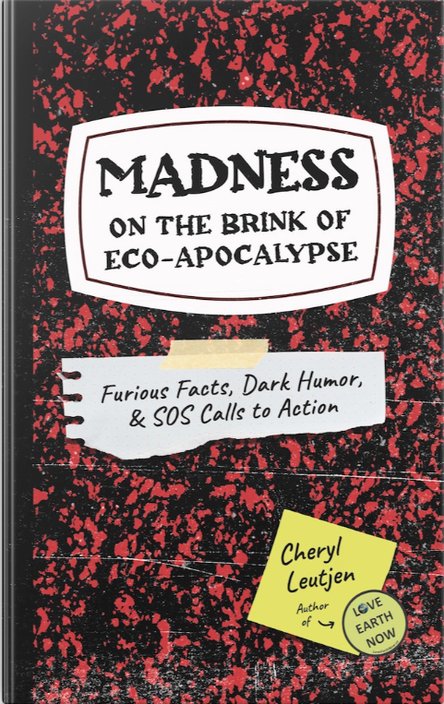
Cheryl Leutjen is the nicest angry woman you’ll ever meet. The California-based author is a lifelong environmentalist who has always been on the lookout for ways to live more greenly.
“I remember being a kid in the '70s during the energy crisis. I was that kid who would tape the light switches down in the off position to save energy,” she says.
But more recently, she’s grown frustrated with the lack of results her personal efforts seem to produce. She, like many other eco-conscious citizens conserving energy and bringing reusable bags on trips to the grocery store, can’t help but notice that the state of the world remains dire: the globe is warming, microplastics are everywhere, biodiversity is in free fall.
And she’s furious about it.
Redirecting that anger into a productive outlet, Cheryl wrote Madness On The Brink Of Eco-Apocalypse: Furious Facts, Dark Humor & SOS Calls to Action, a wide-ranging compendium of the many eco-crises unfolding all over the world. It’s a furious, funny, and ultimately hopeful read for anyone wondering how to come to grips with the seemingly endless stream of grim news about our planet.
We sat down with Cheryl to talk about her motivations for writing, her hopes for the future, and how humor can work to shed light on bleak subjects.
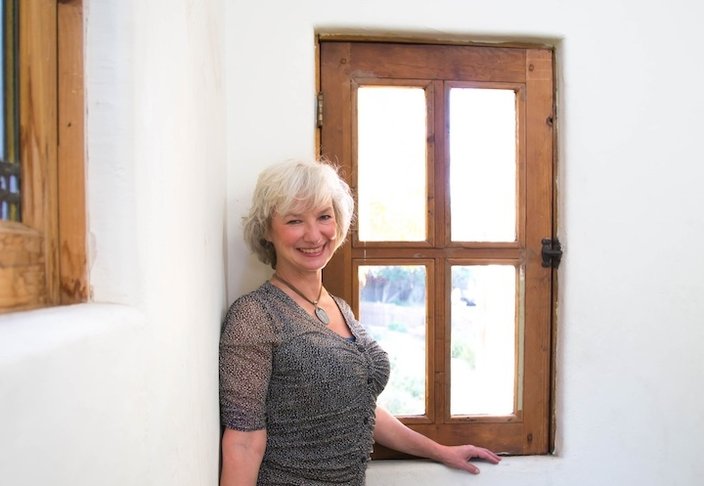
She may not look it, but Cheryl Leiutjen is mad! Don't miss the exclusive free preview of her new book, "Madness on the Brink of Eco-Apocalypse," at the end of this interview.
Your previous book was titled Love Earth Now, but your new one is called Madness on the Brink of Eco-Apocalypse. That’s quite a shift in tone. What caused that change?
Love Earth Now was very personal. It was about finding small, meaningful ways to feel like I was contributing—bringing reusable bags, using metal straws, living with intention. It may not stop ExxonMobil, but it helped me feel more intentional and thoughtful about how I live. And I stand by that.
But at some point, that didn’t feel like enough. A year or two ago, that report came out showing we’re failing six of the nine planetary boundaries that sustain life—forests, oceans, water systems... It hit me hard. I had to take it in small bites, chapter by chapter. And then I started writing—that’s my therapy. That’s where Madness came from.
The book is structured that way, too: tough facts, followed by moments to breathe and restore before diving into the next challenge. But I didn’t want it to be all darkness, so at the end of each chapter, I spotlight an organization doing meaningful work. That’s how I found We Don’t Have Time.
What do you hope readers will take away from the book?
First and foremost, I want them to understand that the problems are real and serious. It’s tempting to look away from the news and assume it can’t be that bad. But it is. At the same time, I want to inspire people to do something. Anything. There are so many causes competing for our attention, but without clean air and water, we can’t address any of the others.
So, the idea is to raise awareness and, hopefully, inspire action. Even small actions matter. And look at these groups I’m showcasing: there are people out there already doing this work. We don’t have to invent it all from scratch.
You've also done some stand-up comedy, and humor plays a major role in your writing. Was writing about these serious topics in a humorous way a means of making it more palatable, or did it just come out naturally?
Humor is part of who I am, absolutely. My daughter once made a book about me when she was eight, and under “What is your mom really good at?” she wrote, “Sarcasm.”
Laughter is therapeutic. And I do believe people absorb difficult truths more easily through humor than lectures. So, the humor is intentional—but it’s also just naturally part of how I deal with heavy topics.
Each chapter in the book features an organization whose work you think deserves support. Assuming readers are already aware of We Don’t Have Time, what are some of your favorites you learned about in the course of writing your book?
Oh, that’s tough—like picking a favorite child! I’m a big fan of the Buy Nothing project. They’re all over the world. It’s simple but powerful: local communities giving and sharing instead of discarding.
Then there’s Denver Urban Gardens. They establish community gardens in a way that feeds people while also strengthening neighborhood ties, which I think is fabulous. Another favorite is the Good Grief Network, which helps people process eco-anxiety and grief in community. I tried to include a mix—some global, some hyperlocal—so readers could find something relevant wherever they are.
You mention eco-anxiety, which has a big presence in this book. Was writing Madness in some sense a way of helping you deal with eco-anxiety?
Yes, and it was incredibly helpful. Getting the thoughts out of my head and onto the page—whether for a book or just in a journal—is deeply therapeutic. It helped me shift from, This is terrible and I can’t handle it, to This is terrible and people are doing something about it.
And I always say, doing something helps. Whether that’s planting wildflowers instead of turf grass, joining a potluck to talk about local sustainability, or attending an international climate discussion by Zoom. Doing beats stewing every time.
What would you say to someone who’s feeling that same kind of eco-despair?
First, I’d say: You’re not alone. Feeling grief is natural. It means you care. Ignoring it doesn’t help. Just like grieving a loved one, it's healthier to feel it and then ask, How can I honor what I love?
And most importantly, don’t go it alone. Find your people. Join a group, start a conversation, show up for a community event. One of my favorite groups is the Society of Fearless Grandmothers in Santa Barbara. These women—some in their 70s, 80s, even 90s—are fierce, joyful, and committed to saving the planet for their grandkids. Community makes all the difference.
You mention in the introduction that you wrote this book before the 2024 election. How would it have been different if you’d written it now?
Honestly? It would contain a lot more expletives. It feels like we’ve taken some serious steps backward. Even though some positive trends continue regardless of the administration in power, the direction we're headed is worrying.
I find myself needing daily time to process, to understand how protecting the systems that make life possible could somehow be unworthy of consideration. It's baffling.
Do you have any projects in the works you’d like to share?
Yes! I’m working on a video series called Saving Ourselves. I’m interviewing groups featured in the book to help bring their work to life and make it even more accessible. Because, as I say in the series: we can’t wait for governments, corporations, or billionaires to save us.
We are here to save ourselves.