Article
Understanding fossil fuel alternatives

Goodwings
59 w
•
•
This Q&A guide dives into fossil fuel alternatives for the aviation industry, exploring innovative solutions, their benefits, challenges, and real-world applications. As air travel continues to grow, switching to sustainable energy sources is essential for minimizing the industry’s environmental footprint.
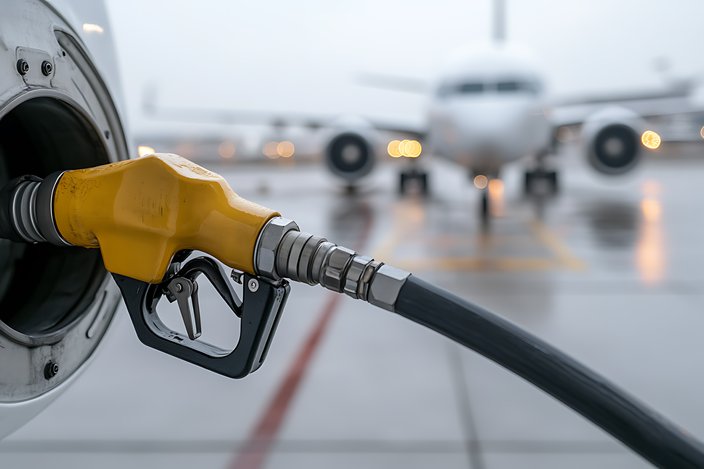
Reducing carbon emissions has become a global priority, and the search for fossil fuel alternatives is at the forefront of this effort. By moving away from traditional fuels like coal, gas, and oil, innovative energy solutions are beginning to reshape industries. One area where change is especially critical is aviation — a sector historically reliant on high-carbon fossil fuels.
Aviation may account for 2–3% of global CO₂ emissions today, but its warming effect is even greater — closer to 3.5% when contrails and other non-CO₂ effects are included. If aviation were a country, it would rank among the world’s top 10 CO₂ emitters. And with passenger demand expected to double by 2040, emissions could skyrocket unless the sector accelerates its shift away from fossil-based jet-fuel.
Efficiency gains alone aren’t enough. Airplanes have become about 39% more fuel efficient between 2005 and 2019, but those improvements have been overshadowed by the growth in global flights. More than 99% of the 300 million tons of jet fuel consumed annually is still fossil-based jet-fuel, highlighting just how far alternatives need to scale.
Why does aviation need fossil fuel alternatives?
Q: What are fossil fuels?
A: Fossil fuels are natural resources formed deep within the Earth over millions of years through the decomposition of ancient organic matter, such as plants and microorganisms. These materials, subjected to intense heat and pressure, transform into coal, crude oil, and natural gas. Fossil fuels are characterized by their high energy density, making them a historically efficient energy source for powering vehicles, machinery, and electricity generation.
In aviation specifically, airplanes run on jet fuel (kerosene-based aviation fuel derived from crude oil). When burned, jet fuel releases large amounts of carbon dioxide (CO₂), along with nitrogen oxides (NOₓ), water vapor, and particulates. These emissions don’t just contribute to climate change — at cruising altitude, they also form contrails and cirrus clouds that trap additional heat in the atmosphere, amplifying aviation’s warming impact beyond CO₂ alone.
Because of its finite nature and harmful environmental effects, the continued reliance on fossil jet fuel underscores the urgent need for sustainable alternatives in aviation.
Q: Why is transitioning to alternative fuels important for aviation?
A: The aviation industry is a significant contributor to global greenhouse gas emissions, with traditional jet fuel being a primary culprit. Fossil fuels release a high level of carbon dioxide when burned, contributing to climate change. By adopting alternatives, the aviation sector can reduce its carbon footprint, improve energy efficiency, and achieve sustainability goals set by countries and organizations worldwide.
Switching to newer energy sources not only aligns with environmental objectives but also encourages innovation within the industry, fostering solutions that ensure air travel remains viable in the long term.
What are the key fossil fuel alternatives for aviation?
Q: What are the most promising alternatives to traditional jet fuel? A: Aviation is exploring several advanced fuel types and technologies, including:
1. Sustainable aviation fuels (SAF)
SAF refers to bio-based fuels developed from renewable resources like waste oils, agricultural residues, or even algae. Unlike traditional jet fuel, SAF offers the potential for up to 80% lower lifecycle carbon emissions, depending on the production process.
Benefits
✅ Lower emissions: SAF burns cleaner than fossil fuels.
✅ Compatibility: It can be blended with traditional jet fuel without requiring engine modifications or new infrastructure.
✅ Raw material variety: Recyclable materials like cooking oil and plant-based waste can be repurposed, reducing environmental waste.
Challenges
✋ Cost: SAF production is currently more expensive than conventional jet fuel due to limited facilities and the complexity of manufacturing processes.
✋ Scaling up: Existing SAF supply meets only a fraction of global demand, making widespread adoption a challenge.
Real-world applications
Leading airlines like United Airlines, Lufthansa Group, and KLM are already incorporating Sustainable Aviation Fuel (SAF) into their operations. United has introduced SAF at major hubs such as Amsterdam, San Francisco, London, Chicago, and Los Angeles, while Lufthansa increased its usage from 13,000 tonnes in 2023 to 20,000 tonnes in 2024 - about 0.2% of its total fuel demand. KLM, a long-time SAF advocate, blended 1% SAF on flights from Amsterdam in 2023-2024 and aims for 10% SAF use by 2030. More broadly, SAF has powered over 360,000 commercial flights at 46 airports, mainly across the U.S. and Europe. With global SAF production growing - from 1.3 billion gallons in 2024 to an estimated 6 billion by 2030 - momentum is building even though SAF still makes up less than 0.3% of aviation fuel consumption.
2. Hydrogen fuel
Hydrogen fuel is a clean alternative that generates energy through combustion or fuel cells, with water being the only byproduct. Hydrogen is gaining attention as a promising energy carrier for both short-haul and regional flight routes.
Benefits
✅ Zero emissions: When burned, hydrogen produces no carbon dioxide.
✅ High energy density: Per kilogram, hydrogen contains significantly more energy than standard jet fuel.
✅ Potential scalability: Hydrogen can power not only aircraft but also ground operations like airport vehicles.
Challenges
✋ Infrastructure needs: Hydrogen requires new storage and refueling systems at airports.
✋ Aircraft redesign: Current planes are not designed for hydrogen storage; significant investment in new aircraft models is essential.
✋ Supply chain hurdles: Producing "green" hydrogen (using renewable energy) remains energy-intensive and costly.
Real-world applications
Airbus is progressing with its ZEROe program and now aims to launch its first zero-emissions commercial aircraft in the late 2030s. While the original 2035 target has shifted, the company reaffirmed its commitment to hydrogen-powered flight at the 2025 Airbus Summit. It is now focusing on fuel-cell propulsion, using four 2 MW electric engines powered by hydrogen fuel cells, and continues investing in key technologies and infrastructure to enable a sustainable aviation future.
3. Electric power
Electric aviation uses batteries and electric motors to power airplanes. While battery technology is still developing, electric aviation could transform short-haul flights and regional travel routes.
Benefits
✅ Zero emissions at point of use: Electrically powered aircraft release no greenhouse gases during flight.
✅ Reduced noise pollution: Electric motors are quieter than traditional jet engines, improving the passenger and community experience.
✅ Low operational costs: Electric systems require less maintenance compared to combustion engines.
Challenges
✋ Battery limitations: The current energy density of even the best batteries cannot yet support long-haul flights.
✋ Weight management: Batteries significantly increase aircraft weight, limiting range and payload capacity (meaning less space for passengers, cargo, or other goods.)
✋ Charging infrastructure: Ground facilities need large-scale upgrades to accommodate battery-powered planes.
Real-world applications
Companies like Eviation (maker of the "Alice" electric plane) and partners such as NASA are pioneering advancements in electric flight. Alice completed its maiden test flight in 2022 and aims to support regional airlines soon.
4. Synthetic e-fuels (e-fuels)
Synthetic e-fuels, or electrofuels, are produced by combining captured carbon dioxide (CO₂) with green hydrogen (hydrogen created using renewable electricity). This process yields a liquid hydrocarbon fuel that can be used in existing aircraft engines and fueling systems—making it a drop-in replacement for conventional jet fuel.
Benefits
✅ Fossil-free and circular: E-fuels are made from renewable electricity and recycled CO₂, offering a closed-loop energy system.
✅ Infrastructure compatibility: Unlike hydrogen or electric aircraft, e-fuels can be used in today’s planes and airports without requiring new infrastructure.
✅ Long-haul potential: For long-distance routes where batteries or hydrogen may fall short, e-fuels offer a scalable alternative.
Challenges
✋ Low energy efficiency: Producing e-fuels is extremely energy-intensive. According to a study by Concito, producing one liter of e-fuel can consume up to five times more renewable electricity than using it to power an electric vehicle directly.
✋ High costs: E-fuels are currently 3–5 times more expensive than fossil jet fuel, and will remain expensive unless subsidized or scaled up significantly.
✋ Limited production capacity: Industrial-scale e-fuel production is still in its early stages, with only a handful of pilot projects operational globally.
Real-world applications
While no commercial flights currently run on pure e-fuel, pilot projects and policy signals are emerging. Europe led early development efforts, but delays and limited investment risk losing ground to the U.S. and Middle East, where state-backed projects are advancing.
Advocacy groups like the eFuel Alliance continue pushing for broader adoption, positioning e-fuels as a complementary solution to SAF—particularly for long-haul and legacy aircraft that can't be electrified or converted to hydrogen.
5. Hybrid solutions
Hybrid electric systems combine electric power with traditional fuel engines to enhance flight efficiency and reduce emissions.
Benefits
✅ Bridge technology: Hybrids make it easier to transition from traditional fuels to full electric.
✅ Improved efficiency: Fuel consumption is reduced by supplementing jet engines with electric propulsion.
✅ Ease of adoption: Offers a practical way to reduce emissions while battery technology matures.
Challenges
✋ Complexity: Operating dual power systems can increase maintenance needs.
✋ Incremental improvements: While hybrids lower emissions, they cannot eliminate them entirely.
Real-world applications
Boeing and Rolls-Royce have developed and tested hybrid-electric propulsion systems, aiming to make commercial aviation more sustainable.
How do these alternatives benefit the aviation industry?
Q: Why should the aviation industry pursue these alternatives?
A: The advantages are significant, including:
✅ Environmental impact: Implementing alternative fuels can drastically reduce greenhouse gas emissions, aligning with international goals like those of the International Civil Aviation Organization (ICAO).
✅ Economic incentives: Governments are offering subsidies and tax breaks for industries adopting clean energy, encouraging airlines to make the switch.
✅ Energy security: Reducing reliance on imported fossil fuels can make airlines less vulnerable to fluctuating oil prices and supply chain disruptions.
What challenges stand in the way?
Q: What obstacles are slowing the adoption of fossil fuel alternatives?
A: Key challenges include:
✋ High costs: Renewable fuels and new technologies often require significant upfront investment.
Infrastructure upgrades: Airports and airlines need modern systems for production, storage, and fueling.
✋ Global regulations: Harmonizing standards across countries is essential to streamline adoption.
What’s next for aviation and fossil fuel alternatives?
Q: What does the future hold for these technologies?
A: Progress is inevitable — but the pace will depend on investment, innovation, and policy support. Several trends point to a rapid acceleration in the coming years:
➡️ Scaling up SAF: Production is expected to rise significantly, with IATA projecting that SAF could provide 65% of the emissions reductions needed by 2050. Dozens of new refineries are being planned globally, and binding policies such as the EU’s ReFuelEU Aviation mandate will ensure rising SAF use — from 2% of jet fuel in 2025 to 63% by 2050.
➡️ Hydrogen on the horizon: Airbus has announced plans for its first hydrogen-powered commercial aircraft by 2035, while airports in Europe and Asia are beginning to test hydrogen supply chains. Although long-haul hydrogen flights are further away, short- and medium-haul routes could see hydrogen adoption within the next two decades.
➡️ Electric and hybrid growth: Electric planes will likely dominate short regional flights. Startups like Eviation and Heart Aerospace are already testing models designed to carry passengers within 300–500 miles. Hybrid-electric propulsion, backed by Boeing and Rolls-Royce, could also serve as a transitional technology to cut fuel burn and emissions in the near term.
➡️ Synthetic e-fuels: Though still expensive, e-fuels produced from captured CO₂ and renewable electricity are gaining attention. If production costs fall, they could complement SAF as a scalable solution for long-haul flights.
➡️ Policy and regulation: Governments are tightening emissions targets. The International Civil Aviation Organization (ICAO) has adopted a global goal of net-zero aviation emissions by 2050, while regional measures like carbon pricing, SAF mandates, and clean energy incentives are providing the economic push needed to shift away from fossil kerosene.
➡️ Corporate commitments: Airlines including United, Lufthansa, British Airways and KLM have signed multi-billion-dollar agreements to purchase SAF and support next-generation fuel projects. These long-term contracts give producers the financial certainty needed to expand supply.
The message is clear: the future of aviation will not be built on fossil fuels. SAF is the leading solution today, hydrogen and electric aircraft are on the horizon, and synthetic fuels could provide another layer of innovation. With governments, airlines, and manufacturers aligned around IATA’s 2050 net-zero target, the coming decades will see one of the most significant transformations in the history of aviation.

Written by Josefine Bovbjerg for Goodwings

Science needs you
Support Make Science Great Again
Get the exclusive cap crafted from 100% recycled cotton and polyester

With your help, we can solve the climate crisis together. We connect you with people, businesses and organizations that needs your comment to improve for the climate. Read more
© 2026 We Don't Have Time – All rights reserved.
We Don’t Have Time is the world’s largest media platform for climate action – with a mission to democratize knowledge about climate solutions and inspire and mobilize global action toward a prosperous, fossil-free future.
The content of the We Don't Have Time social network is user-generated. The We Don’t Have Time organization
does not automatically endorse users’ opinions and claims. All users of We Don’t Have
Time have subscribed to We Don’t Have Time’s Terms of Use, which, among other things, prohibits hateful,
abusive, and violent content. If you discover content that violates our Terms of Use, please notify us
immediately. The platform is operated by the company WeDontHaveTime AB (publ), whose majority shareholder is the WeDontHaveTime Foundation. The Foundation’s principal purpose is to contribute to a reduced climate impact and an ecologically sustainable environment. Our headquarters is located in Stockholm, Sweden.
Please read our Privacy Policy and our Cookie Policy.