The technology exists. The business case is there. And companies are already demonstrating how much energy can be saved. Yet the world is still moving far too slowly on one of the fastest ways to cut energy demand, costs and emissions: energy efficiency.
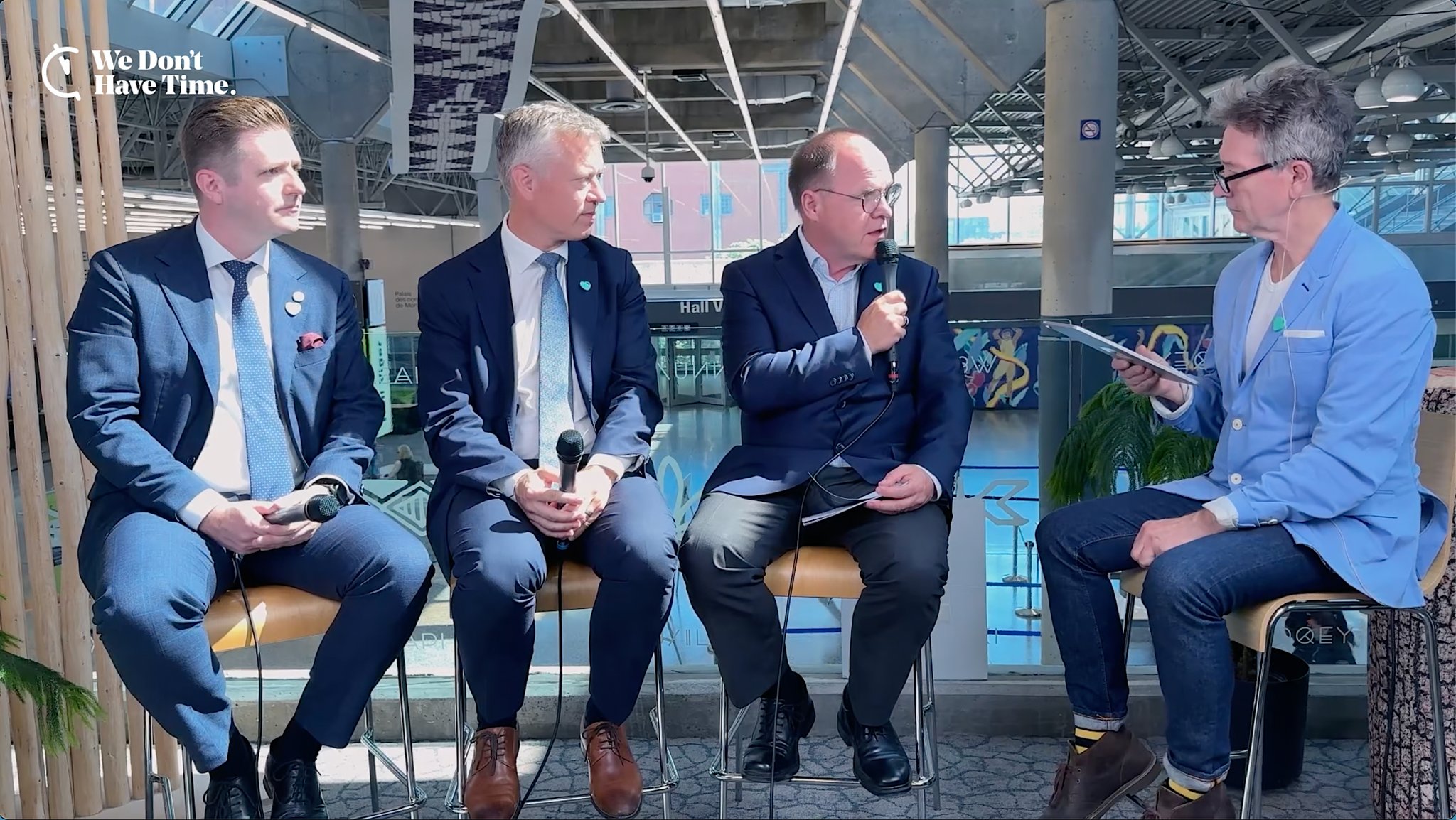
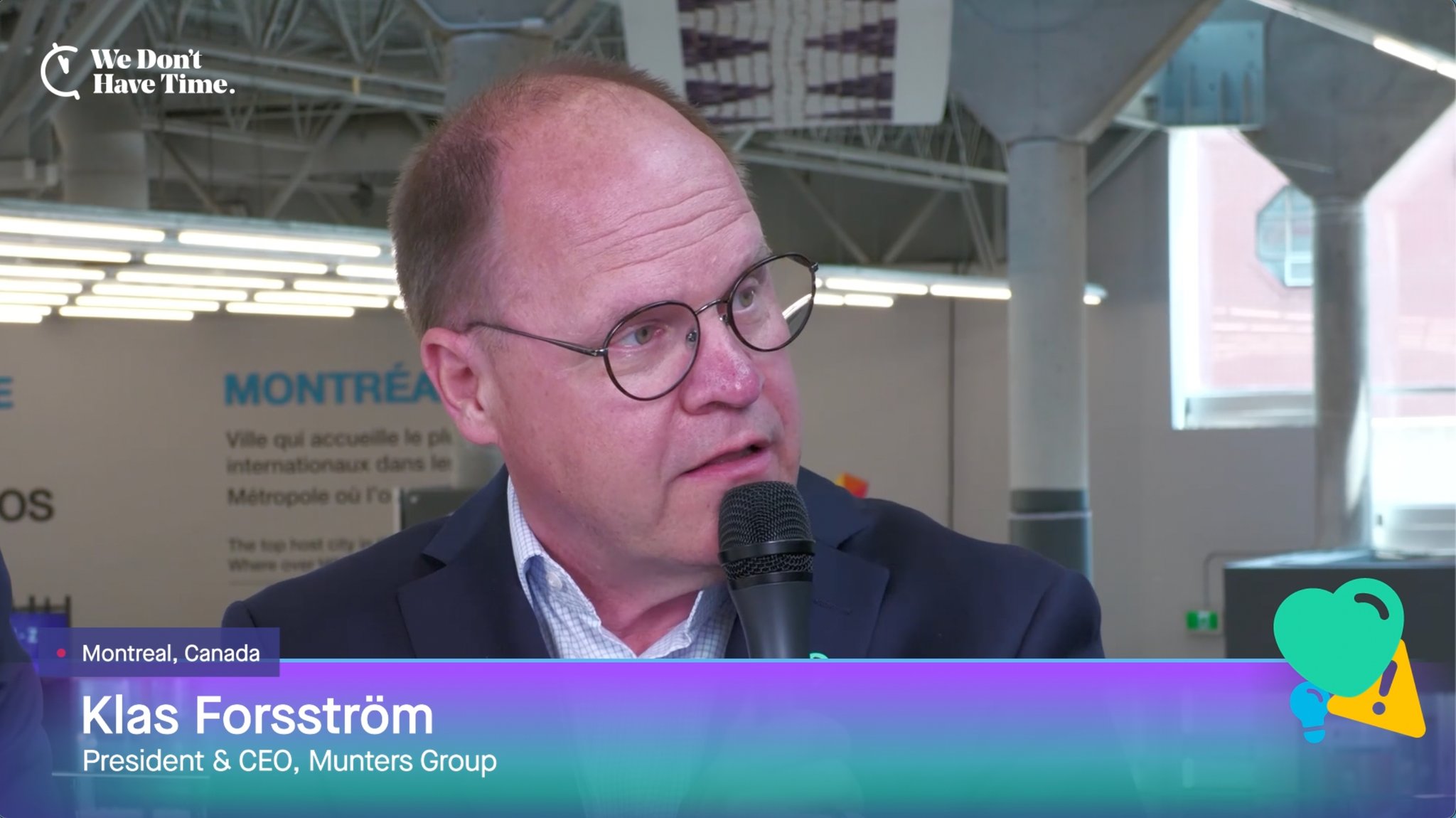
That was the message when top executives from Munters, ABB and Alfa Laval joined We Don’t Have Time for a discussion at the International Energy Agency’s Energy Efficiency Conference in Montreal. For Klas Forsström, CEO of Munters, energy efficiency should not be seen simply as a climate measure. It is also about making businesses work better.
“Twenty years ago, everyone talked about productivity. Productivity is exactly the same as energy efficiency. It’s just a different terminology.”
Munters provides energy-efficient climate solutions for industries ranging from pharmaceuticals to data centers — a sector where rapidly growing electricity demand is making efficiency increasingly important.
And significant improvements do not necessarily require replacing entire systems.
”I can give you two concrete examples. The first is a software combined with our controllers which, used correctly, can reduce energy consumption by 15–30% in existing installations. And if we top that off with new materials that we bring in, it could add another 5–10% improvement”, he said.
The potential extends far beyond any one company or technology.
Erich Labuda, President of the Motion Services Division at ABB, pointed to the more than 300 million electric motors already installed in cooling systems around the world, many using technology that is 15 or 20 years old. According to Labuda, replacing those existing motors with today's most efficient technology could deliver electricity savings equivalent to 10% of current global electricity consumption.
Thomas Møller, President Energy Division at Alfa Laval, highlighted another opportunity: waste heat. Data centers are expanding rapidly, and almost all the electricity they consume ultimately becomes heat, he said. That energy can either be captured and reused, or simply wasted.
So, with all these solutions at hand, why aren’t we implementing them faster?
At COP28 in Dubai in 2023, governments agreed to double the global average annual rate of energy-efficiency improvements from around 2% to more than 4% by 2030. The panelists acknowledged that the world remains far from achieving that goal. “We need to shape up,” Labuda said, arguing that industry, policymakers and financial institutions need to work much more closely together.
”Productivity is exactly the same as energy efficiency. It’s just a different terminology.”
Klas Forsström, CEO of Munters
That collaboration is also at the heart of the Energy Efficiency Movement, which Munters recently joined. Founded by ABB and Alfa Laval, the initiative has grown to more than 600 companies across roughly 40 countries. Its focus is increasingly shifting from making the case for energy efficiency to accelerating its deployment. Klas Forsström says joining this initiative felt like joining a club you are already a member of.
”Munters provides energy-efficient solutions for many critical industries, such as cooling for data centers, preservation, and many different industries across sectors when it comes to climate control. If I simplify what we deliver, it is not only energy efficiency, it's productivity. It is improvements for our customers. So coming back to why did we join, it is because it resonates so well with who we are”, he said.
Forsström compared that work to how water slowly wears away stone: progress requires persistence, more companies joining and more people talking about what can be done.
“It needs to move forward, it needs to accelerate. We cannot give up.”
The message from Montreal was ultimately straightforward. We don't need to wait for a new generation of technologies to start dramatically reducing energy waste.
The solutions are already here. The challenge is to deploy them — at speed and at scale.
Watch the whole panel discussion:
https://youtu.be/FN0Ta4Cbvnw?si=vD9MEeXzD-l0ERmX