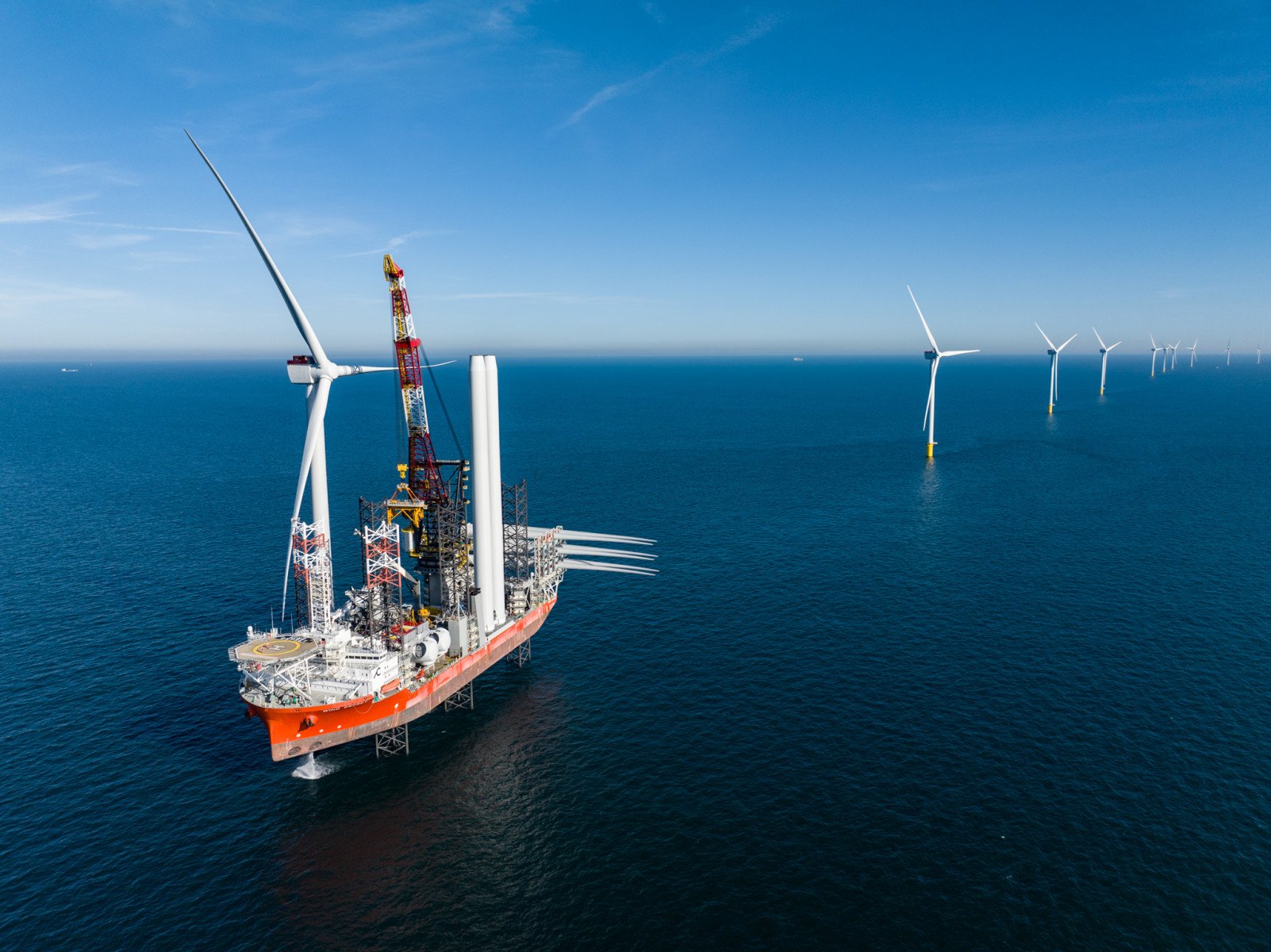
The Netherlands has presented a national roadmap for reducing its dependence on fossil fuels, becoming the second country after France to take such a step. But the plan stops short of setting a binding date for ending oil and gas use.
The Dutch government published an updated National Energy System Plan (NPE) on Tuesday, setting out how it wants to transform the country's energy system towards 2040 and 2050.
The government describes the plan as its ”national roadmap” for the transition away from fossil fuels. It focuses on electrification, renewable energy and energy infrastructure, while reducing dependence on imported fossil fuels.
“The fastest and best route to greater resilience is to reduce the need for fossil fuel imports,” the plan states.
The move follows the first international conference dedicated to transitioning away from fossil fuels, held in Santa Marta, Colombia, in April. The Netherlands co-hosted the meeting with Colombia and later confirmed that its conclusions would feed into the updated national energy plan. 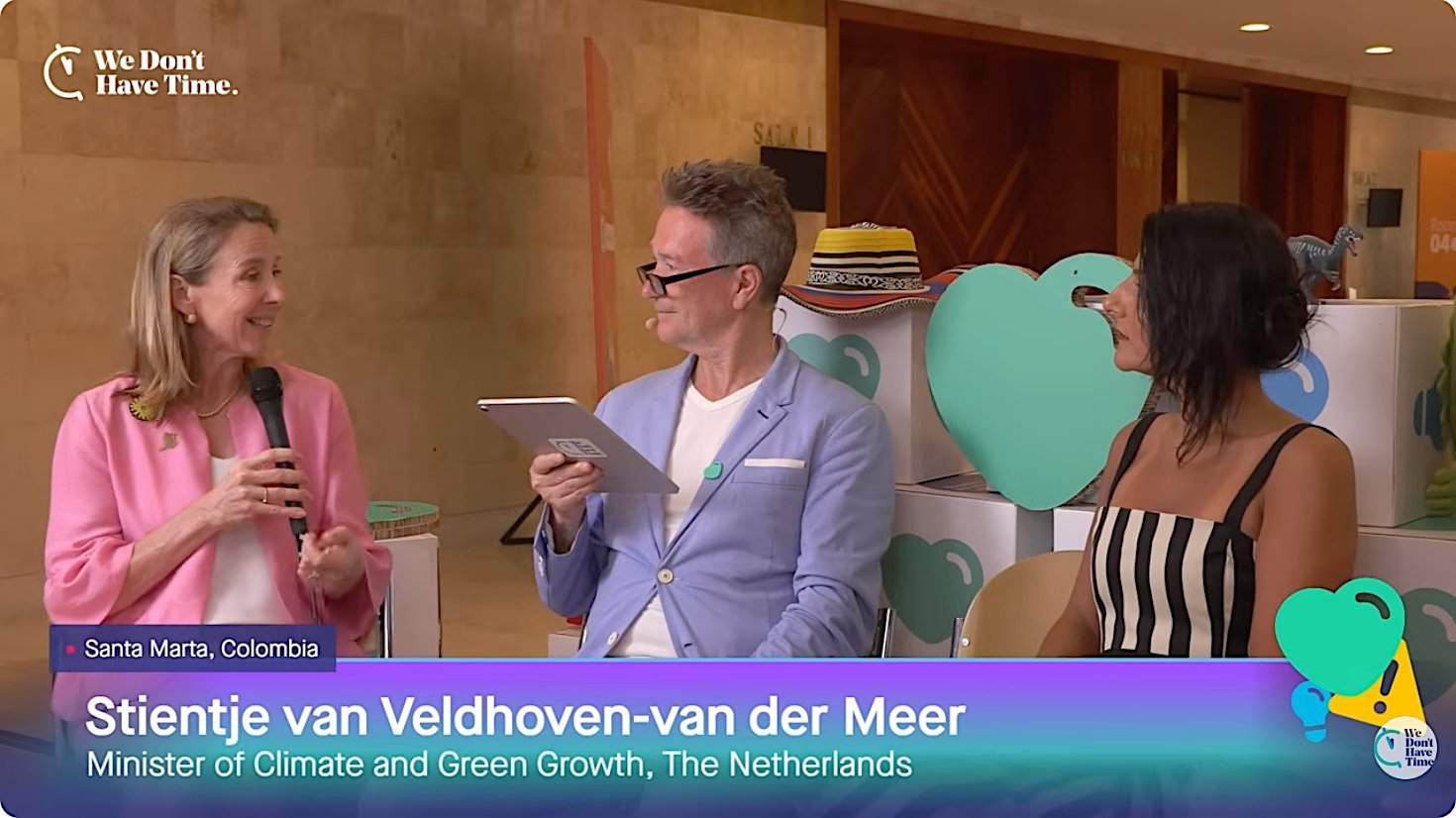
The Dutch climate Minister and her Colombian counterpart Irene Vélez Torres joined We Don't Have Time's live broadcast at the opening day of the Santa Marta Conference. In the middle, program host Nick Nuttall.
Since then, Colombia’s new government has changed course, announcing plans to expand oil and gas exploration and develop fracking. That raised questions over whether the Netherlands, the other host of the Santa Marta conference, would also retreat from the transition it had championed. Tuesday’s announcement shows that the Netherlands has stayed the course.
A spokesperson for Stientje van Veldhoven, Minister of Climate Policy and Green Growth of the Netherlands and co-host of the Santa Marta conference said:
"When we co-hosted the Santa Marta conference earlier this year, we pledged that leadership on transitioning away from fossil fuels must be backed by concrete action, not just ambitious words. With this actualized National Energy System Plan, we are following through on that promise by laying out a responsible roadmap for phasing out fossil reliance while building a resilient, renewable economy.”
Fossil fuels remain in the system
Climate groups welcomed the publication of the roadmap, but called for firmer deadlines.
“This plan contains important ingredients, but unfortunately it is not yet a recipe for a fossil-free Netherlands,” said Maarten de Zeeuw of Greenpeace Netherlands. “This policy remains half-baked without a binding phase-out date for coal, oil, and gas.”
According to an analysis by Greenpeace Netherlands and Oil Change International, Dutch natural gas demand is projected to fall from 935 petajoules in 2025 to 610 petajoules in 2040.
The government also expects natural gas to remain part of the transition and says that, where gas is still needed, it wants to limit dependence on imports by producing part of that gas domestically. "Leadership on transitioning away from fossil fuels must be backed by concrete action."
Coal-fired electricity generation is prohibited from 2030. Coal could still be used in steel production after that date. Plans for Tata Steel aim to halve its coal use by 2037, before phasing out the remainder.
The government's long-term objective is a climate-neutral energy system by 2050. But the roadmap defines the transition as eventually reducing fossil energy carriers towards zero while minimising remaining fossil use in 2050, rather than establishing a binding fossil-free date.

The COP31 venue in Antalya, Türkiye.
The government plans to present the roadmap internationally ahead of the UN Climate Conference COP31, to be held in Antalya, Türkiye, in November this year.
France, the first country to present a roadmap away from fossil fuels, congratulated the Netherlands on creating its own roadmap, hoping that other nations will follow. Benoît Faraco, France’s Special Envoy for Climate Negotiations said:
“It is encouraging that the Netherlands has presented its own, continuing to create momentum ahead of COP31. After a devastating summer of fires, floods and extreme heat, we know that solutions are at hand. Electrification of transport, building and the industry helps to reduce emissions and build growth and competitiveness, while reducing dependency and social impact of volatile fossil fuel prices. Diplomacy must be matched by real world planning and action. I hope that other countries will follow.”
The Netherlands says the transition away from fossil fuels is also a question of energy security. Its new plan argues that reducing fossil fuel imports will make the country's energy system more resilient.