What Sixty Climate Leaders Learned On Inishbofin

Ingmar Rentzhog
3 w
•
•
In August I published an essay called The Biggest Lie Ever Told Is Only Four Words Long. The four words were: “We have more time.” A couple of days later, an invitation arrived. Would I come to Inishbofin, an island off Ireland’s Atlantic coast, and spend four days with sixty people on the question the essay left open: what are we going to do about it?
https://thebiggestlie.wedonthavetime.org
Once you have made that argument in public, you owe an answer. I said yes.
Four days before I stepped off the ferry, the Copernicus Climate Change Service reported that August 2026 was the joint hottest month ever recorded, tied with July 2023 and 1.65°C above pre-industrial levels. Earlier in the year, the International Energy Agency had reported that solar power became the largest single contributor to growth in global energy supply in 2025, the first time a modern renewable source has held that position, and that energy-related carbon dioxide emissions still reached a record of nearly 38.4 billion tonnes.
Hold those facts next to each other. The solutions have never grown faster. The problem has never been larger. Both are true at the same time, and neither cancels the other. That is the contradiction I carried onto the island, to work on it with people who could turn urgency into action, and who would challenge how I thought that should happen.
Sixty People, One Island, One Rule
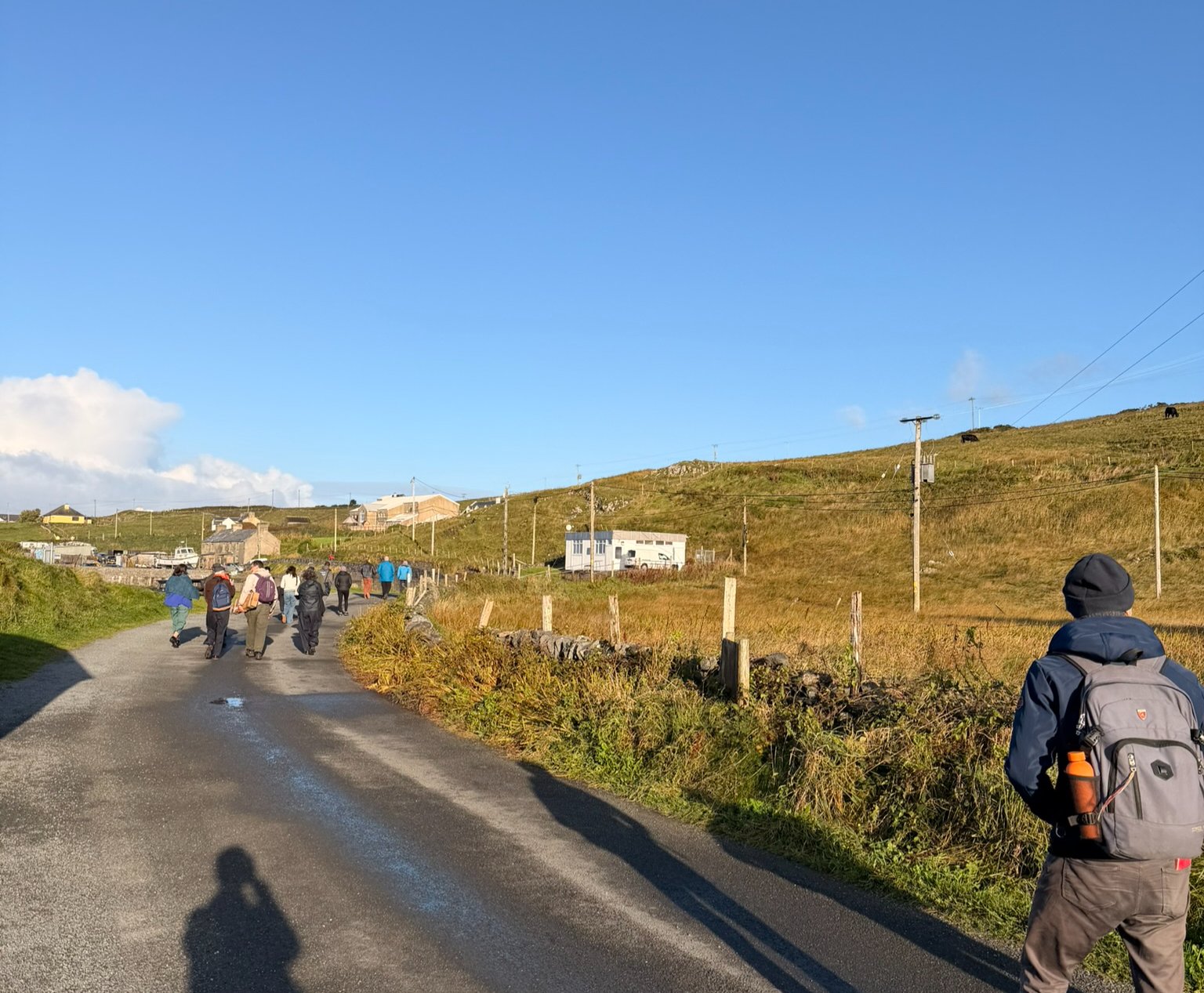
From September 14 to 17, around sixty of us gathered there. Eamon Ryan, Ireland’s former environment minister, convened the meeting with the Laudato Si’ Movement and the Hard Art network, supported by Green Foundation Ireland and the University of Notre Dame. It continued a series of climate gatherings that began at the Burren College of Art in 2013.
https://climategathering.org/
The room held senior UN climate negotiators, a former US Republican congressman, leading climate and ocean scientists, senior figures in sustainable finance and business, internationally recognised artists and writers, faith and civil society leaders, youth representatives, and community leaders from Africa, Latin America and the Pacific who live with consequences the rest of us mostly discuss.
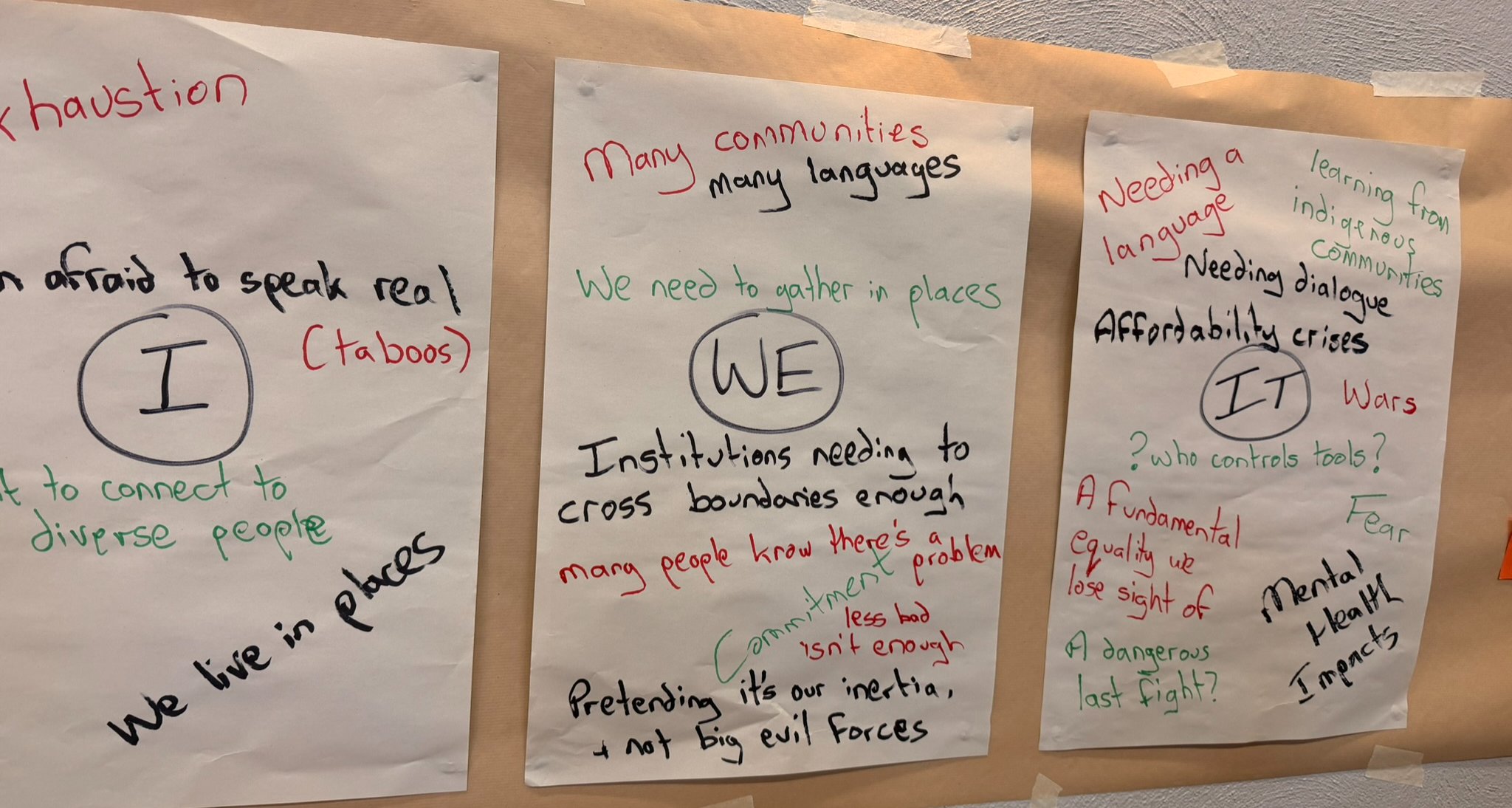
The organisers drew on the Irish idea of a fifth province: a place to meet as equals and speak openly, protected by confidentiality. I am therefore leaving other participants unnamed and their contributions unattributed. What I say about myself, I can say freely.
We worked through four strands: politics, narratives, spirituality and ecological justice, and togetherness. We also walked, sang and made room for poetry.
The Transition Has To Survive The People Trying To Reverse It
A new report gave us a reason to believe the effort was worth making. Published on September 10 by the University of Exeter and the Earthshot Prize, Positive Tipping Points: Accelerating System Change To Repair Our Planet examines 51 areas of environmental action and asks where change can begin to feed on itself. Solar is the familiar case. More deployment lowers costs, lower costs pull in more deployment, and cheaper clean electricity then improves the economics of electric transport, heating and industry.
The report is careful. Its authors say they are not claiming every system is about to tip. Solutions accelerate when they become affordable, accessible and desirable, and those conditions have to be built. The investment gap in the Global South is named as one of the barriers that could stall progress where it is needed most.
Read that again. The conditions have to be built. A technology can tip while the politics around it tips the other way.
Over the past year, my team at We Don’t Have Time documented 45 climate policy reversals across 15 jurisdictions, starting with the United States rescinding the greenhouse gas endangerment finding that had anchored its climate rules for more than fifteen years. As I wrote in August, climate denial did not disappear. It moved from the diagnosis to the treatment. Governments accept the science and reject the measures proportionate to it. The list has kept growing since I closed it. In April, Colombia hosted the first international conference on transitioning away from fossil fuels. In August, it inaugurated a president who pledged to revive its oil and gas sector and reopen exploration. One hundred days from host to reversal.
We have spent two decades making clean technology competitive. We have spent far less making the transition politically durable. That, more than anything, was the work on Inishbofin.
Why I Said Good And Evil, And Why I Was Challenged
At the opening of the gathering I described the climate crisis as a fight between good and evil. When an industry knows what its product does, spends money to mislead the public about it, funds the politicians who block the alternatives, and works to silence the people trying to build them, I cannot find a gentler word.
Not everyone agreed.
So I told the room something I had not said in public before.
When I started this work ten years ago, I believed leaders would act once they understood the crisis and knew that solutions existed. Then We Don’t Have Time helped Greta Thunberg’s school strike reach an international audience, and I met the resistance.
My name appeared in conspiracy theories in languages I do not speak. One tweet a second, around the clock, for days. Human beings do not post at that rate. Our Facebook page was banned from doing any advertising the day after we launched our own platform. An Earth Day livestream was cut in the middle of a speech, and nobody ever explained why. My phone has been taken over remotely more than once, lighting up in the middle of the night and doing things I had not asked it to do. At COP27 in Egypt, an AirTag was planted on me so that someone could follow where I went. Then we found a false wifi router in our Stockholm office, placed to listen to our traffic. I still do not know who paid for any of it. I only know who benefits from it.
None of those things did lasting damage. What they do to your mind does.
You stop trusting your own phone. You leave it in another room to have a conversation. You check the ceiling of a hotel room before you speak. A car parked too long on your street is no longer a car, and your children notice that you notice. You read every message twice, looking for the one that is not from a friend. You catch yourself deciding not to say something, not because it is wrong but because of who might be listening, and you realise the silence has already started working from the inside.
That is the point. The harassment is not there to argue with you. It is there to eat the hours and the nerve you would have spent on the work, until you either stop or stop talking about it. Most people I know who have been through it did one or the other.
When I sat down, several participants came to me one by one, scientists among them, with their own versions of the same story. None of them had told it publicly either. The Pegasus Project showed how far this goes for journalists and activists elsewhere. I am not claiming my case is theirs. I am saying that nobody in the room was surprised. None of this is secret. It is just not said out loud.
That is what I meant by evil: knowingly protecting oil interests while passing the damage to people who have done least to cause it.
The challenge that came back was serious, and it deserves a fair hearing. What happens when that language lands on a person frightened about their job, or struggling to pay a bill? Do they hear a demand for accountability, or an accusation aimed at them? A worker whose town depends on one employer does not have the freedom of the company deciding what to build. A family relying on an old car cannot respond to a policy as though it already had the money for a new one. Call them the enemy and you hand the defenders of the fossil economy their favourite script: your job, your car, your way of life.
I have no intention of becoming more patient with organised obstruction. I do want us to become much better at telling it apart from disagreements we can work through. Having a Republican in the room made that concrete. A policy can be reversed by the next government if too few people are willing to defend it. Winning that support is not a distraction from the work. It is the work.
Efficient At What?
I put my own position plainly. I am an entrepreneur. I have not seen a system better at developing solutions and getting them to millions of people than a capitalist market with money behind it, and I want that capacity working at full speed on climate.
The response came just as plainly. Efficient at what? If damage is left out of the price, what have we measured? And where in the accounts is the work of caring for children, older people and communities, much of it done by women and none of it counted as profit?
Those questions deserve an answer, and I think the answer strengthens my case rather than weakening it. A company has not made a cost disappear by transferring it to someone else’s health, livelihood or tax bill. And the market we have is not unregulated. It is regulated in the wrong direction. The IMF puts explicit fossil fuel subsidies at roughly $730 billion in 2024, and implicit subsidies, the unpriced damage from pollution and warming, at $6.7 trillion. A cleaner business is competing against a rival that is allowed to send its bill to the public.
We did not settle the argument about capitalism. We got closer to the decisions inside it: who owns the assets, who receives the benefits, and who is held responsible for the harm. A carbon price belongs in that discussion. It cannot, on its own, provide a bus route that does not exist or the upfront money to insulate a home. Public investment and access to finance decide whether people can respond to the signal at all.
Cheaper For Whom?
That argument followed us into finance. One participant described the arithmetic on the island where they live: for ordinary households, diesel is still cheaper than solar, and the solar supply is not yet reliable. The panels are cheap on a spreadsheet in Europe. They are not cheap where a small system has to be financed, shipped, installed and maintained thousands of kilometres from the nearest factory.
The IEA has documented how high financing costs hold back clean energy across Africa even where the renewable resource is excellent. Announcing that solar is the cheapest electricity in history tells us little about whether a project can be built. Cheaper for whom, financed by whom, and on what terms?
The discussion about mining pressed on the same nerve. What does a green transition look like to a community told that damage to its land is necessary for somebody else’s clean technology? Consent, ownership and local benefit belong inside the definition of a successful solution, not outside it.
The Word Climate Came Last
I work in communication, so I know the temptation to believe there is one better sentence that will finally make everyone see what we see. A beautiful story about the future is useless to a person who cannot find a place for their family inside it.
One account made the alternative tangible. The community around Bohemian Football Club in Dublin spent more than a year asking who they were and what they cared about. The answers were family, health, food prices, keeping wealth in a part of the city that had rarely benefited from grand schemes, and rebuilding ties between generations. No climate action was prescribed. Then an old gym became a place for workshops on cutting home energy bills, sharing food and sharing skills. This year the club launched a cooperative built explicitly around community wealth and climate justice. The word climate arrived last, and by then it belonged to them.
A parent may come to clean energy through a child’s lungs. A conservative through independence. A trade unionist through secure work. A faith community through obligations to its neighbours. Those motivations can carry the same change without becoming identical. As communicators, we have to let communities shape the story. As investors and policymakers, we have to let them shape the project.
What We Leave Out Of The Room
Two things are normally missing from a climate gathering. On Inishbofin, both came in.
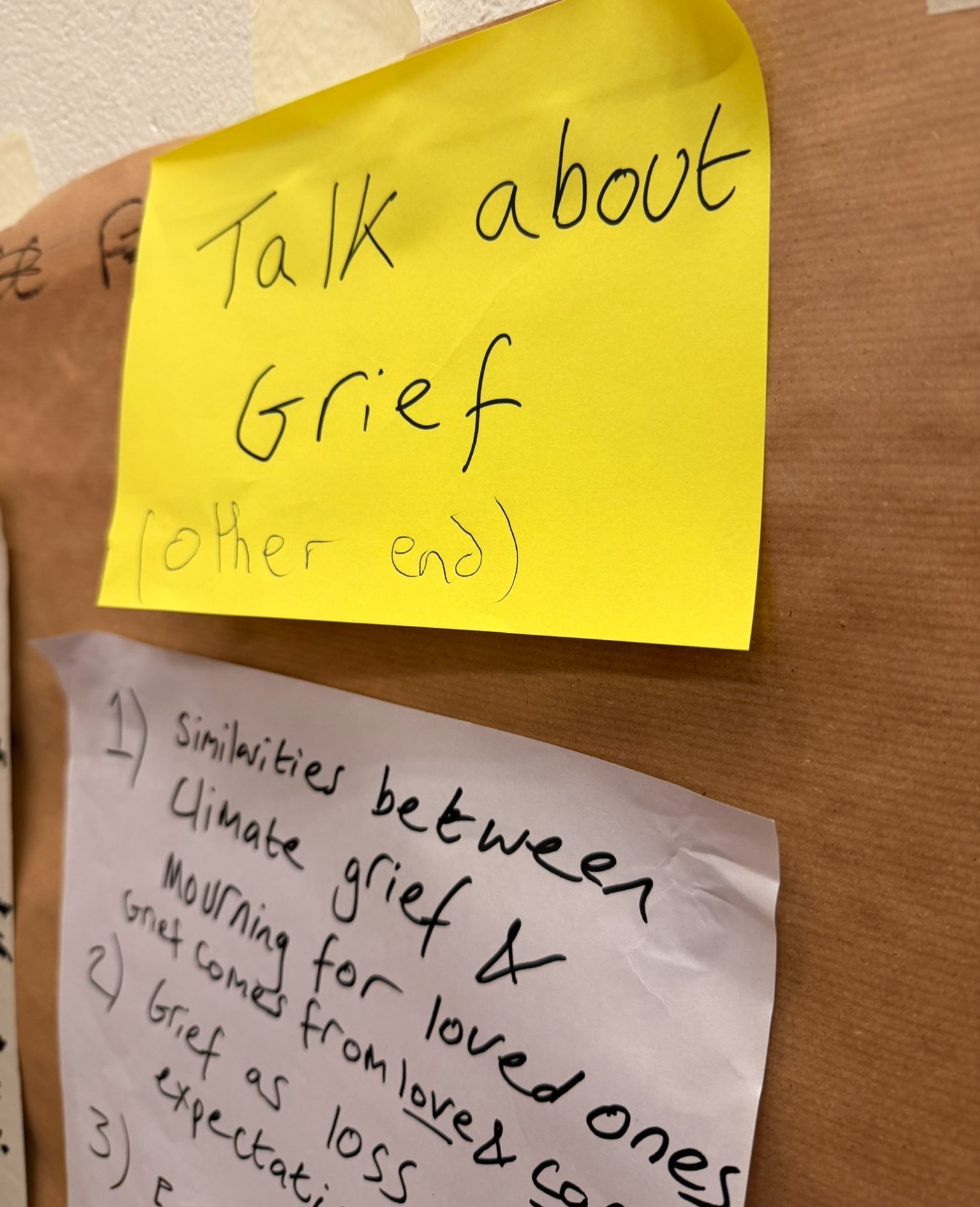
The first was grief. We are practised at speaking about this crisis in temperature pathways and investment gaps, and there is protection in that language. It lets us discuss the destruction of things we love without saying that we love them. Believing in solutions does not make the knowledge of continued failure easier to carry home, and we should stop behaving as though permanent optimism is a qualification for climate work.
On the island, people cried. They told each other things about fear, loss and exhaustion that I have never heard said at a climate conference in ten years of attending them. It was possible because the confidentiality was real and because nobody was performing for a camera or a delegation. The faith conversations made room for obligation without certainty about the outcome. The artists offered a poem that could hold grief without rushing to make it useful. We sang. People who had argued about politics in the morning met without defending a position in the evening. If we expect them to work together afterwards, that is how trust gets built.
The second was nature itself. On Inishbofin it was not an abstraction. The Atlantic was outside the door. We walked the island between sessions, and the conversations about the living world took place inside it rather than about it, which almost never happens at a climate meeting. Even so, an empty chair stood in the room for nature. We can fill a room with human interests and call it inclusive while the living world enters only as something to use, manage or price. A river becomes a water supply. A forest becomes stored carbon. A group began drafting an open letter to Ireland’s president on the rights of nature, with a role for artists and poets, and it was still taking shape when we left. An empty chair cannot change the law. It did make me ask who, or what, cannot speak in the rooms where I do business.
Supporting Tuvalu Without Taking Over
The frustration with the annual UN climate conferences was unmistakable, and it met a forceful defence from people who had spent years building the Paris Agreement and its reporting systems. Both sides were right. A negotiating team arrives with a mandate shaped at home, through decisions about public spending, energy and industry. Finance ministries and company boards cannot keep treating climate as something environmental specialists handle elsewhere.
The Santa Marta process gave that argument somewhere to go. In April, Colombia and the Netherlands convened the first Conference on Transitioning Away from Fossil Fuels. Fifty-seven countries took part, and Tuvalu and Ireland were announced as co-hosts of the second, in the Pacific in 2027. It is a coalition of the willing rather than a search for consensus among nearly 200 governments, and that is its strength. Its weakness is continuity. The process depends on whoever holds the baton, and Colombia’s new government has other priorities.
On the island we drafted an offering to the governments and civil society organisations already carrying that work: an Islands United initiative connecting island communities on practical transition plans, links between young people in Ireland and Tuvalu, stronger faith engagement, and citizens’ assemblies to examine what a fossil fuel phaseout would actually require at home. Business and finance belong in it too, because a plan that cannot be financed is a wish.
The most revealing moment came when the conversation about helping Tuvalu needed a correction. What Tuvalu needs is finance and capacity to support its own leadership, not leadership supplied from outside. A discussion about assistance had begun to slide toward somebody else taking charge. A wealthy country’s ability to help does not give it ownership of another country’s agenda. Travel costs, visas and access to online meetings already decide whose ideas reach the table. A photograph of a diverse group cannot substitute for sharing power.
I offered communications and facilitation support through We Don’t Have Time to help hosts and participants stay connected between conferences, because most of a gathering’s value evaporates in the months after it ends. These were proposals and offers. Their value depends entirely on what follows. A good draft cannot become the achievement we settle for.
The Question To Carry Home
Sixty invited people cannot speak for everyone affected by this crisis. I arrived with the anger and exhaustion behind my essay. I left with more people to work with and a clearer map of which disagreements we can work through and which we cannot.
The tipping points report explains why the effort is worth it. Change accelerates when the conditions are right, and the conditions are made by decisions about money, policy and who gets to shape the transition. The atmosphere has granted no extension because sixty people had thoughtful conversations on an Irish island. Those conversations did give us work to carry forward together.
So here is the question I brought home, and I would ask anyone with influence over a climate policy, a project or a campaign to carry it too. Who will still defend this after the next election? If the only honest answer is people who already agree with you, it is not finished.
We do not have time to wait for everyone to agree with us. We have to become much better at working with people who never entirely will.
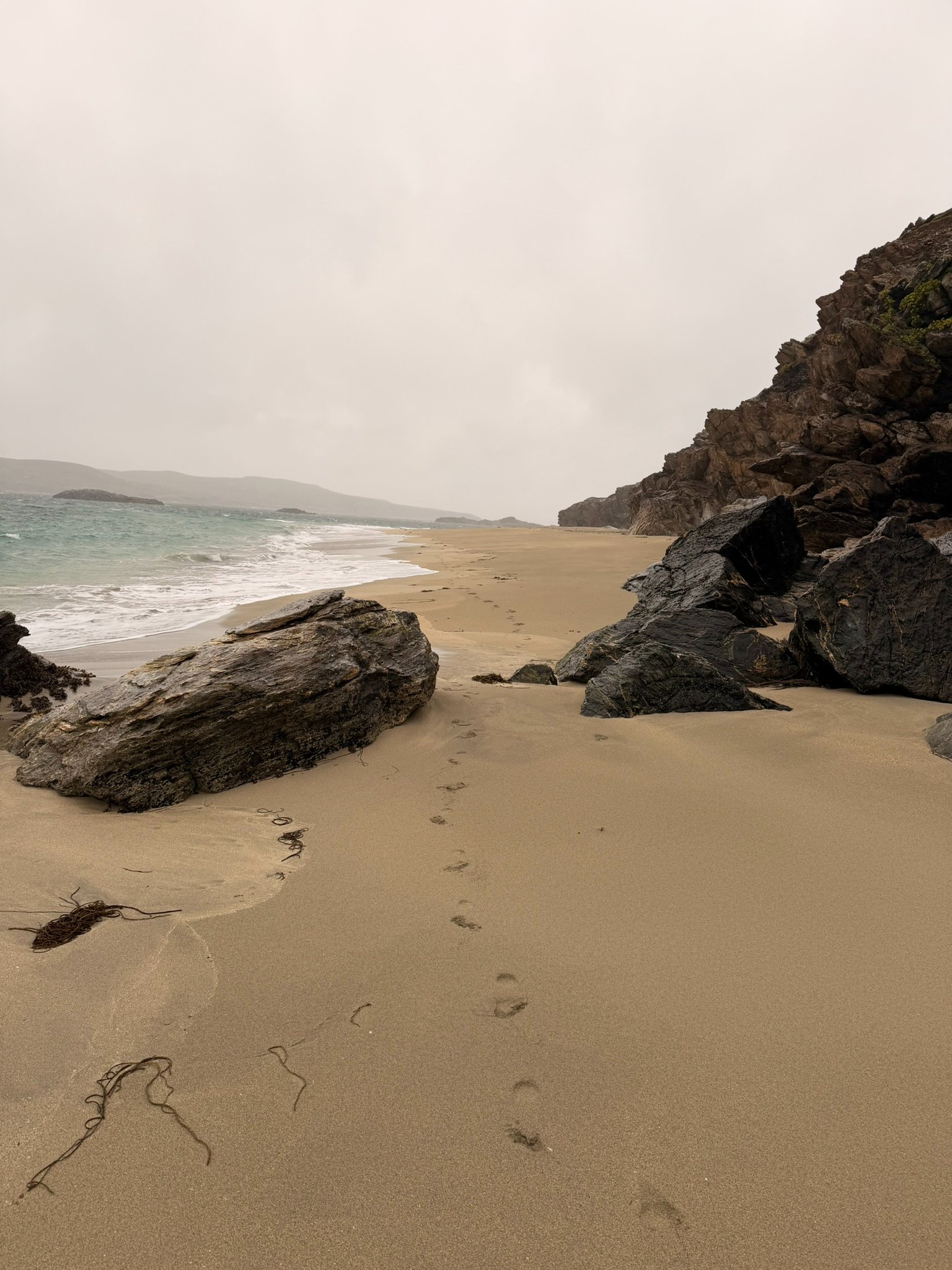
We do not have time to wait for everyone to agree with us. We have to become much better at working with people who never entirely will.
Written by Ingmar Rentzhog
CEO & Founder, We Don't Have Time

Science needs you
Support Make Science Great Again
Get the exclusive cap crafted from 100% recycled cotton and polyester

With your help, we can solve the climate crisis together. We connect you with people, businesses and organizations that needs your comment to improve for the climate. Read more
© 2026 We Don't Have Time – All rights reserved.
We Don’t Have Time is the world’s largest media platform for climate action – with a mission to democratize knowledge about climate solutions and inspire and mobilize global action toward a prosperous, fossil-free future.
The content of the We Don't Have Time social network is user-generated. The We Don’t Have Time organization
does not automatically endorse users’ opinions and claims. All users of We Don’t Have
Time have subscribed to We Don’t Have Time’s Terms of Use, which, among other things, prohibits hateful,
abusive, and violent content. If you discover content that violates our Terms of Use, please notify us
immediately. The platform is operated by the company WeDontHaveTime AB (publ), whose majority shareholder is the WeDontHaveTime Foundation. The Foundation’s principal purpose is to contribute to a reduced climate impact and an ecologically sustainable environment. Our headquarters is located in Stockholm, Sweden.
Please read our Privacy Policy and our Cookie Policy.