All modern modes of transportation emit carbon dioxide (CO2). Or, at least, they do when they run on hydrocarbon-based fuels, which is still the case for the vast majority of them. And when those fuels are fossil-based, they contribute to a long-term increase in atmospheric carbon dioxide.
Simply put, we cannot mitigate climate change without addressing transportation-related emissions.
While these global figures highlight the sheer scale of the challenge, the picture looks very different when we zoom in on specific organizations. For companies, transportation emissions don’t just come from the sector at large. They show up directly in supply chains, logistics, and, in many cases, business travel. Depending on the nature of the business, travel-related emissions can be a minor consideration or the dominant source of its carbon footprint.
Business travel in your carbon footprint
Businesses
For businesses, transport emissions result from both business travel and the transportation of raw materials and finished goods. The relative weight of these two emissions sources depends enormously on the type of company you operate. One analysis puts business travel at less than 1% of emissions for companies in the garments industry:
At the other end of the spectrum, people-centered businesses, like consulting firms, might find that nearly all the greenhouse gases they emit are the result of business travel. We can consider McKinsey & Company, for example, who provide annual emissions reports documenting their progress toward their sustainability targets. For them, just under 90% of their emissions result from travel.
.](https://storage.googleapis.com/wdht-media/e338539fc3ff4a268f6e5447e4949d60_original.jpeg)
McKinsey & Company’s emissions profile, based on their 2025 report.
Not only does business travel play an outsized role in the carbon footprint of organizations like McKinsey, most of these emissions come from a particular type of travel. According to environmental consultancy Squake, just 10–20% of travel routes (like frequent long-haul or executive trips) may account for 70–90% of a company’s travel emissions. For companies of all kinds, these patterns reveal a clear opportunity. By identifying and targeting the relatively small number of high-impact travel practices, businesses can make significant progress toward sustainability goals. What’s more, smarter travel policies often deliver not only carbon savings but also cost efficiencies and reputational benefits.
Individuals
Carbon footprints vary as much or more from person to person as they do between companies.
- Do you drive to work? How far? In what type of car?
- Do you eat meat? What kind? How often?
- What kind of home do you live in? How do you heat it? Where does your electricity come from?
…and, of course, there is the question of travel.
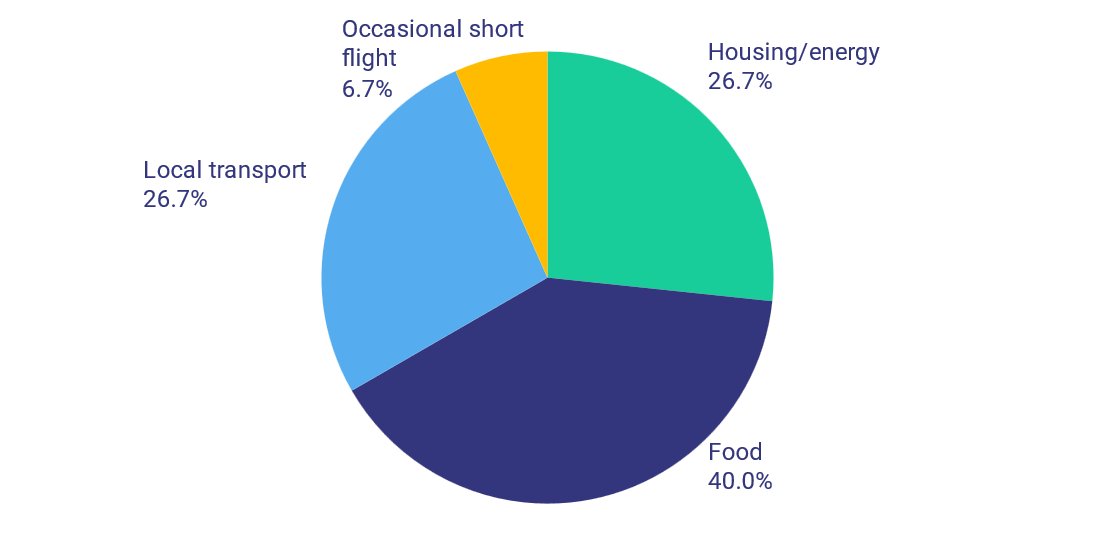
Let’s imagine Silvia, a climate-conscious person dedicated to minimizing her personal emissions. Silvia lives in France in an apartment powered by clean electricity, eats a mostly plant-based diet, commutes to work by bicycle or public transit, and takes just one short flying trip every year or two for vacation. This would put her annual carbon footprint at about 3.75 tons, with an emissions profile that looks like this:
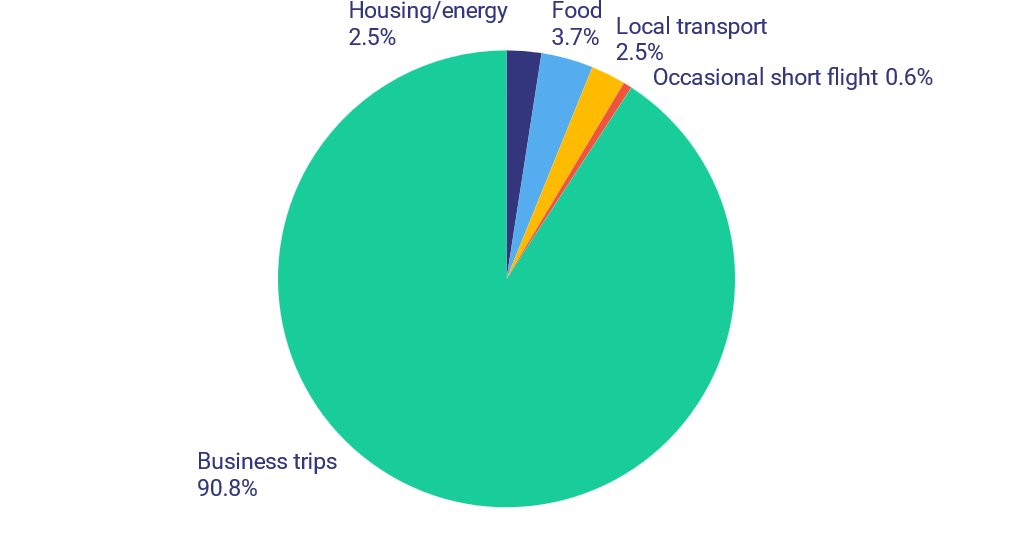
Now, let’s suppose Silvia lands a great job as a sales manager. Because of her new position, she’s now taking 10 trips from Paris to New York every year. Even without taking emissions from taxis and hotels into consideration, this raises her personal footprint dramatically. In fact, since she flies business class, each roundtrip flight to New York emits about as much carbon as Silvia did over an entire year before the new job. This puts her new carbon footprint at 40.75 tons per year, with an emissions profile like this:
Silvia’s story underscores just how much travel choices can shape an individual’s overall impact. For many people who already live relatively low-carbon lifestyles, frequent flying or long daily commutes can quickly outweigh progress made in other areas. And while it might be tempting to imagine that Silvia could simply choose a different job, that wouldn’t solve the problem—if she doesn’t take the position, someone else will, and the emissions remain.
The real solution lies in rethinking how such jobs are performed in the first place. Only by changing the way work gets done can we truly cut these emissions at the source.
Let’s cut our travel emissions! #MoveTheTravel
Travel is one of the most powerful levers we have to cut carbon. Just a handful of trips can outweigh everything else in a person’s or company’s footprint.
This is actually good news because it means that small shifts can create outsized impact!
Businesses that rethink travel save money, reduce risk, and show real climate leadership. Individuals who swap a few flights for trains, carpools, or virtual meetings align their daily choices with their climate values. The technology is already here: electric cars, high-speed rail, sustainable aviation fuel, better tools for connecting across distances. Every avoided trip, every smarter route, every shared ride matters.
Importantly, this isn’t about giving up connection. Some travel is an indispensable part of business. Instead, it is about moving smarter.
Learn more about #MoveTheTravel:
https://wedonthavetime.org/movethetravel

.](https://storage.googleapis.com/wdht-media/448a510ba5774de4a1c5f6927dd8bf8a_original.jpeg)
.](https://storage.googleapis.com/wdht-media/abfc18909b2248f49899c62c1f9cd3f8_original.jpeg)