By Nick Nuttall
A little-known Europe-wide effort is underway to develop a range of high temperature, industrial heat pumps and novel energy storage systems, that could make significant cuts in the energy use of sectors like food and drink to paper and petrochemicals.
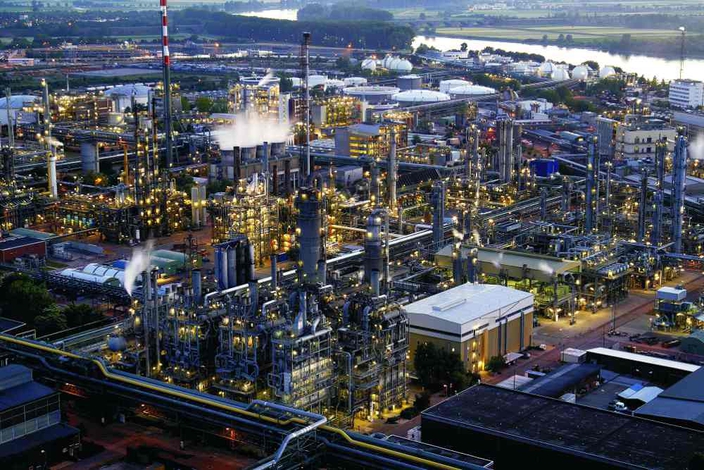
Industry world-wide is responsible for up to 20 per cent of global climate pollution and in Europe over 65 per cent of the energy is used for heating in processes such as drying and bleaching up to sterilization and distillation.
Yet many of Europe’s industrial processing plants are still heavily reliant on fossil fuels like gas—and most of this valuable heat is lost after being vented to the surrounding air.
The new push, called SUSHEAT aims to recover, upgrade and re-use 75 per cent or more of the heat wasted in industrial processes.
A recent paper on SUSHEAT in Applied Sciences, led by Professor Jose Daniel Marcos of the National University of Distance Education (UNED) in Madrid, Spain, estimates heat pumps providing temperatures of up to 250 C, could cut industry related emissions by well over 19 million tonnes of carbon dioxide annually.
And play a “significant” role in the European Union’s 55 per cent emission reduction targets for 2030 and net zero by 2050.
KTH is one of the 14 companies and universities taking part in SUSHEAT located in countries including Romania and Italy to Austria and the UK.
Together they are working with a new generation Stirling Engine that can take waste heat and transform it to hit temperatures up to 250 C. It has been built by Enerin, a Norwegian company in the partnership.
Heat Storage System Mimics Human Lung
The KTH researchers are linking the heat pump to a storage system that works in part by mimicking the shape and function of the human lung.
It has been developed by the University of Lleida, Spain and can store heat for several hours providing further flexibility and heat on demand.
The advanced industrial heat pump and heat storage technologies link to a concentrated solar plant and an artificial intelligent (AI) management system to add even more flexibility and performance.
The overall goal is to not only re-use of as much waste heat as possible but to ensure there is a tech package relevant to different countries with, for example, different electricity prices and conditions.
“You can also achieve temperatures between 200 C and 250 C with concentrated solar. In a country like Italy where electricity is expensive but there is a lot of sun, you will use more concentrated solar heat and produce less from the heat pump, “said Dr Trevisan.
“In a country like Norway, where there is less sun but electricity is cheap and green, you can deploy the industrial heat pump more,” added Dr Trevisan.
Will this industrial revolution happen?
Commercial high temperature industrial heat pumps hitting 250 C could be ready in the next one or two years.
“The integrated system will take more time as the management is more complex—maybe 4 to 5 years, “said Dr Trevisan.
Perhaps the biggest challenge will be the capital costs for the new technologies and the incentives provided by governments.
“The technology could be a game changer, but a lot of the challenge is probably more related to the capital costs and payback periods industry is prepared to accept,” added Dr Trevisan.
The European Heat Pump Association agrees. Most EU countries plus Norway, Switzerland and the UK, have some government incentives available. But there are still barriers to take-up including lack of awareness of their potential.
(A version of this article originally appeared in Climate Table, part of Table Media)