Every September, Climate Week NYC draws policymakers, activists, investors, and innovators from around the world. The 2025 edition (September 21–28) promises to be no exception—as the world meets in New York amid the UN General Assembly to shape the clean energy transition.
As part of the event, Isabelle “Isodope” Boemeke, the science influencer turned climate communicator, will promote her new book, Rad Future: The Untold Story of Nuclear Electricity and How It Will Save the World, during Climate Week NYC. Known for her engaging TikTok advocacy for nuclear electricity, Isodope brings wit, clarity, and flair to complex topics—and her presence signals a new kind of nuclear conversation rooted in storytelling as much as science.
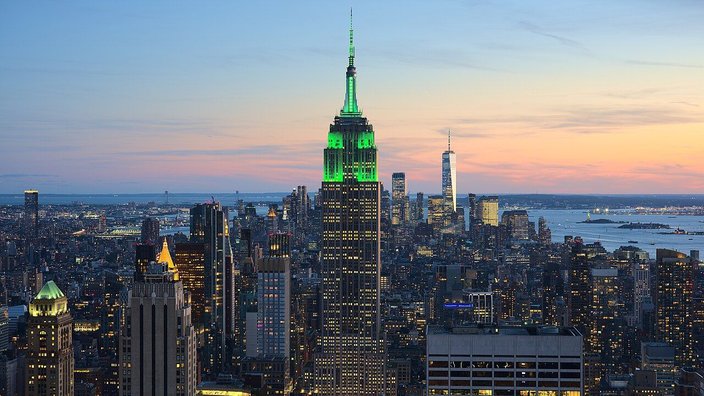
View of the Empire State Building, lit in green to celebrate Climate Week NYC, from the Top of the Rock at 30 Rockefeller Plaza. By Dllu - This image has been extracted from another file, CC BY-SA 4.0, https://commons.wikimedia.org/w/index.php?curid=
Wishful Thinking vs. Real-World Decarbonization
If wind, solar, and batteries alone could decarbonize the grid, we’d be well on our way. But reality isn’t that neat. Electricity demand is soaring—from electrifying transport and heating, to powering AI data centers and industrial sectors.
Intermittent renewables, while essential, can’t reliably meet around-the-clock demand without massive overbuilds, unproven long-duration storage, and costly grid upgrades. Pretending otherwise risks letting fossil fuels fill the gaps.
A clean, firm power source—nuclear—is not just nice to have. It's essential.
Nuclear’s Cultural Turn at Climate Week
In addition to technical and policy discussions, Isodope’s book launch introduces nuclear to new audiences through humor, history, and human-scale storytelling. It’s a reminder: nuclear’s clean energy potential can become part of mainstream climate culture, not just technical debates.
Innovation Meets Urgency: AI + Nuclear
This year’s shift isn’t purely cultural. Technology is helping accelerate deployment, too. In July 2025, Oak Ridge National Laboratory and Atomic Canyon announced they’re harnessing AI to streamline the U.S. nuclear licensing process. By decoding reams of technical and regulatory documentation, this AI could shave months—or years—off approvals, speeding up deployment and decreasing costs.
This innovation—crucial to the “Power On” spirit of Climate Week—demonstrates that nuclear needn’t be slow, costly, or stuck in red tape.

AI can help overcome one major barrier to nuclear implementation: Extensive licensing paperwork.
What It Really Takes
From what we’ve seen at Climate Week NYC, clearing the path to real decarbonization now means:
- Cultural traction, like Isodope’s dynamic storytelling, that puts nuclear into everyday awareness.
- Political and financial will, so nuclear is no longer sidelined but seen as core climate infrastructure.
- Technological innovation, such as AI-driven licensing or modular reactor construction, to reduce time and cost barriers.
- Cross-sector collaboration, blending storytelling, policy, activism, and investment into shared momentum.
From Awareness to Action
Climate Week NYC may spotlight nuclear—through book launches, panels, and viral social moments—but the true test comes afterward.
Will that show of attention lead to building permits, government funding, and new reactors?
Or will it fade back into background noise?
The answer depends on whether we turn culture into capability. Isodope’s book launch gives nuclear a narrative voice. Now it’s up to civil society, media, investors, and policymakers to turn that energy into deployment.