Since the Paris agreement was signed in 2015, the G20 have provided more than $3,3 trillion in fossil-fuel subsidies, according to a recent report by BloombergNEF and Bloomberg Philanthropies. (Figures for 2015-2019.)
At today’s prices that sum could fund 4,232GW in new solar power plants – over 3.5 times the size of the current U.S. electricity grid.
On paper, these global leaders seem to recognize the urgency of leaving yesterday’s energy sources behind. Already in 2009 G-20 promised to ”phase out… inefficient fossil-fuel subsidies”.
In reality, they continue to spend huge amounts of their tax-payers’ money to support the fossil-fuel industry. In fact, eight member states (Australia, USA, Canada, Indonesia, France, China, Brazil, and Mexico) have in recent years increased their subsidies, according to the report.
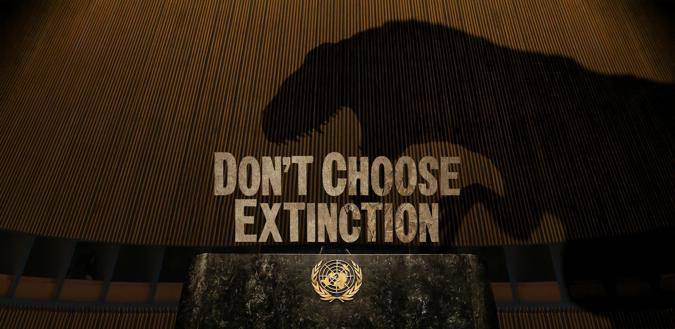
This madness must end. G20! Please #DontChooseExtinction
Fossil-fuel subsidies are destroying our planet and hindering the transition to clean, renewable energy, which in reality is much cheaper and easier to scale.
If the subsidies would be taken away, many fossil-fuel companies would be unprofitable, which in turn would mean banks and pension funds would stop investing in them.
Dear G20 leaders. 70 percent of the youth (under-18s) in your countries believe we are in a climate emergency. The majority of them support renewable energy and cleaner transports, and they strongly believe you should support green businesses and jobs.
As leaders of these powerful nations, you have the power to listen to them and to create real change. You are the world’s largest economies, collectively the biggest population – and the greatest polluters. Your responsibility is enormous. But so are your possibilities to create change.
We, therefore, demand of you:
• To present a roadmap for how to phase out fossil-fuel subsidies.
• To present an end date for all fossil-fuel subsidies.
We are looking forward to your reply.
Join the climate dialogue here on We Don’t Have Time
Further upsetting facts about the world’s fossil-fuel subsidies:
⚠️ Without fossil fuel subsidies, which equal 85% of all subsidies, total carbon emissions in 2015 would have been 28% lower, and there would have been 46% fewer air pollution deaths, while additional government revenues would contribute an additional 3.8% of GDP.
⚠️ Globally, direct subsidies to the fossil fuel industry total an astonishing US$300–680 billion per year. When including indirect subsidies, the amount grows to US$5.2 trillion,13 which represents 6.5% of global GDP (2017 estimate).
⚠️ This is greater than the GDP of all states except the US, European Union and China.
⚠️ The biggest subsidizers are China, United States, Russia, the European Union and India, and while direct subsidies are often claimed to support underprivileged groups, just 8% of the money trickles down to the poorest 20% of the population.
(Thanks Pernilla Bergmark, Principal Researcher, ICT Sustainability Impacts, Ericsson, for providing these additional facts).
Sources:
Exponential Roadmap 1.5.1 (page 134):
https://exponentialroadmap.org/wp-content/uploads/2020/03/ExponentialRoadmap_1.5.1_216x279_08_AW_Download_Singles_Small.pdf
The G20 Peoples’ Climate Vote: Support for climate action is getting stronger
https://www.undp.org/blog/g20-peoples-climate-vote-support-climate-action-getting-stronger
IMF:s Global Country Update of Fossil Fuel Subsidies
https://www.imf.org/en/Publications/WP/Issues/2021/09/23/Still-Not-Getting-Energy-Prices-Right-A-Global-and-Country-Update-of-Fossil-Fuel-Subsidies-466004
The Bloomberg NEF and Bloomberg Philanthropies report on G20 fossil-fuel subsidies
https://about.bnef.com/blog/new-report-finds-g-20-member-countries-support-fossil-fuels-at-levels-untenable-to-achieve-paris-agreement-goals/
Production Gap report: https://productiongap.org/
UNEP Emission Gap report: https://lnkd.in/ewv4ndTv

G20
Climate warning