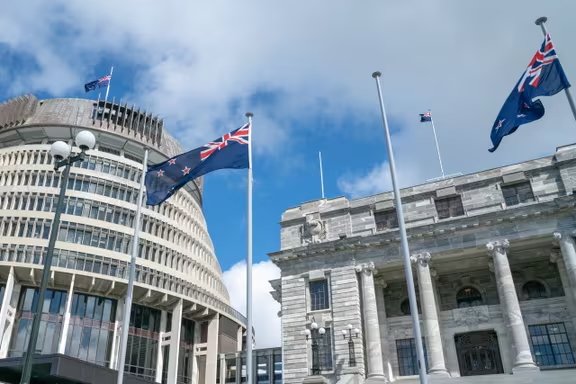
New Zealand just passed a law shielding companies from a new generation of climate lawsuits — and abruptly ended a landmark case that the country’s own Supreme Court had allowed to go to trial. The move could become part of a wider international battle over whether major polluters can be held legally responsible for climate damage.
We Don’t Have Time highlighted the New Zealand case in our weekly newsletter earlier this summer. Anyone, anywhere in the world, was able to submit their views to New Zealand’s Justice Committee — and we encouraged our community to do so.
The Justice Committee received written submissions from 623 interested groups and individuals, and heard from 38 submitters in oral hearings.
The opposition was overwhelming.
”About 2.6 percent of submitters supported the bill, while 93.3 percent of submitters opposed it”, wrote Tom Rutherford, Chairperson of the Justice Committee, in his presentation to the House of Representatives. So why has this case attracted so much attention? Because it could have helped answer one of the biggest unresolved questions in climate litigation: Can major emitters be held legally responsible for their contribution to climate damage?
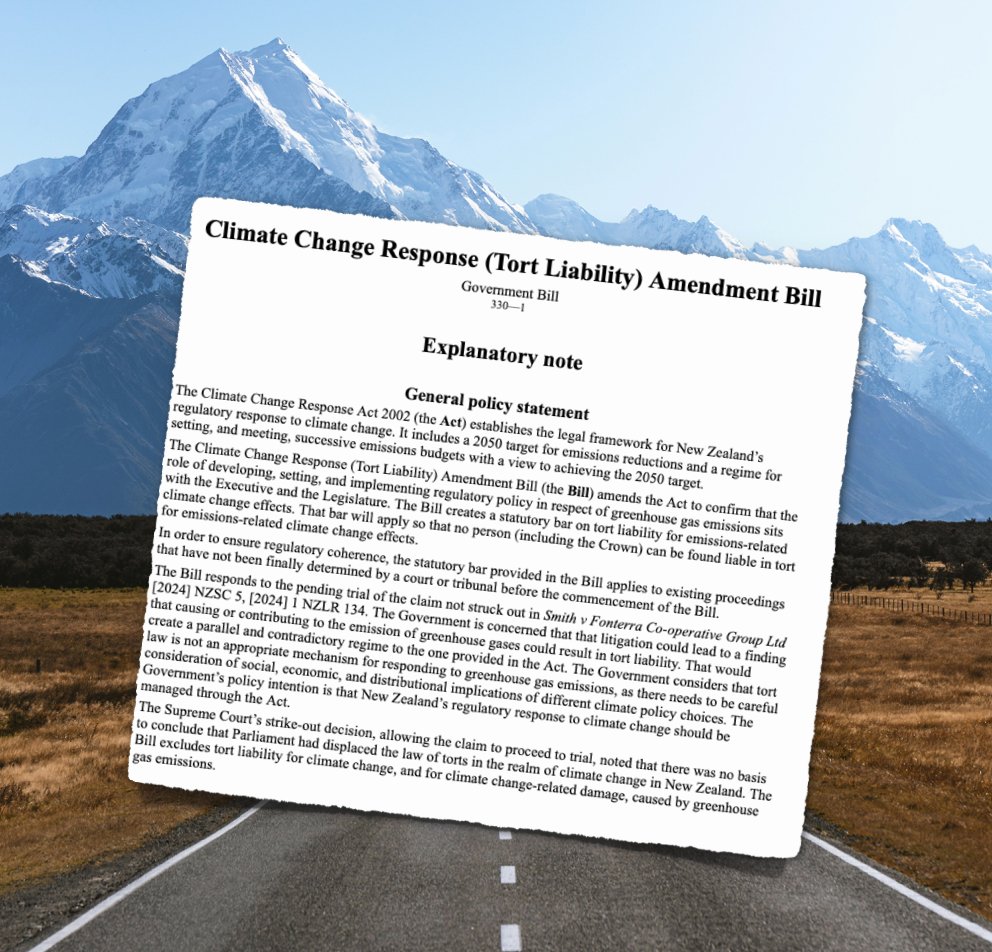
The bill will become law following formal approval from the head of the state, which is expected within a week.
Despite the public submissions and opposition to the proposal, New Zealand’s parliament has now passed legislation preventing companies and other parties from being held liable under tort law for climate-related damage caused by their greenhouse-gas emissions.
Crucially, the protection applies not only to future lawsuits, but retrospectively.
That effectively ends Smith v Fonterra, a groundbreaking case brought by Māori climate activist and iwi leader Mike Smith against some of New Zealand's biggest greenhouse-gas emitters. The case targeted companies including dairy giant Fonterra, energy company Genesis Energy, fuel company Z Energy, New Zealand Steel and coal producer BT Mining. Smith argued that their emissions contributed to climate change that threatened his land, cultural interests and customary rights. In February 2024, New Zealand's Supreme Court unanimously reinstated the case after lower courts had attempted to strike it out. The country's highest court ruled that Smith's claims — including public nuisance, negligence and a proposed new duty concerning damage to the climate system — should be allowed to proceed to trial.
The Supreme Court did not rule that the companies were responsible for the damage. It ruled that Smith should be allowed to make his case.
Now he will not get that chance.
Government: Climate policy belongs in parliament
The government argues that questions as complex and global as climate change should be decided through elected governments and regulation, rather than through private lawsuits.
"The courts are not the right place to resolve claims of harm from climate change," he said.
The government argues that New Zealand already regulates emissions through mechanisms including its Emissions Trading Scheme and that tort law is poorly suited to deciding responsibility for a problem involving emissions from countless sources around the world.

"The courts are not the right place to resolve claims of harm from climate change," says Justive Minister Paul Goldsmith.
Critics see something very different: parliament changing the rules while a politically sensitive case is already before the courts.
That criticism became sharper after documents showed that Ministry of Justice officials had advised the government not to intervene while the litigation was underway. Officials recommended allowing the common law to develop through the courts before considering reform. Mike Smith, who brought Smith v Fonterra, has called the intervention outrageous. He has stressed that his case was not seeking financial damages, but a legal finding on whether major emitters could be held responsible for their contribution to climate change.
In a statement after the vote, Smith and the Environmental Law Initiative said: “Climate litigation in Aotearoa New Zealand has taken a hit, but it is far from dead. In fact, it is alive and kicking.” A battle spreading far beyond New Zealand
However, the significance of the decision extends well beyond the country's shores. As governments struggle to reduce emissions quickly enough, courts have become an increasingly important arena for climate action. Governments, communities and individuals are bringing cases seeking everything from stronger climate policies to compensation from fossil-fuel producers for the growing costs of floods, fires, rising seas and extreme heat.
The United States has become one of the main battlegrounds.
Around 60 state and local governments have brought climate-related cases against fossil-fuel companies, according to Reuters. One of the most important comes from Boulder, Colorado, which is seeking damages from ExxonMobil and Suncor for local climate impacts. The US Supreme Court agreed in February to hear the companies' attempt to stop the case. Its eventual ruling could affect many similar lawsuits.
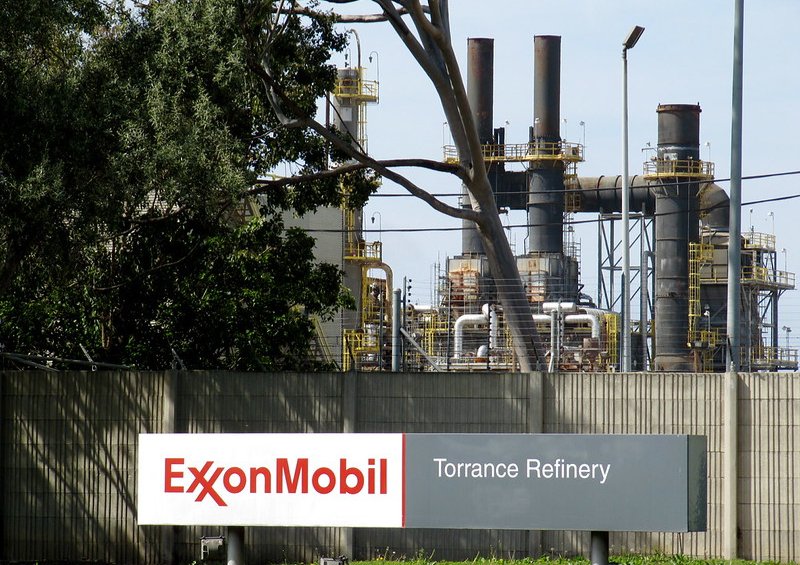
The city of Boulder, Colorado, is seeking damages from ExxonMobil for local climate impacts.
But something else is happening as well. Rather than waiting for courts to decide these cases, politicians are trying to prevent some of them from being heard at all.
At the federal level, Republican lawmakers have gone considerably further. Proposed legislation known as the Stop Climate Shakedowns Act of 2026 seeks to block state climate-accountability lawsuits and other state measures targeting fossil-fuel companies. That makes the New Zealand decision potentially important internationally.
The country has moved beyond debating whether such lawsuits should succeed. It has changed the law so that a whole category of claims cannot succeed at all.
Future implications of the New Zealand case
Could other countries follow? Legally, New Zealand's law does not directly change what courts can do in the United States, Europe or elsewhere. Each country has its own tort law, constitutional framework and rules governing access to courts.
Nor does it stop other kinds of climate litigation. Cases based on human rights, constitutional obligations, consumer protection, corporate greenwashing or governments' legal duties may operate on entirely different legal foundations.
But politically, New Zealand may provide a model.
As attribution science becomes increasingly capable of connecting emissions to climate impacts, companies face a growing possibility that courts will be asked to decide not only who caused climate change, but who should pay for its consequences.
That question involves enormous sums of money.
Governments are spending billions adapting infrastructure to rising seas, extreme rainfall, fires and heat. If courts establish that major emitters can bear some responsibility for those costs, the financial implications for fossil-fuel producers and other high-emitting industries could be profound.
The alternative is that those costs largely remain with governments, taxpayers, insurers and the people directly affected.
That is why Smith v Fonterra mattered.
New Zealand's parliament has now ensured that the test will not take place.