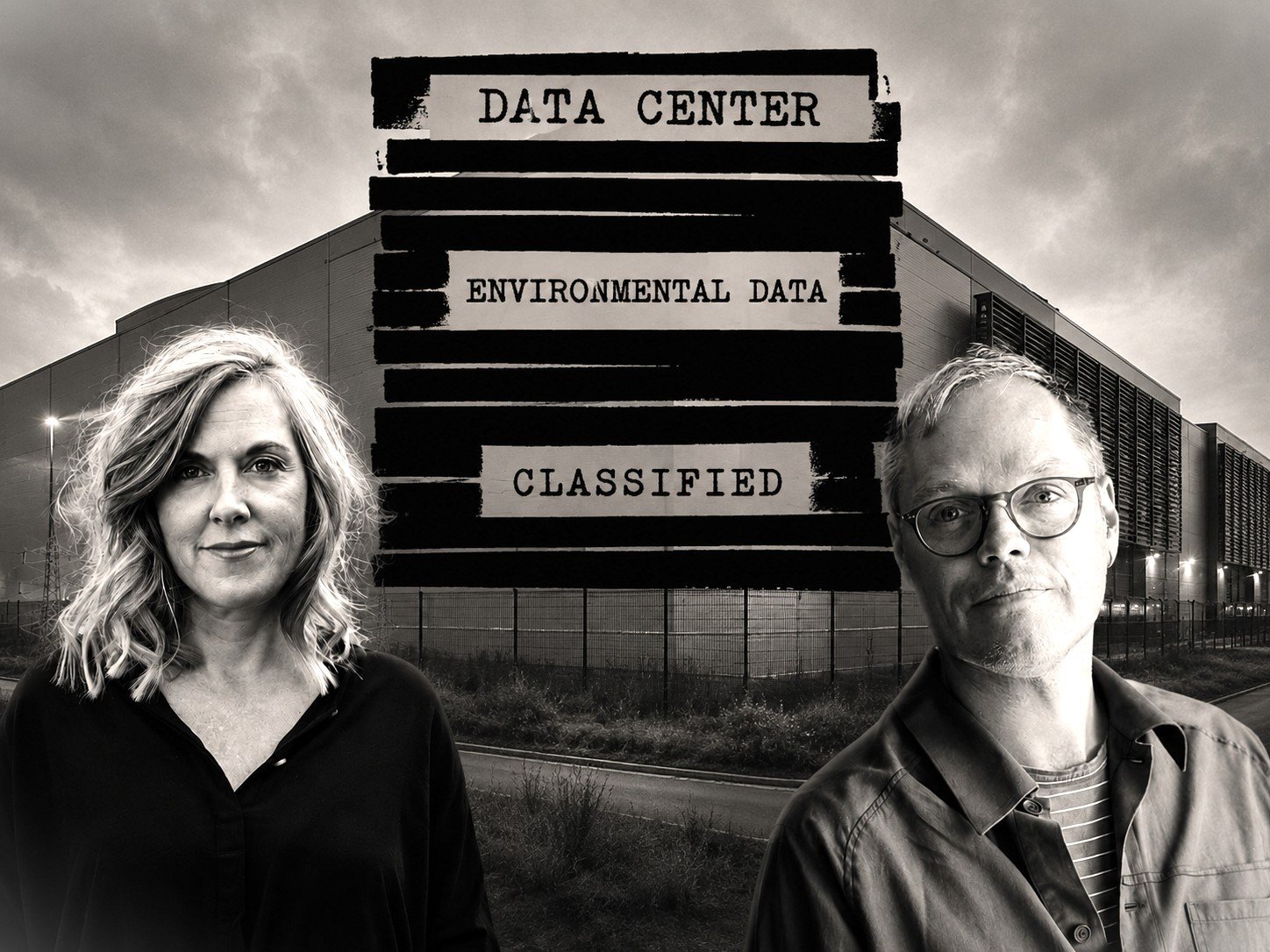
OPINION ARTICLE: A few weeks ago, it was revealed that the European Commission had copied a proposal almost word-for-word from tech giants such as Microsoft, Amazon, Google and Meta to keep environmental data from individual data centers secret in a new legislative proposal.
This is the result of a massive lobbying offensive. Between 2021 and 2025, the tech industry's lobbying in Brussels increased by over 50 percent. Last year, the companies spent over €151 million annually on influencing the EU. They now appear to be getting a return on their investment. This was not how it was supposed to be.
Since July 1, 2025, an EU law has been in effect that requires large data centers to report energy and water consumption. The purpose is to reduce the sector's environmental impact and promote energy efficiency and renewable energy. This information is crucial. Especially as the EU aims to triple data center capacity within a few years and simultaneously has ambitious climate goals through the EU's Green Deal. Open climate data is crucial for the climate transition. If we do not know how large emissions are, where they come from, we cannot reduce them.
The data center boom is driven primarily by AI. According to the International Energy Agency, data centers' global electricity consumption is expected to double by 2030. AI is here to stay. And as a civic tech NGO, we ourselves build and use AI to collect and disseminate climate data. But we don’t accept the rapidly growing climate impact of large-scale AI expansion at all costs – risking a fossil energy lock-in for years to come.
There are many ways to reduce AI's footprint. Data centers can be run on fossil-free electricity and second hand hardware; they can rationalize their energy and water consumption and add waste heat to power grids.
As builders and consumers, we can choose less energy-intensive AI models and demand sustainability information from our data providers.
But this requires a commitment to transparency.
Just as food labeling makes it possible to choose healthy food, data center’s environmental data must be accessible for companies, organizations, and citizens to make informed decisions.
There are of course actors who are trying to do the right thing. Swedish Berget AI is an example of a smaller data center that wants to work transparently and sustainably. However, the market is still dominated by the large-scale solutions of the tech giants. The European Commission is now risking classifying data centers' environmental data as entirely confidential. But it is not too late to stop the proposal.
They refer to legal experts who believe the article violates both the EU's transparency rules and the UN Aarhus Convention, which guarantees the public's right to environmental information. But openness regarding environmental data should not be a party political issue. We now want a response from the Swedish government and all parties in the Riksdag (Swedish Parliament), as well as other European member state governments.
It was also only a few months ago that countries across the EU signed a new UN declaration on information integrity regarding climate change. Countries now need to live up to their international commitments. Who will take the lead and ensure citizen’s right to data center transparency?