Climate investments may be motivated by social responsibility goals beyond making profits at first glance. However, building a resilient and versatile infrastructure for clean energy generation is not simply about throwing money at a problem to make it go away, it’s about nurturing an ecosystem that will grow and self-generate. Nuclear energy has exemplified this through a multiplier effect: providing jobs and injecting investments into the local economy and tax accounts.
Think globally, act locally. This mantra has guided many climate initiatives, illustrating that while the climate crisis is a global issue, the solutions need to be implemented locally at the sites where emissions happen. Therefore, innovations and knowledge need to filter down into local communities, enabling them to reduce emissions in the long term.
This mantra also applies to financing. Major national and global institutions have made climate financing a priority, funding climate solutions on the local level. These funds can be the crucial spark that boosts local economies, growing beyond the initial project and raising the well-being of the entire community.
It’s easy to think of climate financing as a money sink, a necessary cost to meet climate goals and fulfill the Paris Agreement. But a more appropriate perspective is that climate funding is an investment, allowing the local economy to evolve and grow in a sustainable direction, enabling long-term financial prosperity.
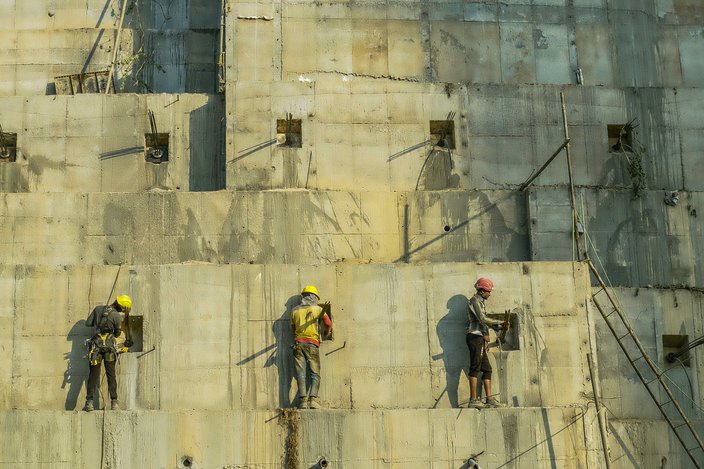
For every ten jobs created by the nuclear industry, 18 more jobs are created in adjacent industries, according to a U.S. study from 2024. Photo by Vanburn Gonsalves on Unsplash.
The Implications of Clean Energy Investments for Local Communities
A new fossil fuel plant will not only cost the local community in terms of air pollution and decreased quality of life. It also depends on importing increasingly expensive fossil fuels, siphoning money out of the local community.
On the other hand, investments into clean energy sources contribute to a healthier and more prosperous community. An energy plant with a low dependency on fuel imports will require a larger initial investment, but once the plant is built, it will pay back to the local community for a long time thereafter.
Taking nuclear energy as an example, a 2024 study released by the Southeast Nuclear Advisory Council investigated the economic impact of the nuclear energy sector in five U.S. states: Georgia, North Carolina, South Carolina, Tennessee, and Virginia.
The study found that the nuclear energy industry generates an annual economic activity of $42.9 billion, supports 152,598 jobs, and provides $13.7 billion in labor income. Jobs generated by the nuclear industry are highly skilled and often well-paid, ranging from engineering to operations and security. This also dominoes into even more indirect jobs, as every ten jobs created by the nuclear industry enable 18 more jobs on average in adjacent industries, such as construction, transportation, food, and lodging.
Nuclear companies in these five states also contribute to local and state economies with $3.7 billion in annual tax revenues, supporting community services such as public schools, emergency services, and infrastructure.
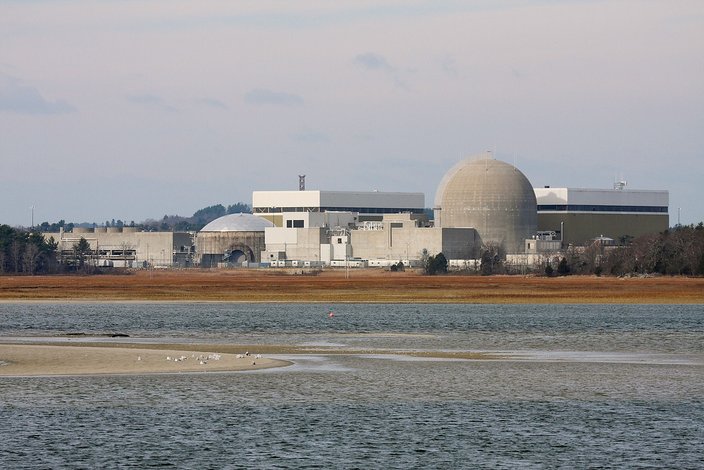
Seabrook Station Nuclear Power Plant supports New Hampshire with not only fossil-free energy, but also jobs and boosts to the local economy. Photo from Wikipedia.
The Case of Seabrook Station: A Boon to New Hampshire
Seabrook Station has played a pivotal role in New Hampshire's economy. A 2013 study showed that the nuclear power plant employed 650 people, with average salaries more than double those in Rockingham and Strafford Counties.
The plant contributed an annual $535 million to the local economy and $1.4 billion to the national economy in total – and let’s not forget the environmental value of generating about 40% of New Hampshire’s electricity entirely fossil-free, avoiding nearly 4 million tons of carbon dioxide emissions annually, comparable to removing almost 700,000 cars from the road.
Nuclear energy has shown significant economic benefits for both local and national economies. This is the case not only in the U.S., but also in countries like France, China, the United Arab Emirates, South Korea, and Sweden. Nuclear projects typically entail high initial costs tied to construction and security. When those costs can be covered by private or federal investments, the power plant will be a net positive for the local economy, providing long-term employment opportunities and financial growth.
Implementing sustainable innovations should not be considered a cost in the long term. In fact, they have the potential to not only generate revenue, but also avoid the enormous costs related to the climate crisis and other forms of environmental degradation. As we navigate through the current global economic turmoil, we must remember this.